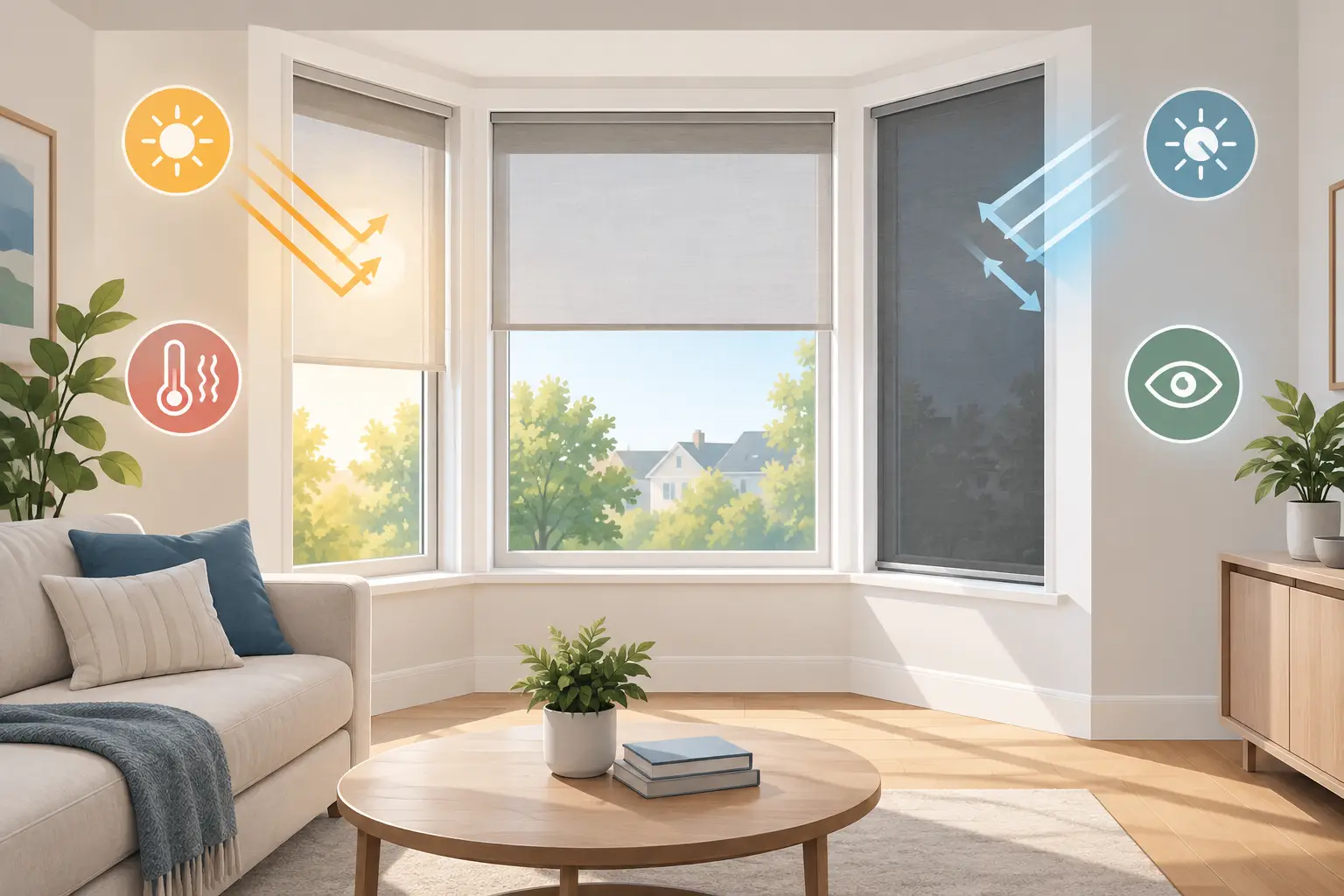
If your conservatory feels brilliant in March and unbearable by late May, you are not imagining it. Conservatories are designed to bring in light, and that same light brings solar heat gain – fast. The usual pattern is familiar: the room is too hot to use midday, glare makes it uncomfortable to read or work, and your furniture and flooring quietly fade over time.
The good news is you can stop conservatory overheating with film without turning the room into a dark box. The right commercial-grade window film reduces heat and glare while keeping a bright, usable space. The key is choosing a film that matches how you use the conservatory and which glass you have.
Why conservatories overheat so quickly
A conservatory is effectively a light collector. Sunlight passes through the glass as short-wave radiation, then warms interior surfaces which re-emit heat as longer-wave infrared. Standard glass is not great at letting that heat back out, so it builds up. Add limited ventilation, a polycarbonate or glass roof, and a large glazed area compared to the room volume, and you get a space that can spike in temperature surprisingly quickly.
Glare is the other half of the problem. Even when the air temperature is tolerable, strong direct sun can make the space feel harsh, raise eye strain, and wash out screens.
What window film actually does (and what it cannot do)
Solar control film is a thin, multi-layer material applied to the inside face of flat glass. Depending on the film type, it reflects and or absorbs a portion of the sun’s energy before it becomes heat inside the room. Good films also block the vast majority of UV, helping protect upholstery, flooring, artworks, and finishes.
Film does not replace ventilation or insulation, and it cannot change the fundamental design of a conservatory. What it can do is reduce the peak heat load and glare so the room is usable for longer through the day – which is exactly what most homeowners and static caravan owners want.
The practical difference tends to be most noticeable in the times that matter: late morning through mid-afternoon on clear days, and during heatwaves when the conservatory would otherwise be a no-go area.
How to stop conservatory overheating with film: the approach that works
The simplest way to get a good outcome is to work backwards from the problem you feel most.
If the conservatory is too hot to sit in, heat rejection is the priority. If you can sit in it but you are squinting, glare control becomes the focus. If you are overlooked, you may want daytime privacy as well – but that brings trade-offs, because privacy finishes often rely on reflection and that changes with lighting.
A professional installer will typically assess three things before recommending a film: which elevations receive strong sun, whether the roof is glazed and accessible, and what type of glass is already installed. That last point matters because some high-performance films are not suitable for certain sealed units or specific glass compositions. Getting that right protects both performance and peace of mind.
Film options that suit conservatories
Most conservatory jobs fall into a few film categories.
Reflective solar control films are often the first choice where overheating is the main complaint. From the outside they have a reflective finish that reduces solar gain and cuts glare. Inside, you still get a bright room, but with a noticeably softer feel.
Neutral or lightly tinted solar control films are used when you want heat reduction with a more subtle appearance. They can be a good fit on properties where a strong reflective look is not desirable, or where you want to keep the external appearance closer to the existing glazing.
Spectrally selective films are designed to reduce heat while keeping more visible light, so the room feels bright. They are useful where you want comfort without a dramatic change in the look of the glass, although the exact performance depends on the specific product and the conservatory’s orientation.
Anti-glare films focus on cutting harsh light and reflections, which helps if you use the conservatory as a dining area, office, or hobby space. They can be paired with solar control, but it is important to prioritise what matters most – overheating, glare, or privacy – because one film rarely delivers maximum performance in every category.
Daytime privacy in a conservatory: what to expect
Many customers want a conservatory that is private from neighbours while still letting in daylight. Window film can do this, but it is important to understand how privacy works.
Most daytime privacy films rely on a reflective exterior surface. In daylight, when it is brighter outside than inside, they provide good privacy. In the evening, if you have lights on inside, the effect reduces or can reverse, so silhouettes may be visible from outside. That is not a fault – it is simply physics. If evening privacy is essential, you may still want blinds or curtains for night-time, while film handles heat, glare, and daytime privacy.
Roof, sides, or both?
If your roof is glazed, that is often where a large portion of heat enters. Treating the roof can make a significant difference to peak temperatures, especially in south-facing conservatories. Side glazing also matters, particularly for morning or late afternoon sun depending on orientation.
In some properties, it is more cost-effective to target the worst elevations first – for example, roof plus the most sun-exposed side – rather than applying film everywhere. That depends on how the conservatory is laid out and where you sit during the day. A space that is used mainly at breakfast may need different coverage than one used for late afternoon family time.
Trade-offs you should be aware of
Stopping overheating means reducing solar energy entering the space, and that usually changes the light quality.
A higher heat-rejection film can slightly reduce visible light, particularly with darker or more reflective finishes. Many people see this as a positive because the room feels calmer, but if you chose a conservatory specifically for maximum brightness, a very dark film may not be the right fit.
Reflective films change the external look of the glass. Some homeowners like the crisp, modern finish and the privacy it brings. Others prefer a more neutral appearance.
If you have plants in the conservatory, reducing heat and glare can help them in summer, but lowering light levels may affect very light-hungry species. It is worth mentioning this during the quote stage so the film can be selected accordingly.
Finally, film is only as good as the installation. Poor preparation or rushed fitting can lead to edge issues, contamination, or a finish that does not look professional. Conservatories are high-visibility spaces, so it pays to get the application right.
Why commercial-grade film and professional installation matter
Conservatories are a demanding environment: high solar load, frequent temperature swings, and a lot of glass. Commercial-grade films are designed to perform consistently and remain stable, with reliable adhesive systems and predictable results.
Professional installation matters for another reason: compatibility and risk management. Some conservatory glazing is more sensitive to heat build-up within the glass unit, and using the wrong film can increase the chance of thermal stress. A specialist will select an appropriate film and apply it correctly, with clean edges and a finish that looks like it belongs on the property.
Real-world use cases we see across North Wales and the North West
A common residential request is a conservatory that can be used as a family room without the midday heat spike. In these cases, a high-performing solar control film is often chosen to cut heat and glare while keeping a bright feel.
Static caravan owners often want a cooler interior and daytime privacy without losing the view. Reflective privacy films are popular here because they also reduce glare and protect interiors from UV – useful when caravans are exposed to strong coastal light.
For small commercial premises with glazed frontages or sunrooms used as waiting areas, glare and occupant comfort are usually the driver. Film helps reduce squinting and screen glare while maintaining a clean, professional appearance.
Getting the right result: what to ask before you book
When you are ready to move forward, it helps to be clear about what success looks like. Is the aim to make the room usable at lunch time, to stop the TV washing out, to protect new flooring, or to add daytime privacy from nearby houses?
Ask what film type is being recommended and why, whether it is intended primarily for heat rejection, glare reduction, or privacy, and what change you should expect in visible light. It is also sensible to mention any existing glazing details you know, such as whether the units are self-cleaning or have special coatings, so compatibility can be checked.
If you are based in North Wales, The Wirral, Chester, or surrounding areas and want a tailored, installation-led solution, Tinting For Glass (Solar Tint Wales) can advise on commercial-grade films specifically for conservatories, homes, static caravans, and flat glass commercial settings.
The most useful way to think about window film is not as a cosmetic tint, but as a performance upgrade for the glass you already have. Done properly, it turns a conservatory from a seasonal space into a room you actually use – even when the sun shows up at full strength.