If your room faces a pavement, a neighbour’s window, or a busy park home pitch, you already know the problem: you want daylight, but you do not want a front-row audience. Curtains solve the privacy bit, then immediately steal the light. Blinds help, until the sun hits the glass and the glare makes the space uncomfortable anyway.
Daytime privacy window film is the practical middle ground. Done properly, it gives you a bright interior, clear outward visibility, and strong privacy during daylight hours – while also improving comfort by cutting glare and UV.
What daytime privacy window film is (and isn’t)
Daytime privacy window film is a specialist film applied to flat glass that increases reflectivity on the outside of the window. In daylight, the exterior appears more mirror-like, making it difficult for passers-by or neighbouring properties to see in. From inside, you can still see out because the interior is comparatively darker than the exterior.
It is not the same thing as a frosted or opaque privacy film. Frosted films give privacy day and night, but they blur the view and reduce the crispness of natural light. Daytime films are chosen specifically because they retain outward visibility and a clean, modern appearance.
It also is not a “one film fits every window” product. The right option depends on where the glass is, how the space is used, and what you need alongside privacy – glare reduction, heat control, UV protection, or a particular exterior finish.
How it works: the simple physics that matters
The privacy effect comes from light balance. During the day, the exterior is brighter than the interior. A reflective or one-way style film bounces a portion of that bright exterior light back outwards, which creates the mirror effect outside.
That balance flips after dark if you have lights on indoors. If your interior becomes brighter than the outside, the film will not provide the same privacy. People can often see in more clearly at night, especially if you are close to the glass.
This is the key trade-off. Daytime privacy window film is excellent for daylight hours, but it is not a full replacement for night-time privacy measures. Many customers pair it with simple evening solutions like blinds, curtains, or strategic lighting placement to keep the space comfortable and private around the clock.
Where daytime privacy film makes the biggest difference
Street-facing homes and overlooked rooms
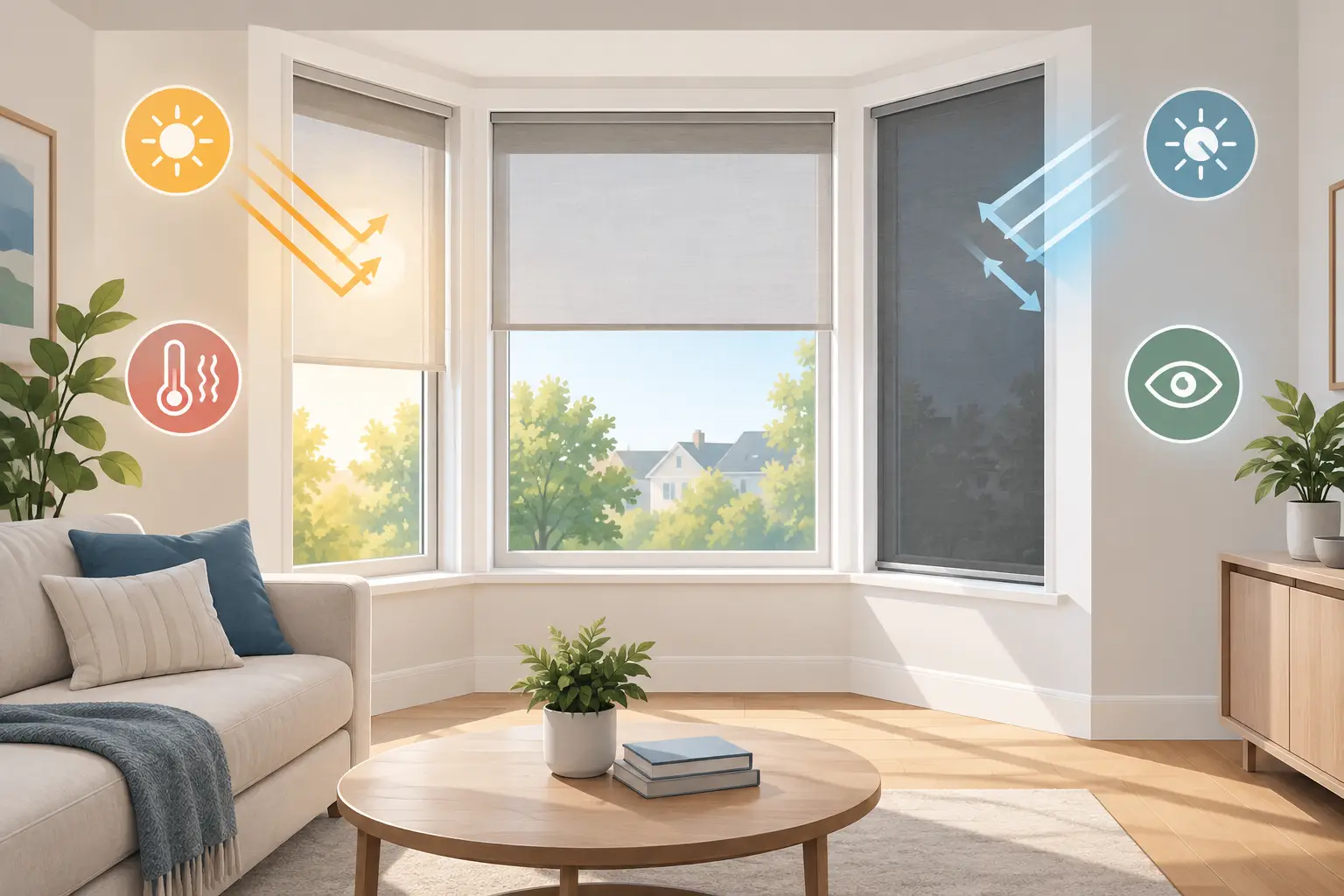
Front lounges, kitchens and ground-floor bay windows are common problem areas, especially in terraces and semis where the pavement feels close. A reflective daytime film keeps the room bright, reduces the “fishbowl” feeling, and can soften harsh sun that causes screen glare.
If you work from home near a front window, the benefits are immediate. Less glare means fewer squinting days and fewer awkward screen angles, and the privacy gives you a more usable room without pulling the blinds down at midday.
Conservatories and glass-heavy extensions
Conservatories can feel exposed and can overheat quickly. Daytime privacy film is often chosen here because it tackles multiple issues at once: it reduces glare and solar gain while improving privacy from neighbours and surrounding gardens.
It is worth being realistic, though. If the conservatory is already extremely hot in summer, you may need a film designed primarily for heat rejection rather than a lighter privacy finish. The best installations prioritise the outcome you care about most, then balance the rest.
Static caravans and holiday parks
Static caravans are a perfect match for daytime privacy window film because pitches are often close together, and daylight privacy makes the space feel genuinely usable. Many owners want to sit inside with the door open, enjoy the view, and still feel shielded from foot traffic.
It also helps protect interiors that take a battering from sun – upholstery, flooring, laminated surfaces and soft furnishings. UV reduction is a practical benefit here, not a nice extra.
Commercial premises: offices, receptions and shopfronts
For offices, reflective film can reduce screen glare and make meeting rooms feel less exposed without turning the space into a dark box. For receptions and street-level commercial units, it can provide a professional look while limiting visibility into sensitive areas.
Some businesses also prefer a more subtle finish rather than a strong mirror effect, especially where brand appearance matters. There are privacy films that look clean and modern without being overly reflective, and the right choice often depends on the building’s facade and how much direct sunlight the glazing receives.
What you can expect: privacy, light and comfort
A well-chosen daytime privacy film should give you three practical outcomes.
First, a noticeable privacy increase in daylight. You should be able to use the room normally, without feeling watched, particularly on ground floors and close-boundary windows.
Second, reduced glare. Even a relatively light reflective film can take the edge off harsh sunlight. That matters for living spaces, but it is especially valuable in offices and caravans where sunlight can be relentless.
Third, UV protection. Commercial-grade films typically block a high percentage of UV, which helps reduce fading and material degradation over time. If you have sofas near windows, display stock, or caravan interiors that get strong sun, this is one of the most cost-effective ways to protect them.
Light levels are the most common concern. The right film should keep the room bright, but any film that increases reflectivity and controls solar energy will change the feel slightly. That is why film selection is not about picking the darkest option – it is about matching the film’s performance to the room’s needs.
Choosing the right finish: it depends on your priorities
Most daytime privacy solutions sit on a spectrum from subtle to strongly reflective.
A lighter, more neutral finish can suit homes where you want a discreet appearance and minimal change to daylight. You still get privacy, but it may be less dramatic on dull days.
A stronger reflective finish typically gives more daytime privacy and better glare reduction. It can also provide a more pronounced mirror look outside, which some customers like for the clean, uniform appearance, and others prefer to avoid.
There is also the question of internal reflection. Some films can make the glass look more reflective from inside in certain lighting conditions, particularly with bright interiors and darker exteriors. A good installer will talk through how the space is used so you do not end up with a finish that feels distracting.
The night-time reality (and how to handle it)
Because the effect relies on daylight, you should plan for evening privacy separately. The simplest approach is to keep your existing blinds or curtains for night use.
If you want to reduce night-time visibility without blocking light completely, you can also look at lighting choices. Avoid placing bright lamps right next to the window, and consider softer, more central lighting that does not turn the glass into a lit display. In some cases, combining daytime privacy film with a secondary decorative privacy film on specific panes can work, but that is a design decision and depends on whether you want to keep a clear view.
Installation: why professional fitting matters
Daytime privacy film is unforgiving. Any dust, trapped moisture, or uneven trimming shows up clearly, especially on reflective finishes. Professional installation is not just about neat edges – it is about long-term clarity, adhesion, and performance.
A proper fitting process includes assessing the glass type, measuring accurately, preparing and cleaning the glass thoroughly, and applying the film with controlled technique to avoid contamination. This matters even more in coastal areas and holiday parks where salt and fine airborne particles are common.
It also protects you from the wrong film being applied to the wrong glass. Some glazing types and coatings need specific film compatibility. The goal is not just “privacy now” but a stable, reliable result that stays looking right.
Common questions customers ask before booking
Will it damage my windows?
Applied correctly to suitable flat glass, quality window film should not damage the glass. The important part is selecting a film appropriate for the glazing and the building’s conditions, then installing it professionally.
Does it work on dull Welsh days?
Yes, but the effect is strongest when the outside is clearly brighter than the inside. On very overcast days, privacy can still improve, but it may be less dramatic than on sunny days. If your window faces a shaded area, a stronger privacy finish may be more appropriate.
Can I still see out clearly?
That is one of the main reasons people choose this option. In daylight, outward visibility is typically very good. At night with lights on, the balance changes and privacy reduces – so visibility out remains, but people may see in more than you expect.
Is it only for privacy?
No. Many customers choose it because it makes a room more usable: less glare on screens, less harsh sunlight, and less UV damage to furnishings. Privacy is often the driver, but comfort and protection are the everyday wins.
Getting the outcome right in North Wales, The Wirral and Chester
Local properties vary – coastal light, open aspects, tighter terraces, holiday parks, modern glass-heavy builds. The most reliable way to get the result you want is to start with how the space is used and what you need the film to achieve at the problem times of day.
If you want a tailored recommendation and professional installation for flat glass in homes, static caravans or commercial premises across North Wales, The Wirral and Chester, Tinting For Glass (Solar Tint Wales) can help you choose a commercial-grade solution and fit it properly: https://tintingforglass.com.
A helpful way to think about it is simple: the best daytime privacy film is the one you forget is there – because the room feels brighter, calmer, and more private exactly when you need it to.