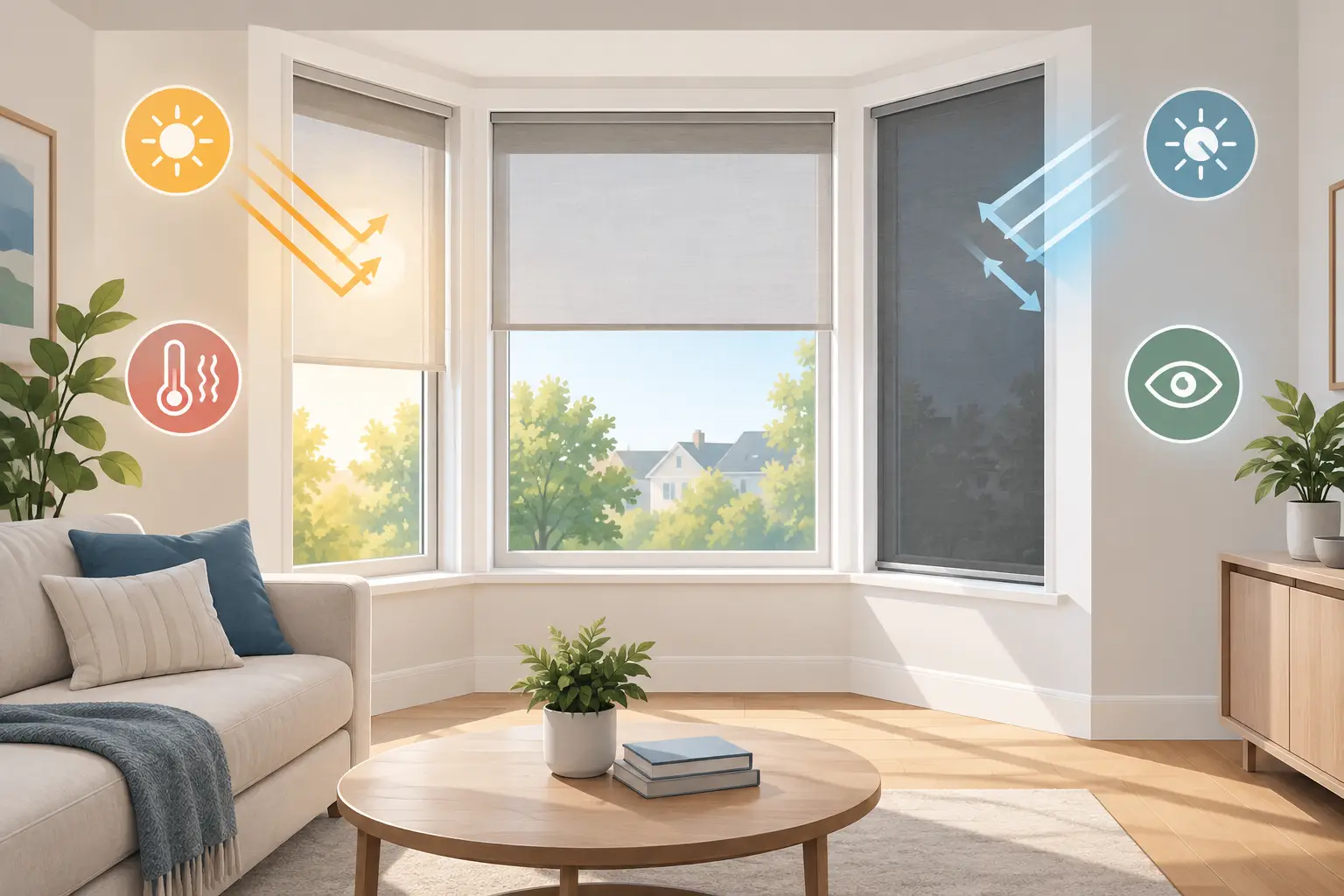
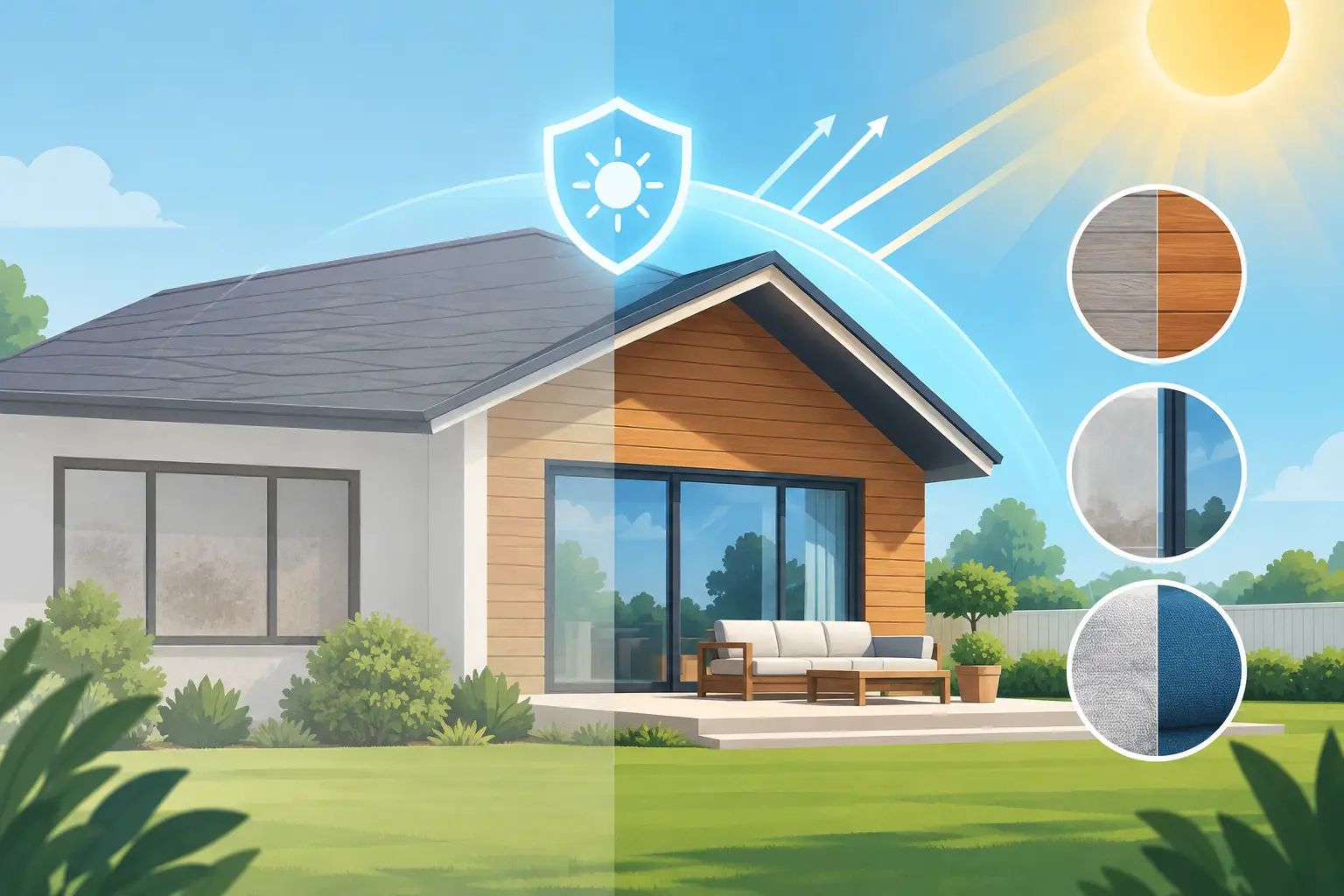
You can usually tell when a building has the wrong window film within five minutes: the room is bright but unusable because of glare, the conservatory feels like a greenhouse, or the front-facing lounge has the blinds down all day for privacy. The good news is that modern flat-glass window films are performance products. Pick the right type and you can keep the light you like, while controlling the heat, glare and visibility you do not.
This is a practical, property-focused breakdown of the main window tint film types, what each one actually does, and where they tend to work best across homes, static caravans and commercial premises.
Window tint film types explained – what changes between them?
Most window films look similar in a brochure, but they behave very differently once they are on your glass. The differences come down to three things: how they manage solar energy (heat), how they manage visible light (glare and brightness), and how they manage visibility (privacy and appearance).
Some films are designed to reflect more solar energy outward, helping reduce overheating. Others absorb more energy and re-radiate it, which can still reduce glare but may not be the best option for every glazing type. Some are built primarily for daytime privacy or for safety and security, where the main purpose is holding glass together under impact.
A professional specification looks at your glazing, the orientation of the windows, how the room is used, and what “better” means for you – cooler, less glare, more privacy, improved UV protection, or a more professional façade.
Solar control films (heat reduction without living in the dark)
Solar control films are the most common choice when comfort is the problem. They are designed to reduce solar heat gain and manage glare while keeping the room usable and naturally lit.
If you have a south- or west-facing room, a glass-heavy extension, or a conservatory that becomes uncomfortable on bright days, a solar control film is often the most direct fix. In commercial spaces, they are used to improve occupant comfort and reduce hot spots near windows, which can have a noticeable impact on how well a workspace functions.
The trade-off is that you cannot reduce heat and glare without affecting the way the glass looks. Some solar control films are subtle, others are obviously reflective. The right selection depends on whether you want a “barely there” finish or a film that clearly changes the appearance of the window from outside.
Reflective solar films (maximum performance and daytime privacy)
Reflective films are the ones most people recognise: a mirrored or highly reflective external finish that throws a lot of solar energy back out. They can be particularly effective for strong sun exposure and they also give useful daytime privacy, because the brighter side tends to be reflective.
This makes them popular for front-facing living rooms, offices at street level, shopfront glazing where staff want to see out but passers-by do not need a clear view in, and static caravans where daytime privacy is a constant concern on busy parks.
The “it depends” detail is night-time. When it is dark outside and the lights are on inside, reflective films do not stop visibility in the same way. Many customers still choose reflective films for the daytime benefit and then use standard evening privacy measures if required.
Neutral solar films (balanced look, strong comfort gains)
Neutral films aim to reduce heat and glare without a heavily mirrored finish. They are often chosen where you want the practical benefit but prefer a more understated external appearance, or where planning considerations and aesthetics matter.
They suit modern homes, offices with mixed elevations, and commercial properties that want a consistent, professional look across a façade. They can also be a good fit where you want to reduce glare on screens but do not want the windows to look highly reflective.
Anti-glare films (when brightness, not temperature, is the daily issue)
Glare is not just annoying – it changes how you use a space. If you have to move your seating, tilt monitors, or keep blinds half closed, the room is effectively underperforming.
Anti-glare films focus on controlling visible light transmission and reducing harsh brightness. In offices, they are often used around desk areas and meeting rooms to reduce reflections on screens and improve comfort for staff. In homes, they can be useful in lounges with large windows, kitchens with strong morning sun, and any room where TV glare is a regular complaint.
Anti-glare does not always equal maximum heat reduction. If overheating is also an issue, you typically look for a film that is specified for both glare control and solar performance, rather than treating glare in isolation.
Privacy films (what you can and cannot achieve)
Privacy is one of the most requested outcomes, particularly for overlooked homes, ground-floor commercial spaces, and static caravans on close pitches. The key is being clear about which type of privacy you need.
Daytime privacy tints (see out, reduce being seen)
Tinted and reflective films can provide good daytime privacy while maintaining outward visibility. These work well on front elevations, offices facing pavements, and caravan windows where you want to feel less exposed during the day.
As with reflective solar films, the limitation is night-time privacy with internal lighting. If evening privacy is essential in a specific room, you may choose a different film type or combine a daylight-privacy film with practical evening measures.
Frosted and etched-effect films (privacy at all hours)
Frosted films are designed for privacy regardless of lighting conditions. They diffuse light rather than reflecting it, which means you get a bright room but no clear view through the glass.
They are a strong option for bathrooms, entrance sidelights, internal office partitions, consultation rooms, and any area where you need consistent privacy without making the space feel gloomy. They also give a clean, professional finish in commercial settings, particularly where you want a permanent privacy solution that still looks tidy from both sides.
The trade-off is outward visibility – frosted finishes are about obscuring detail, so they are not ideal where you want to preserve a clear view.
UV protection films (protecting interiors and stock)
Most quality window films provide strong UV reduction, which matters more than many people realise. UV is a key driver of fading and degradation in fabrics, flooring, artwork and retail stock. If you have rooms with strong sun exposure, a shop window with displayed products, or a static caravan with soft furnishings that get a lot of summer sunlight, UV control is a measurable benefit.
It is worth being practical here: UV protection helps significantly, but fading is also influenced by visible light and heat. If your main concern is protecting furnishings, the best results usually come from a film that addresses UV plus either glare reduction or solar control, depending on the space.
Safety and security films (holding glass together)
Safety and security films are thicker, more durable films designed to help hold glass in place if it breaks. They are commonly used where there is a higher risk of impact, where you want extra peace of mind against opportunistic break-ins, or where you want to reduce the hazard from shattered glass.
In commercial premises, they can support site security and reduce disruption from accidental breakage. In homes, they can be relevant for vulnerable glazing, side panels near doors, or any area where you want additional reassurance.
Security films are not a replacement for good physical security, and they are not “magic”. Their value is in delaying entry, increasing effort and noise, and reducing the immediate danger of flying glass. For some properties, that extra layer is exactly what makes the building feel more secure.
Decorative films (branding, zoning and smarter-looking glass)
Decorative films are sometimes overlooked because people assume window film is only about tint. In reality, decorative finishes can solve practical problems in commercial spaces: creating visual separation, meeting room privacy, subtle branding, or a consistent look across internal glazing.
They are also used in domestic settings where you want privacy in specific areas without changing the external appearance of the whole window. The main point is that decorative does not have to mean flashy. Many finishes are deliberately minimal and designed to look like part of the building.
Which film type suits your property?
For homes, the decision usually starts with comfort and privacy. If a room overheats, a solar control film with a suitable finish is often the best first step. If the room is fine temperature-wise but hard to use because of brightness, anti-glare becomes the priority. For overlooked front windows, daytime privacy tints are popular when you still want to see out, while frosted films make sense for bathrooms and areas where you need privacy all day and night.
For static caravans, the pattern is similar but the priorities tend to be sharper: daytime privacy on busy sites, reducing glare off water or bright skies in coastal locations, and keeping the interior cooler during warm spells. A film that balances solar control and privacy is commonly the most satisfying choice, because it improves comfort without making the space feel closed in.
For commercial premises, think in terms of usability and consistency. Offices often need glare control for screens and more even comfort across the floorplate. Shops and public-facing spaces often want daytime privacy for staff areas, a professional external appearance, and UV protection for display stock. Security films are usually chosen where risk and disruption are costly.
If you are not sure, the quickest way to narrow it down is to answer two questions: when is the problem worst (morning, midday, afternoon, or all day), and is the main pain heat, glare, privacy, or security? From there, the film choice becomes much more straightforward.
Getting the specification right matters more than the label
Two films can both be described as “solar” or “privacy” but perform very differently on the same window. Your glazing type, the size of the panes, and the exposure all affect results. Installation quality also matters, because flat-glass films need clean preparation, correct fitting and a finish that holds up over time.
If you want a tailored recommendation for a home, static caravan or commercial building across North Wales, The Wirral, Chester and nearby areas, Tinting For Glass (Solar Tint Wales) organises its service around clear outcomes – UV protection, glare reduction, privacy, security and reflective finishes – and matches commercial-grade films to the way you actually use the space.
The most useful next step is not memorising film names. It is deciding what a better room looks like for you, then choosing the film that gets you there with the least compromise.