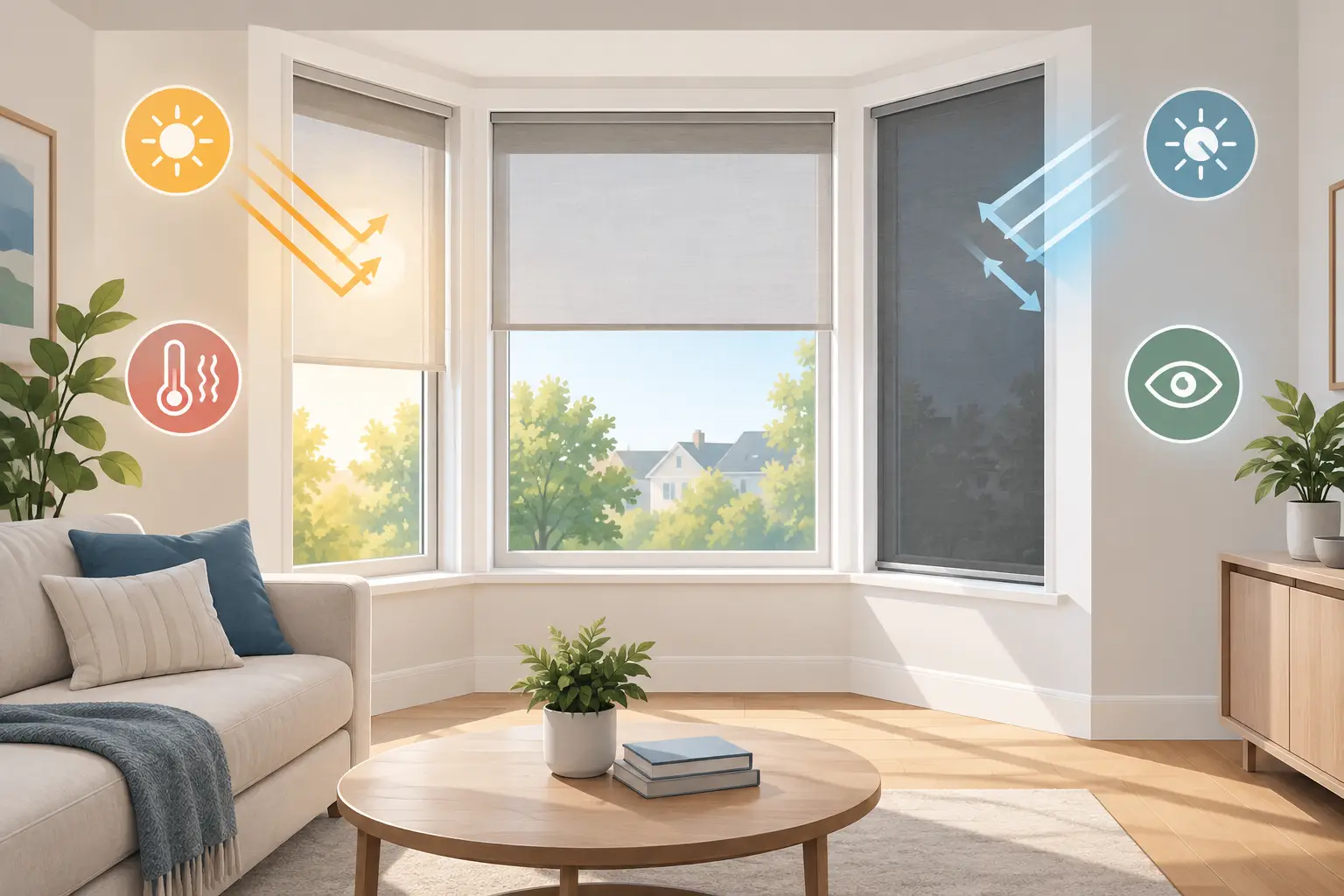
A bright room can quickly become difficult to use when sunlight reflects across a television, computer monitor, kitchen worktop or glossy floor. So, does window film reduce glare? Yes. The right professionally installed solar window film can noticeably reduce harsh glare while allowing useful daylight to remain in the room.
For homes, static caravans, conservatories and commercial premises, this is often the difference between keeping blinds shut and enjoying the view outside. The result depends on the glazing, the direction the windows face and the film selected, which is why a tailored solution matters.
How window film reduces glare
Glare occurs when a surface is much brighter than your eyes can comfortably manage. It may be direct sun shining through a window, or reflected light bouncing from glass, water, pale paving, desks or nearby buildings. It causes squinting, eye strain and screen visibility problems, even when the room itself does not feel particularly hot.
Solar window film is applied to the inside face of flat glass. It controls the amount and type of solar energy passing through the window, including visible light. By reducing excessive light transmission, the film softens the intensity of sunlight entering the space. This makes bright areas easier to work, relax and watch television in.
The aim is not normally to make a room dark. Commercial-grade anti-glare films are selected to strike a practical balance between daylight, outward visibility and comfort. A lighter film can take the sharp edge off a bright window, while a darker or more reflective option can deliver stronger glare control where the sun is particularly intrusive.
Does window film reduce glare on screens?
Screen glare is one of the most common reasons property owners choose window film. In offices, sunlight crossing monitors can make text harder to read and lead people to move desks, close blinds or work with lights on during the day. In a home, the same problem affects televisions, laptops and tablets.
A suitable solar film reduces the level of bright light reaching the screen and the surfaces around it. It will not remove every reflection in every position, particularly when sunlight falls directly onto the screen, but it can make a substantial day-to-day difference. Many customers find they can leave blinds open more often without losing screen usability.
Film works best when it is chosen with the room layout in mind. The window position, the direction of the sun, where people sit and the type of screen all affect the result. A west-facing office with afternoon sun may need a different level of performance from a north-facing room with occasional reflections.
The difference between glare control and heat reduction
Glare and heat often arrive together, but they are not the same issue. A room may feel uncomfortably bright without becoming excessively warm, especially in winter. Equally, a room can gain considerable solar heat through glass even where glare is not the main complaint.
Quality solar films are designed to address both concerns, with different products offering different levels of visible-light reduction and solar heat rejection. A film chosen primarily for glare may still help moderate heat, while a high-performance solar-control film can be particularly useful for conservatories, large glazed elevations and sun-facing commercial windows.
This matters because the darkest film is not automatically the best choice. If a room already has limited natural light, an overly dark finish may reduce glare but leave the space less pleasant on dull days. The most effective installation is one that deals with the problem window without compromising how the room is used for the rest of the year.
Which type of window film is best for glare?
There is no single anti-glare film that suits every property. The best option depends on how much glare is present, whether privacy is also required and how the glass is constructed.
Reflective solar film is often a strong choice for heavily sun-exposed windows. It can reduce glare and heat while creating daytime privacy, as people outside see more reflection than those inside. This is popular for street-facing homes, offices and static caravans where occupants want to look out without feeling overlooked during daylight hours.
Neutral or lightly tinted films provide a more subtle appearance. They are well suited to rooms where maintaining a natural look and a brighter feel is important, but where direct sunlight still makes screens, seating areas or workspaces uncomfortable.
For businesses, the choice may also be influenced by the appearance of the building. A consistent finish across a glazed frontage can improve comfort for staff and visitors while giving the premises a smarter, more uniform look.
Privacy has different rules after dark
Daytime reflective privacy should not be confused with night-time privacy. When it is dark outside and lights are on indoors, the brighter side is inside the property. A reflective solar film will not provide the same one-way effect in those conditions.
Where privacy is the main priority at all times, a frosted or opaque privacy film may be more appropriate for selected windows, internal glass or lower panes. This may reduce light and outward visibility more significantly, so it should be specified according to the purpose of the glass.
Where glare-reducing film makes the biggest difference
Conservatories are a frequent problem area because they contain large amounts of glazing and are designed to capture light. Solar film can help make the space more practical during sunny periods, reducing the glare that makes dining, reading or using a screen uncomfortable. It can also help protect furnishings and flooring from fading caused by UV exposure.
Static caravans can benefit in a similar way. Coastal locations and open views often bring strong, low-angle sunlight and reflections from water or pale ground. A professionally fitted film helps maintain a more comfortable interior, improves daytime privacy and preserves the view better than permanently closed curtains.
In homes, glare film is useful in living rooms with televisions, home offices, kitchens and rooms with bi-fold or patio doors. It is particularly effective where the sun hits the same seating or work area at predictable times each day.
Commercial settings benefit from improved screen visibility and more consistent working conditions. Offices, shops, reception areas, schools and care settings can all have problem windows where glare interrupts normal activity. Rather than asking occupants to manage blinds throughout the day, a properly specified film provides continuous control at the glass.
What window film cannot do
Window film is an effective glare-management measure, but it has limits. It cannot change the angle of the sun or prevent direct light from entering through an open door or uncovered rooflight. It also cannot eliminate glare created entirely within the room, such as reflections from highly polished furniture or a screen positioned directly opposite a window.
For severe glare, film may work best alongside sensible room adjustments. Repositioning a monitor, changing the angle of a television or using a blind for the short period when the sun is lowest can improve the overall result. The advantage of film is that it reduces the base level of brightness and solar exposure all day, without relying on someone to keep adjusting a blind.
It is also essential to consider the glass itself. Some double-glazed units, laminated glass and specialist glazing require compatible films to avoid unnecessary thermal stress. Professional assessment helps ensure the selected product is appropriate for the pane, its frame and the property’s needs.
Why professional installation matters
Glare reduction depends on the film performing as intended across the whole window. Poorly fitted film, contamination beneath the surface, uneven edges or unsuitable product selection can affect appearance and durability. Professional installation provides a clean finish and ensures the film is matched to the application rather than chosen simply by shade.
At Tinting For Glass, we specify commercial-grade window films for domestic properties, static caravans, conservatories and commercial premises. Every installation is considered around the real issue: whether that is low afternoon sun across office screens, excessive brightness in a caravan lounge or glare and heat through conservatory glass.
We provide professional window film installation across North Wales, The Wirral, Chester, Manchester, Salford, Worsley and Runcorn, including Rhos on Sea, Old Colwyn, Llandudno, Prestatyn, Anglesey, Abersoch, Pwllheli and Conwy.
If glare means a room is only comfortable at certain times of day, the answer is not always darker blinds or less daylight. A correctly selected window film can make the glass work harder, keeping the space brighter, calmer and more usable when you need it most. Contact the team to discuss the windows causing the problem and the level of glare control that will suit your property.