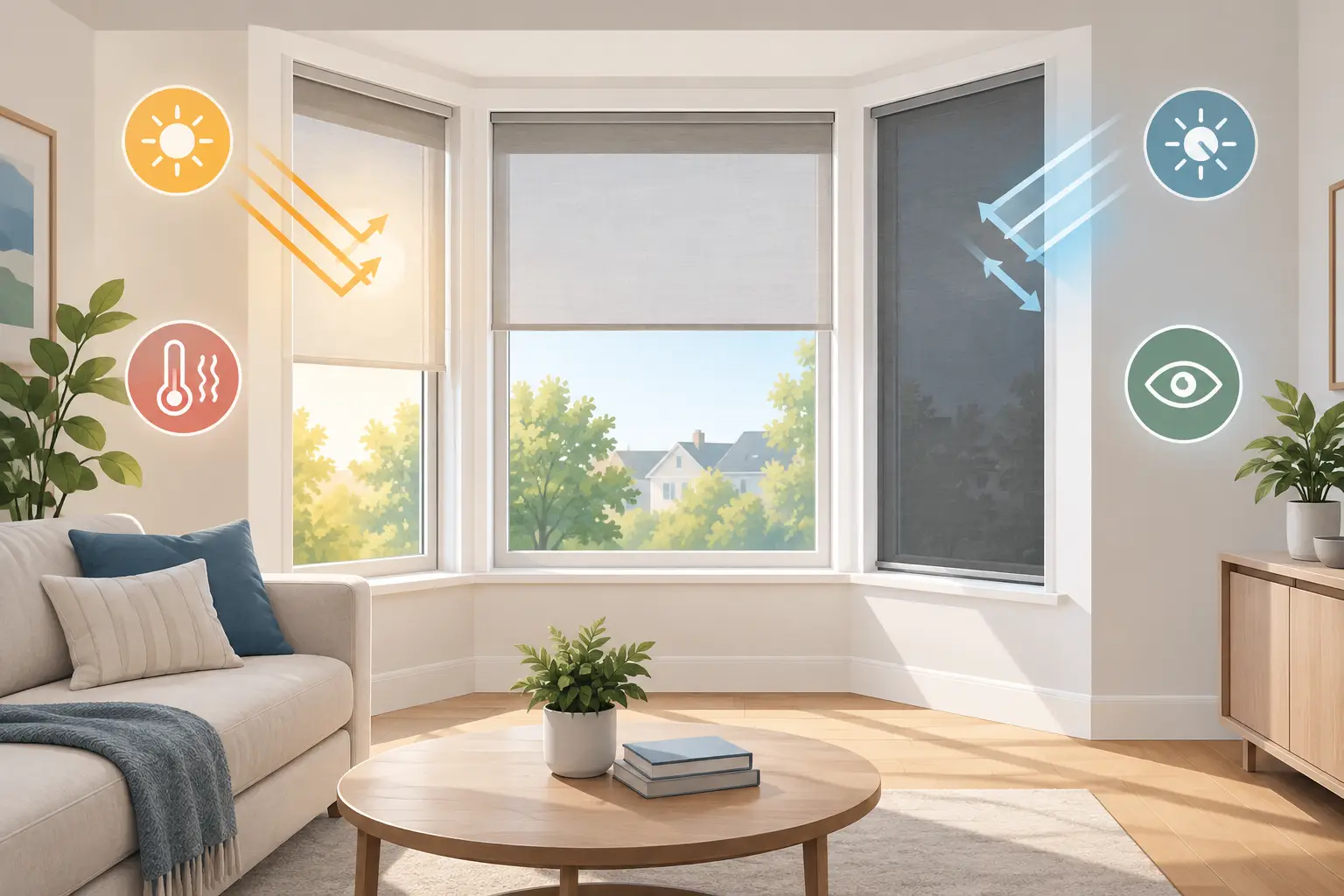
A home, office or static caravan can feel exposed long before it feels uncomfortable. If neighbouring properties overlook your lounge, customers can see straight into a shop, or holiday-park foot traffic passes close to your caravan, the question of how to add daytime privacy windows becomes a practical one. The aim is not to black out the room. It is to keep useful daylight and your outward view while making it far harder for people outside to see in.
Professional window film is often the most effective answer for flat glass. The right commercial-grade film can create a reflective outer appearance in daylight, reduce glare and solar heat, and filter UV exposure at the same time. However, daytime privacy depends on lighting conditions, so choosing the correct product and setting realistic expectations matters.
How daytime privacy window film works
Daytime privacy film works through light balance. During the day, the outside of a window is normally much brighter than the room behind it. Reflective or mirrored window film uses that difference to make the exterior glass appear more reflective, while allowing occupants to see out through the glass.
From the pavement, garden, neighbouring property or caravan pitch, the view into the room is reduced. From inside, you still receive natural light and can usually retain a clear outward view. The level of privacy, reflection and tint will vary by film type, the direction the glass faces, and how much direct daylight reaches it.
This makes reflective film particularly useful for front-facing lounges, overlooked kitchens, ground-floor bedrooms, conservatories, shopfronts and office glazing. It is also a strong option for static caravans, where large windows, close pitches and bright summer sun can make privacy and overheating a regular issue.
The key point is that daylight privacy is not the same as permanent privacy. Once it is dark outside and lights are on indoors, the light balance reverses. A reflective film will no longer prevent people outside from seeing in. Curtains, blinds or another night-time covering are still needed where complete privacy is required after dark.
Assess the window before choosing a film
A good installation begins with the use of the room, not simply the colour of the glass. A film that looks effective on a south-facing conservatory may not be the best choice for a shaded bathroom window or a shop with bright internal lighting.
First, consider where people are viewing the glass from. A window overlooked from directly opposite may need a stronger privacy effect than one seen only at an angle from a path. Then think about the times you need privacy. If the concern is daytime passers-by, neighbours or other caravan users, a reflective solar film may be ideal. If privacy is essential around the clock, a frosted or obscured film may be more suitable, although it will restrict the view out.
Also consider the condition and construction of the glazing. Modern double-glazed units, older sealed units, large panes, roof glazing and conservatory glass can all require different film specifications. Applying the wrong product can affect thermal performance or place unnecessary stress on certain glass types. A professional assessment ensures the chosen film is appropriate for the glass as well as the desired finish.
Choose the privacy level around the room’s job
Not every window should receive the darkest or most reflective film available. The best result is usually a tailored balance between privacy, light transmission, glare reduction and heat control.
Reflective solar films for clear views out
Reflective solar films are the usual choice where daytime privacy is the priority and occupants want to continue seeing out. They are available in different shades and reflectivity levels, from a subtle exterior sheen to a stronger mirrored finish.
These films can be especially useful in living rooms, offices and static caravans with wide glazing. Along with daytime privacy, they help reduce harsh sunlight, screen glare and fading caused by UV exposure. This helps protect furnishings, flooring, displays and soft finishes while making the space more comfortable to use.
A darker or more reflective film usually gives a stronger privacy effect in bright conditions, but it also reduces more visible light. In a naturally dark room, a lighter film may be the better long-term choice. In a sun-heavy conservatory, a higher-performance solar film can provide a more noticeable improvement in comfort.
Frosted films for permanent obscurity
Frosted and translucent films are suited to rooms where seeing out is less important than preventing views in. They allow daylight through but obscure the glass, making them useful for bathrooms, internal office partitions, treatment rooms, entrance sidelights and lower sections of glazing.
Unlike reflective film, frosted film does not depend on the daylight difference between outside and inside. It maintains privacy day and night. The trade-off is clear: you lose the external view through the covered glass. Some customers choose frosted film only on the lower half of a window, retaining daylight and a higher-level view while protecting the most exposed part of the room.
Decorative and patterned options
For premises that need privacy without a plain frosted look, decorative films can create a more finished appearance. Manifestation bands, etched-style effects and patterned designs work well in commercial spaces where safety marking and visual privacy are both needed.
They are less likely to provide the heat and glare reduction of a solar-control film, so the priority should be clear before selecting them. Where a room suffers from both overlooking and strong sunlight, a solar privacy film is normally the more functional solution.
Get the installation details right
Window film performs best when it is professionally measured, specified and installed. Small issues such as gaps at edges, contamination beneath the film, unsuitable cleaning methods or poor preparation can spoil the appearance and shorten its working life.
Professional installation starts with checking the glass, measuring each pane and discussing how the room is used. The film is cut accurately, applied to clean glass and finished carefully around edges. After fitting, it needs time to cure. It is normal for a newly fitted film to show slight haziness or small water marks while moisture dries out, particularly in cooler conditions. These should clear as the film settles.
For large commercial windows or caravan glazing, consistent installation matters even more. Matching panels properly avoids an uneven appearance, while a suitable film choice helps maintain comfort across the whole space rather than solving one problem window in isolation.
Avoid the common privacy mistakes
The most common mistake is expecting a mirrored film to work like a blind at night. It will not. If indoor lighting is brighter than outside, people can see in unless curtains, blinds or shutters are closed. Planning for both day and evening use avoids disappointment.
Another mistake is choosing film solely by how dark it appears. Darker is not automatically better. A very dark film may reduce glare and increase privacy, but it can also make a north-facing room feel unnecessarily dim. Conversely, a lightly tinted film may improve comfort without supplying enough privacy for a heavily overlooked window.
It is also worth avoiding off-the-shelf film applied without checking the glazing type. Domestic and commercial glass units vary, and a professional-grade film should be selected for the particular application. This is especially relevant for conservatories and static caravans, where solar gain can be high and glass specifications may differ from a standard house window.
Finally, do not overlook the exterior appearance. Reflective film can give windows a clean, professional finish, but the level of reflectivity should suit the property. A subtle finish may be preferable on a traditional home, while a more pronounced reflective look can work well for contemporary offices, shops and caravan park settings.
Daytime privacy for homes, caravans and business premises
For homeowners, the benefit is often being able to use a front room or overlooked kitchen without feeling on display. You can retain a brighter interior than you would with closed blinds, while gaining added protection from glare and UV damage.
For static caravan owners in coastal and holiday locations, privacy film can make large front windows more practical during busy periods. It can reduce the feeling of being overlooked, help limit sun glare on televisions and improve comfort when the caravan heats up quickly.
For offices, retail premises and facilities teams, window film supports a more usable working environment. Screen glare can be reduced, occupants may be more comfortable near windows, and externally visible areas can feel more private without closing the building off from daylight. Depending on the film selected, reduced solar gain can also ease the burden on cooling systems.
Solar Tint Wales provides tailored, commercial-grade window film installation for homes, conservatories, static caravans and commercial premises across North Wales, the Wirral, Chester, Manchester, Salford, Worsley and Runcorn. Local coverage also includes Rhos-on-Sea, Old Colwyn, Llandudno, Prestatyn, Anglesey, Abersoch, Pwllheli and Conwy.
The most useful next step is to look at the room at the time privacy matters most. Notice where the light is coming from, who can see the glass and whether your main issue is overlooking, glare, heat or all three. With those details, the right window film can provide a brighter, more private space that remains comfortable to use throughout the day.