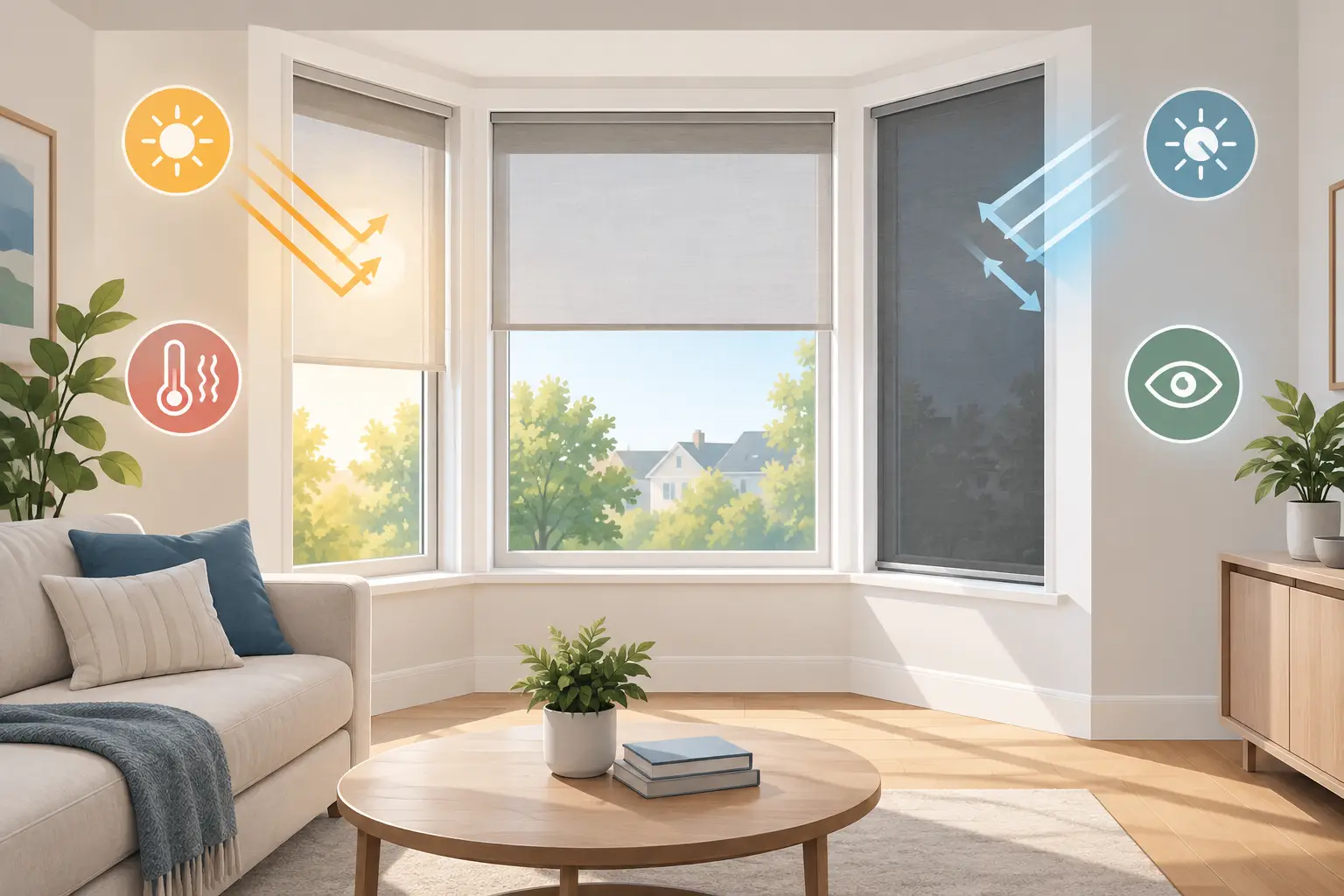
If your room feels exposed the moment the sun comes up, the best film for daytime privacy is usually a reflective solar window film rather than a dark decorative tint. That matters because privacy on flat glass is not just about making windows look darker from outside. It depends on light balance, glass position, room use, and whether you also want heat reduction, glare control, and UV protection.
For most homes, static caravans, conservatories and commercial premises, daytime privacy works best when the external face of the glass reflects more light than it lets through. From outside, that reflective finish limits visibility into the room during daylight hours. From inside, you keep your outward view and natural light, provided the film has been chosen properly for the orientation of the window and how the space is used.
What is the best film for daytime privacy?
In practical terms, the best film for daytime privacy is a professionally installed reflective film with a suitable balance of visible light transmission and solar rejection. Silver reflective films are the most common choice because they give a strong daytime mirror effect, reduce glare, and help control heat build-up. They are especially effective on south-facing and west-facing glazing where sunlight is strongest.
That said, there is no single film that suits every property. A bright conservatory with large panes of glass needs a different specification from a street-facing lounge, a ground-floor office, or a static caravan on an exposed coastal site. The right film is the one that delivers enough privacy without making the room too dim or changing the appearance of the glass more than you want.
If privacy is your main concern but the room already struggles for daylight, a lighter reflective film may be the better option. If glare and overheating are also ongoing problems, a more performance-led solar control film often makes more sense. The best result usually comes from treating privacy as one part of the overall glazing problem, not the only one.
How daytime privacy film actually works
A lot of people assume privacy film blocks the view in both directions all day and all night. It does not. Daytime privacy film relies on the brighter side of the glass being the side that is easier to see from. In daylight, the outside is usually brighter than the inside, so reflective film gives good privacy from external view.
Once it gets dark and interior lights are on, that effect changes. If your room becomes the brighter side, people outside may be able to see in unless curtains or blinds are used. That is not a fault with the film. It is simply how reflective privacy film works.
This is why proper advice matters. If a customer asks for full privacy at all times, the answer is not always a stronger reflective film. Sometimes the correct solution is a combination of film for daytime performance and blinds or curtains for evening use. Being clear about that from the start avoids disappointment.
Reflective film versus frosted film
Reflective solar film is usually the better option where you want daytime privacy and still want to see out. It keeps the glass functional and open, which is ideal for lounges, offices, reception areas, conservatories and caravan windows.
Frosted or opaque film works differently. It obscures vision both ways, regardless of lighting conditions, but it also removes the clear outward view. That makes it more suitable for bathrooms, meeting rooms, entrance doors or side panels where privacy matters more than visibility.
So if your question is specifically about the best film for daytime privacy while keeping daylight and outward vision, reflective film is normally the stronger choice.
Choosing the right level of reflectivity
More reflective does not always mean better. High-reflective films offer stronger daytime privacy, but they also create a more noticeable mirrored appearance from outside. Some property owners like that clean, commercial finish. Others want a subtler look, particularly on domestic homes.
There is also a balance to strike with internal light levels. A darker or more reflective film will usually cut more glare and heat, but it can also reduce the amount of visible light entering the room. In a bright conservatory or sun-facing office, that can be a real advantage. In a shaded room or on a north-facing elevation, too strong a film may make the space feel flatter than expected.
Commercial-grade film selection should take account of orientation, existing glass type, room function and the result you want from the installation. A one-size-fits-all approach is where many poor choices start.
Best film for daytime privacy in different property types
For homes, the most common request is privacy from neighbours or passing foot traffic without making the house feel closed in. A medium to high reflective solar film often works well on front bays, lounge windows and conservatories. It gives a cleaner external appearance, reduces harsh glare on televisions and screens, and helps keep rooms more comfortable in warm weather.
For static caravans, daytime privacy is often tied closely to solar control. Caravan interiors can heat up quickly, especially on exposed parks and coastal sites. A reflective film helps reduce internal temperature gain while also making the windows less transparent from outside during the day. That combination tends to be more useful than privacy alone.
For commercial premises, the priorities are often broader. Offices may need reduced glare on monitors, more comfortable working conditions, and a smarter external finish as well as privacy. Shops and street-facing businesses might want to soften visibility into certain areas without losing the open feel of the frontage. In these settings, the best film is usually one that balances presentation and performance rather than going as dark as possible.
When a lighter film is the better choice
A lighter film can still improve daytime privacy if the external light level is strong enough. It is often the better option when preserving natural light is just as important as reducing visibility from outside. This can suit living areas that already receive moderate daylight, or commercial spaces where a very mirrored finish would not be appropriate.
It is also a sensible choice where the main complaint is glare rather than direct overlooking. In those situations, a moderate solar film may solve more problems at once without overly changing the look of the glazing.
Common mistakes when choosing privacy film
The biggest mistake is choosing by appearance alone. A film may look right in a sample image but perform poorly on your specific glazing. Glass size, location, surrounding shade, and internal lighting all affect the final result.
Another common mistake is assuming darker film always equals better privacy. In reality, reflectivity matters more than simple darkness for daytime performance. A dark non-reflective film can reduce light without giving the same external privacy effect.
There is also the question of glass compatibility. Not every film is suitable for every type of flat glass. A professional installer should assess the glazing properly before recommending a product, particularly in conservatories, larger domestic units and commercial buildings. That protects both performance and glass safety.
Why professional installation matters
Even the best film for daytime privacy will disappoint if it is poorly fitted or incorrectly specified. Bubbles, edge lift, contamination and uneven finish are all signs of poor application, but the more serious issue is using the wrong film on the wrong glass.
Professional installation means the recommendation is based on actual use, not guesswork. It also means the finished result looks clean and consistent across the property. On street-facing windows especially, a neat installation makes a real difference to how the building presents from outside.
For property owners across North Wales, the Wirral, Chester and surrounding areas, a tailored approach is usually the best route. A home in Llandudno, a static caravan in Abersoch, and a commercial unit in Salford may all ask for privacy film, but they do not need the same specification.
Is reflective privacy film right for you?
If you want privacy during the day, want to keep your outward view, and would also benefit from less glare, lower heat gain and UV protection, reflective solar film is often the right solution. It is particularly effective on windows that receive strong daylight and where the room feels overexposed from outside.
If your main concern is 24-hour privacy, then reflective film on its own may not be enough. In that case, it is better to be honest about the limits of daytime-only performance and consider whether frosted film, blinds, or a combined solution would be more practical.
The best results come from matching the film to the window, the property and the problem you are trying to solve. At Tinting For Glass, that is how we help customers choose the right commercial-grade window film for homes, static caravans and business premises. If you are unsure what will work on your glazing, the sensible next step is to ask for advice based on the actual windows rather than guessing from product names alone.
A good privacy film should make the room easier to use, not just harder to see into.