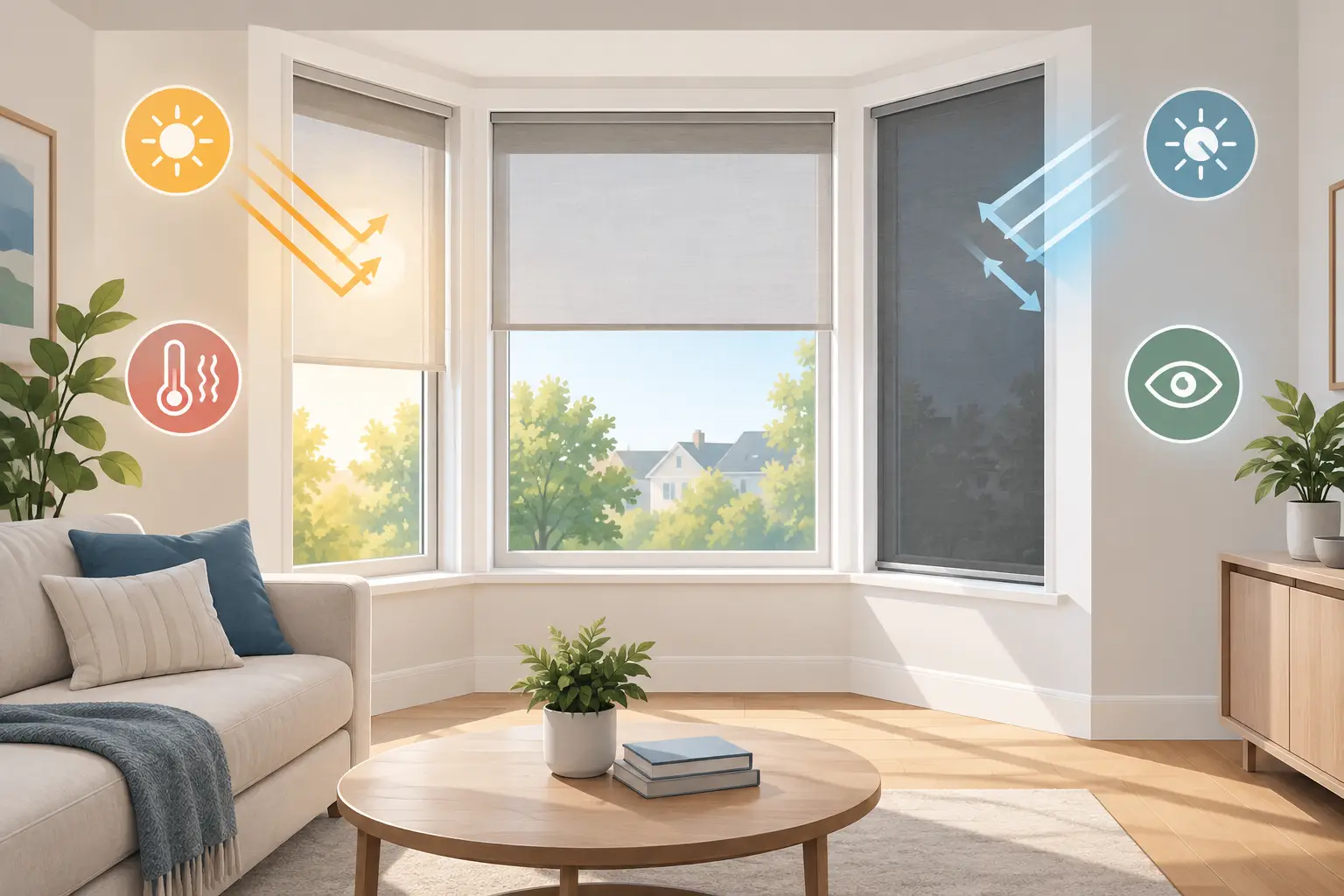
When the sun is up and your rooms are fully lit, privacy problems become obvious fast. Street-facing lounges, home offices, shop fronts, conservatories and static caravans can all feel too exposed. If you are looking at how to improve daytime window privacy, the aim is usually not to block daylight altogether. It is to stop people seeing in clearly while keeping the space bright, usable and comfortable.
That balance matters. Heavy curtains solve one problem but create another by darkening the room and cutting off your view. Blinds can help, but if they stay half closed most of the day, you lose much of the natural light that makes the space pleasant in the first place. For most properties, the best answer is not simply more coverage. It is choosing the right type of privacy control for how the glass is used.
How to improve daytime window privacy without losing light
The first thing to understand is that daytime privacy works differently depending on light levels. In simple terms, privacy film and reflective finishes are most effective when it is brighter outside than inside. That is why they work well through the day on homes, offices, shops and caravans, but they do not provide the same one-way effect after dark when interior lights are on.
This is where many people get caught out. They assume any tinted or mirrored finish will give round-the-clock privacy. In reality, daytime privacy films are designed to reduce inward visibility in daylight conditions while still allowing a good level of natural light into the room. If your priority is daytime privacy, that is often ideal. If you also want evening privacy, you may need to combine film with blinds or curtains.
For many properties, professionally installed window film gives the best overall result because it deals with more than visibility alone. A good commercial-grade film can also reduce glare, limit UV exposure and help moderate solar heat gain. So instead of adding a product that only hides the room, you improve comfort and protect furnishings at the same time.
The main options for daytime privacy
Reflective window film is usually the most effective option where people want strong daytime privacy and a clear outward view. From the outside, the glass takes on a reflective appearance in daylight, making it far harder to see through. From the inside, occupants can still look out comfortably. This is popular for front-facing domestic windows, conservatories, offices and static caravans where exposure to nearby footpaths, roads or neighbouring units is a regular issue.
The trade-off is appearance. Reflective film changes the external look of the glass, sometimes quite noticeably. For many commercial premises and modern homes that is a positive, as it gives a cleaner and more professional finish. On some properties, though, a softer or less mirrored look may be preferable.
Tinted privacy films can also help, particularly where glare reduction and solar control matter alongside privacy. These films may not create the same pronounced daytime mirror effect as highly reflective products, but they can reduce visibility enough to make interiors feel less exposed. They are often chosen where the customer wants a more subtle finish.
Frosted and obscure films are another route, but they suit different spaces. These films block or blur visibility more consistently, regardless of light conditions, so they are useful for bathrooms, meeting rooms, entrance doors and internal glazed partitions. The drawback is obvious – you lose clear outward vision. For a room where the window is part of the view, frosted film is usually the wrong choice. For overlooked side panels or lower panes, it can be ideal.
Blinds and curtains still have a place, particularly for evening use, but they are not always the best daytime solution if your goal is to keep the room bright. They work by covering the glass, whereas privacy film works through the glass. That difference is why film often feels less intrusive in everyday use.
Choosing the right solution for different property types
In homes, the biggest concern is usually being overlooked from the street or from neighbouring houses. Front bays, lounge windows and home office glass are common problem areas. Here, reflective or privacy-focused solar film often works well because it reduces visibility while also cutting glare on screens and helping protect flooring, furniture and soft furnishings from UV fading.
Conservatories are a slightly different case. Privacy matters, but so does heat. If the space becomes too hot in sunny weather, a film that only darkens the glass without offering proper solar control may not go far enough. A performance-led film that combines daytime privacy with heat and glare reduction is usually the better long-term choice.
For static caravans, daytime privacy is often a practical necessity rather than a preference. Sites can be busy, pitches can be close together, and large windows quickly make the interior feel exposed. Caravan owners also tend to deal with strong sunlight and heat build-up during warmer months. In that setting, privacy film makes sense because it helps create a cooler, more comfortable interior while keeping the living space bright.
Commercial premises have their own priorities. Offices may need privacy from passing pedestrians or nearby units, but they also need to maintain a professional appearance and reduce screen glare. Retail premises may want to soften inward visibility without making the frontage feel closed off. For these settings, commercial-grade film is often the most efficient option because it addresses privacy, comfort and presentation in one installation.
What affects how well daytime privacy works?
If you are deciding how to improve daytime window privacy, it helps to know what influences results. Window orientation matters. South and west-facing elevations often receive stronger daylight, which tends to improve the daytime privacy effect of reflective films. Properties shaded by trees, overhangs or other buildings may still benefit, but the appearance and performance can differ.
Interior lighting also matters. If a room is very brightly lit inside, particularly on dull days, the contrast between inside and outside is reduced. That can make any one-way privacy effect less pronounced. This does not mean the film has failed. It simply means privacy films rely partly on light balance to do their job.
Glass type and room use play a part as well. A shopfront, a caravan window and a domestic lounge do not all need the same finish. One property owner may prioritise the strongest possible privacy. Another may care more about maintaining the clearest outward view or preserving the external appearance of the building. The right choice depends on which compromise matters least.
Why professional installation usually pays off
Window film can look simple, but performance depends on selecting the right product and fitting it correctly. Poorly chosen film can leave a room darker than expected, fail to provide the desired privacy level, or create an external appearance that does not suit the property. Poor fitting can lead to bubbling, lifting edges and a finish that never looks right.
Professional installation starts with the use case, not just the shade. That means looking at whether the priority is privacy, glare reduction, UV control, solar heat rejection, appearance or a combination of all four. It also means considering the size and orientation of the windows, the building type and how the room is used throughout the day.
For residential properties, caravans and commercial buildings, commercial-grade film gives a more reliable result than off-the-shelf products aimed at quick DIY use. The finish is better, the performance is more consistent and the solution can be tailored properly. That is especially important for larger glazed areas such as conservatories, offices and shopfronts, where the wrong film can be an expensive mistake.
A practical way to decide
Start by asking what is actually bothering you. If the room feels exposed but you still want the view, reflective privacy film is often the strongest option. If glare and heat are just as frustrating as the lack of privacy, a solar control film with privacy benefits will usually be the better fit. If the glass only needs to stop direct visibility in a specific area, such as a bathroom or lower pane, obscure film may be all you need.
Then think about when the privacy matters most. If your concern is daytime use, window film can solve the problem without making the room feel shut in. If you need privacy day and night, film may still be the right base solution, but it should be paired with blinds or curtains for after-dark coverage.
For property owners across North Wales, the Wirral, Chester and surrounding areas, the most effective results usually come from choosing a film designed for the building and the problem, not just the darkest shade available. Daytime privacy should make the space easier to use, not dimmer or more awkward.
A well-chosen window film does exactly that – it gives you privacy when you need it, keeps the room brighter than curtains ever will, and adds practical benefits you notice every day.