A static caravan with large front windows can feel bright and open one minute, then far too exposed the next. That is why a static caravan privacy film installation example is useful – it shows what actually changes once the right film is selected and fitted properly, rather than relying on broad claims about tinting.
For many caravan owners, the issue is not simply privacy on its own. It is glare across the seating area, heat building up through the glass on warmer days, and UV slowly fading soft furnishings, flooring and blinds. In coastal and holiday park settings especially, those problems tend to arrive together. A professional window film installation deals with all three, but the result depends on the glass layout, the direction of the caravan and the level of privacy required.
A realistic static caravan privacy film installation example
Take a typical static caravan with full-height front elevation glazing and additional side windows facing neighbouring plots or footpaths. The owner wants to keep the caravan bright inside, reduce the feeling of being overlooked during the day, and cut glare on the television without closing curtains every afternoon.
In that situation, a reflective privacy film is often the right starting point. It gives strong daytime privacy from outside looking in, while still allowing occupants to look out. It also helps reduce solar gain and blocks a high level of UV, which is particularly useful in static caravans where fabrics and laminated surfaces are exposed to repeated summer sun.
The important detail is that privacy film works best in daylight conditions where the exterior side is brighter than the interior. At night, if lights are on inside and it is dark outside, the privacy effect reduces. That is not a fault in the film – it is simply how this category of window film performs. For caravan owners, that usually means reflective privacy film is ideal for daytime use, while curtains or blinds still play a role after dark.
What gets assessed before installation
A proper installation starts with the glass, not the brochure. Static caravans vary more than many people expect. Some have modern double glazed units with large uninterrupted panes. Others have narrower sections, curved details or older sealed units that need a more careful film selection.
The first consideration is the purpose of the room. Front lounge windows usually need the strongest balance of privacy, glare control and retained natural light. Bedroom or bathroom glazing may call for a different finish altogether, depending on whether the priority is daytime screening, a softer appearance or more consistent obscurity.
Orientation matters as well. A south-facing or west-facing front elevation will typically deal with more solar load than a shaded side window. In practice, that means the same caravan might benefit from one film choice across the main living area and a slightly different approach elsewhere. The best result is rarely about making every window identical. It is about making each part of the caravan more usable.
Choosing the right film for a static caravan
For most privacy-led caravan installations, there are three broad approaches. A mirrored or reflective solar control film is the most common where daytime privacy and heat reduction are both needed. A neutral solar film is useful when the owner wants glare and UV reduction with a softer external appearance. A frosted or obscure film tends to suit windows where visibility out is not essential, such as certain side panels or bathroom areas.
Reflective film is often the strongest fit for front windows in holiday caravans because it addresses several issues in one product. It reduces harsh brightness, improves daytime privacy and helps keep the interior more comfortable in sun-exposed positions. The trade-off is appearance and lighting balance. Some owners like the cleaner, reflective look from outside. Others prefer a less mirrored finish, even if it gives away a little privacy performance.
This is where a tailored recommendation matters. Commercial-grade film is not a one-size-fits-all product. The right option depends on how the caravan is used, how much direct sun the glazing receives and whether privacy is needed mainly from passing foot traffic, nearby caravans or open park views.
How the installation is carried out
Once the film has been selected, the fitting itself needs to be precise. Static caravan windows are more compact than many domestic installations, but that does not make them simpler. Cleanliness, edge finishing and handling of seals all matter if the film is to perform and last well.
The glass is first cleaned thoroughly to remove dust, residue, grease and any contamination that would sit beneath the film. This stage is more important than most people realise. Small particles can become visible once the film is on the glass, especially in strong daylight.
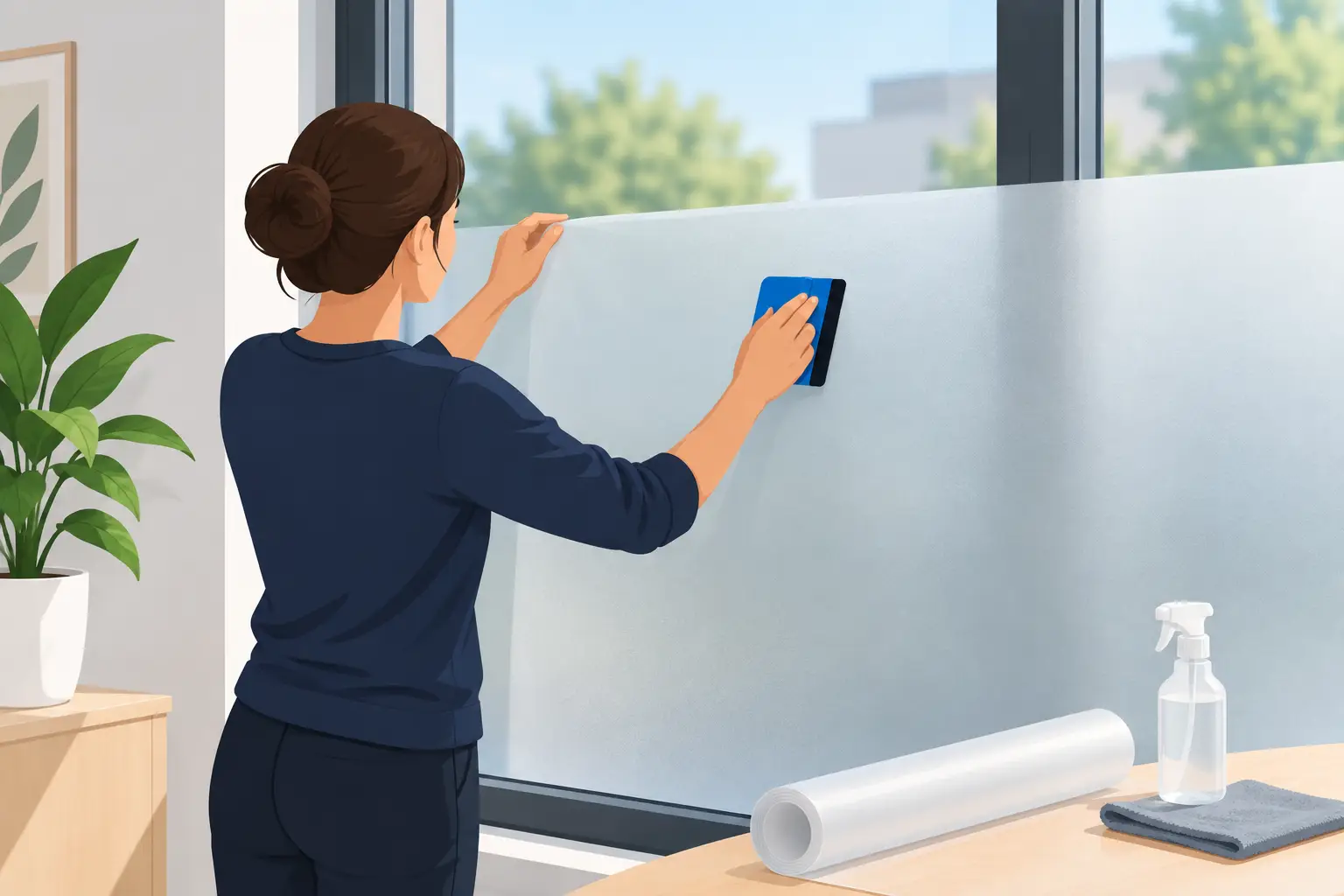
After preparation, the film is measured and cut to suit each pane. It is then applied to the internal face of the glazing using a professional fitting solution, positioned accurately and carefully squeegeed to remove excess moisture and air. The goal is a clean, even finish with neat edges and no lifting.
In a caravan setting, attention to detail is critical because the windows are viewed at close range. A professional installation should look tidy from both inside and outside, with no rough trimming or obvious defects. Drying time varies depending on temperature and conditions, and the film may show a slight hazy or mottled appearance initially while residual moisture cures out. That is normal during the settling period.
What changes after fitting
The most immediate change is usually visual comfort. The living area feels less harsh in bright sun, and there is less need to half-close blinds just to make the room usable. Television viewing improves because reflected light and direct glare are reduced. On warm days, the interior can also feel less oppressive, particularly in front lounges with large glazed areas.
The second change is privacy. During the day, neighbouring pitches, walkways and open approaches feel less intrusive because the glass becomes harder to see through from outside. Owners still keep their view out, which is one of the main reasons film is chosen instead of permanently covering the windows.
Then there is the longer-term benefit that is easy to overlook. UV reduction helps protect upholstery, cushions, wood-effect finishes and flooring from premature fading. In a static caravan used regularly through spring and summer, that can make a noticeable difference over time.
Where this works best – and where it depends
A static caravan privacy film installation example is helpful because it shows the strengths clearly, but it should also be honest about limits. Reflective privacy film is excellent for daytime privacy. It is not a total privacy solution in darkness with interior lights on. If full all-hours screening is needed, blinds or curtains remain part of the setup.
Likewise, heat reduction is real, but the exact result depends on glass area, orientation and existing ventilation. Film can reduce solar gain and make a space more comfortable, but it does not replace shade, airflow or sensible temperature management during very hot spells.
There is also the question of appearance. Some caravan owners want the strongest possible reflective finish because performance comes first. Others want a subtler look that blends in more naturally across a holiday park. Neither choice is wrong. It is simply a matter of selecting the right balance between privacy, solar control and external finish.
Why professional fitting matters for caravan glass
With flat glass applications, product choice and installation standard go together. A good film fitted badly will not deliver the result it should. Poor trimming, contamination under the film or the wrong specification for the glass can lead to disappointment that was avoidable from the start.
Professional installation gives caravan owners a clearer route to the right outcome. The glass can be assessed properly, the film matched to the use-case, and the finished result applied cleanly using commercial-grade materials. That is particularly important for static caravans in exposed coastal and holiday locations across North Wales, Chester and the Wirral, where glare, sun exposure and close neighbouring units are common concerns.
For owners who want the caravan to stay bright but feel more private, cooler and easier to use, window film is one of the most practical upgrades available. The best results come when the installation is treated as a performance improvement, not just a cosmetic add-on. If you are weighing up options for your own caravan, the most useful next step is to look at the windows you use most and decide what matters most there – privacy, glare reduction, heat control, or a measured combination of all three.