If you have ever switched the lights on after dark and caught your own room reflected in the glass, you have already met the real answer to the question does window film work at night. Sometimes it does, but not in the way many people expect. That matters if you are choosing film for a home, office, shopfront, conservatory or static caravan and privacy is high on the list.
A lot of confusion comes from daytime reflective film being sold as if it provides round-the-clock privacy. It does not. Reflective window film is highly effective in daylight because it works with the balance of light. When it is brighter outside than inside, people outdoors tend to see the reflective exterior surface, while you keep your outward view. Once that balance flips at night, the effect changes.
Does window film work at night for privacy?
The short answer is not usually, at least not if you mean standard reflective privacy film. At night, interior lights make the inside of the property brighter than the outside. That means anyone standing outside can often see in, particularly if the room is well lit and the external area is dark.
This is not a fault in the film. It is simply how light behaves through glass. Reflective and solar control films are designed to reduce heat, glare and UV, and they can also provide excellent daytime privacy. But they are not the same as blinds, curtains or specialist obscuring films intended for 24-hour screening.
For homeowners, this catches people out most often in front-facing rooms, conservatories and large patio doors. For static caravan owners, it can be an issue on park plots where windows face walkways or neighbouring units. For commercial properties, receptions, meeting rooms and shopfront glazing are common problem areas.
Why reflective film behaves differently after dark
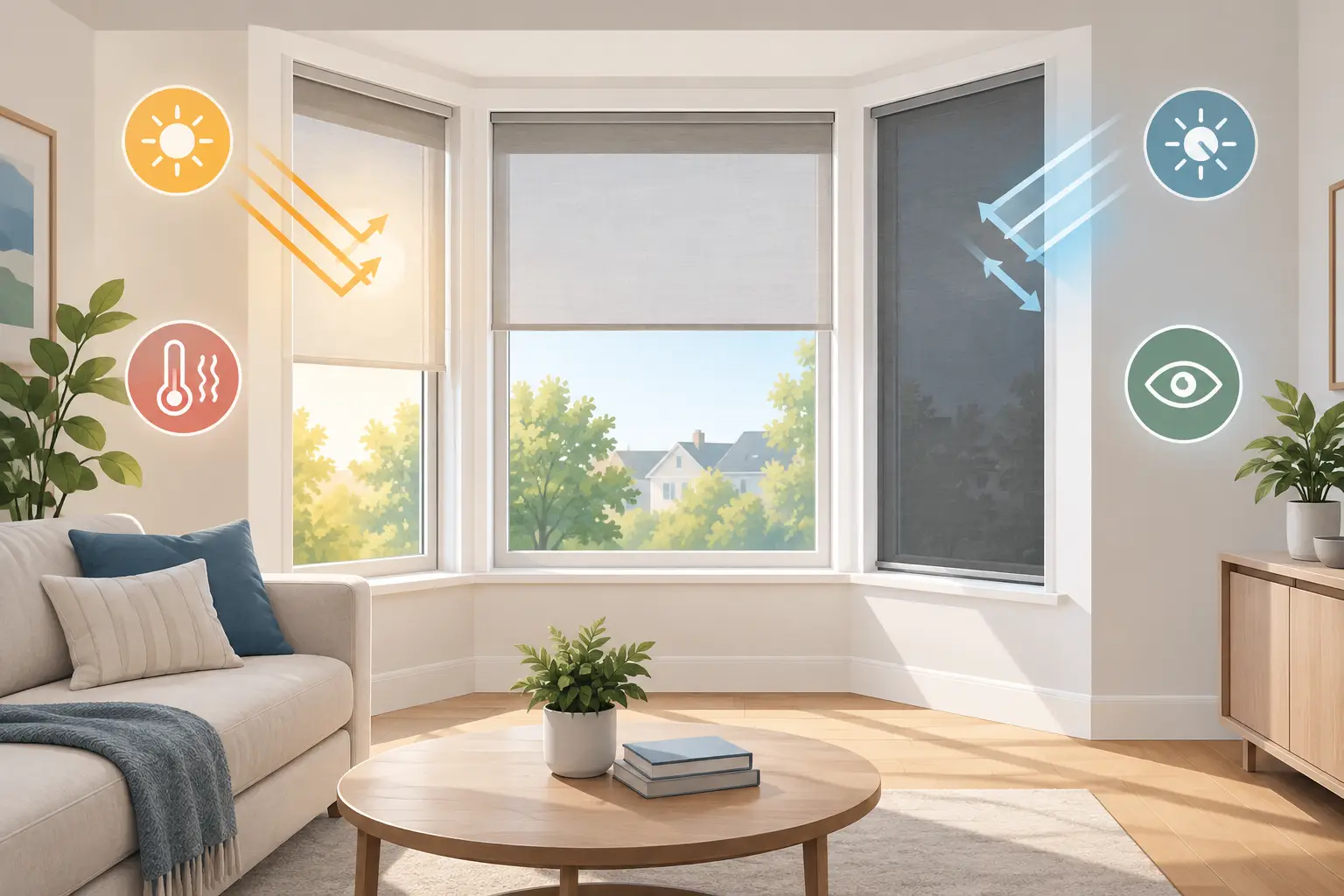
Window film does not create privacy on its own. It works with available light. In the day, the brighter exterior light helps the outside face of reflective film act almost like a mirror. At night, with lamps and ceiling lights on indoors, that mirror effect weakens from the outside perspective.
In practical terms, if you stand inside during the day, you can often see out clearly. If someone stands outside, they see much less of the interior. After dark, if the same room is brightly lit, the outside viewer may see silhouettes, movement, furnishings or even the full room layout depending on the film type and the lighting conditions.
That is why a professional recommendation should always start with the actual use of the glass. If the main goal is daytime heat and glare reduction with a privacy benefit, reflective film can be the right choice. If the goal is night-time screening, a different product or a combined solution will usually be better.
What window film still does well at night
Even when standard privacy film does not fully prevent inward views after dark, it can still deliver strong performance benefits. This is where many property owners get real value.
Solar control film continues to help reduce solar gain from daytime sun exposure, making rooms more comfortable and easier to use. Anti-glare performance remains useful in offices, lounges and workspaces where screens are affected by bright daylight. UV-filtering performance continues to protect furnishings, flooring, fabrics and display stock from fading. Certain films also improve the appearance of glazing from the outside, giving buildings a cleaner, more professional finish.
So if you are asking whether window film is still worth it, the answer can easily be yes. You just need the right expectation. Night-time privacy is only one part of the picture.
The best options if you need privacy after dark
If privacy at night is your main concern, there are better options than relying on reflective solar film alone. Frosted and obscured films are often the most dependable for 24-hour privacy because they interrupt visibility rather than depending on reflected light. These work particularly well for bathrooms, entrance doors, sidelights, office partitions and street-facing windows where natural light is still wanted.
There is a trade-off, though. Frosted and obscured films reduce clear views through the glass. That makes them excellent for screening, but less suitable if you want to look out onto a garden, coastline, park or commercial frontage.
For some properties, the best answer is a mixed approach. You might use reflective solar film on main living areas or office windows where daytime glare and heat are the issue, then use blinds or curtains at night. In other rooms, obscured film may be the better permanent solution. This is why tailored advice matters more than choosing a film based on one claimed benefit.
Homes and conservatories
In domestic settings, reflective film is often chosen for south-facing rooms, conservatories and patio doors because it cuts glare and helps keep interiors cooler without heavily darkening the space. It can also provide welcome daytime privacy from neighbouring houses or passing foot traffic.
At night, however, those same windows may still need blinds or curtains if occupants do not want to be visible. If the room is used mainly in daylight hours, that may be perfectly acceptable. If it is a lounge used every evening, a combined privacy plan makes more sense.
Static caravans
Static caravan owners often want two things at once – privacy on site and a more comfortable interior in warm weather. Window film can be very effective here, especially for reducing glare, helping with solar heat, and cutting UV exposure on fabrics and finishes.
But caravan windows can be close to neighbouring units or shared walkways, so night-time privacy becomes more important. In that setting, a professional installer will usually talk through the trade-off between reflective film, obscured options and existing blinds, rather than promising one film does everything.
Commercial premises
For offices, shops and other business premises, privacy needs vary. Daytime reflective film can be ideal for reducing glare on screens, improving comfort and giving a smarter external appearance. It may also help create a more private feel from outside during business hours.
At night, especially in brightly lit offices or retail spaces, visibility into the premises increases. If there are security or confidentiality concerns, specialist privacy or security films, combined with internal screening where needed, are often the more reliable route.
Does darker film work better at night?
Not necessarily. Darker film can reduce visibility to a degree and may make it harder to see detail in some conditions, but it does not override the basic light-balance problem. If the inside is brighter than the outside, dark film alone will not guarantee privacy.
This is another area where product names can be misleading. A darker appearance is not the same as true night privacy. It may improve comfort and reduce brightness, but that should not be confused with complete screening.
Choosing the right film for the real job
The most reliable way to choose window film is to start with the main problem you are trying to solve. If it is overheating, glare or UV damage, solar control film may be exactly right. If it is daytime privacy, reflective film can work very well. If it is permanent privacy both day and night, obscured or frosted options are usually more suitable.
That is why flat glass applications need a practical assessment rather than a guess. Glass size, room use, lighting, window orientation and the distance to neighbours all affect the result. A front room in Chester has different privacy needs from a coastal static caravan in Abersoch or a commercial unit in Salford.
At Tinting For Glass, that is how the recommendation process should work – around the outcome you need from the glass, not a one-size-fits-all product claim. The right installation can make a noticeable difference to comfort, glare, UV protection and privacy, but only if the film matches the job.
If you are weighing up film for your property, the helpful question is not just does window film work at night, but what exactly do you need it to do once the lights come on. That is usually where the right solution becomes clear.