If one room is always too hot by mid-afternoon, your conservatory is hard to use in summer, or office screens are washed out by glare, the question is usually not whether film will help. It is how to choose solar control window film that actually suits the way the space is used. The right film can reduce heat, cut glare, improve daytime privacy and protect interiors from UV damage, but the best option depends on the glass, the building and the result you want most.
A lot of property owners start by asking for the darkest film available. That is understandable, but darkness alone does not tell you how well a film will perform. Some lighter films are excellent at reducing solar gain, while some darker finishes are chosen more for appearance or privacy. What matters is matching the film specification to the problem you are trying to solve.
Start with the main problem you need to fix
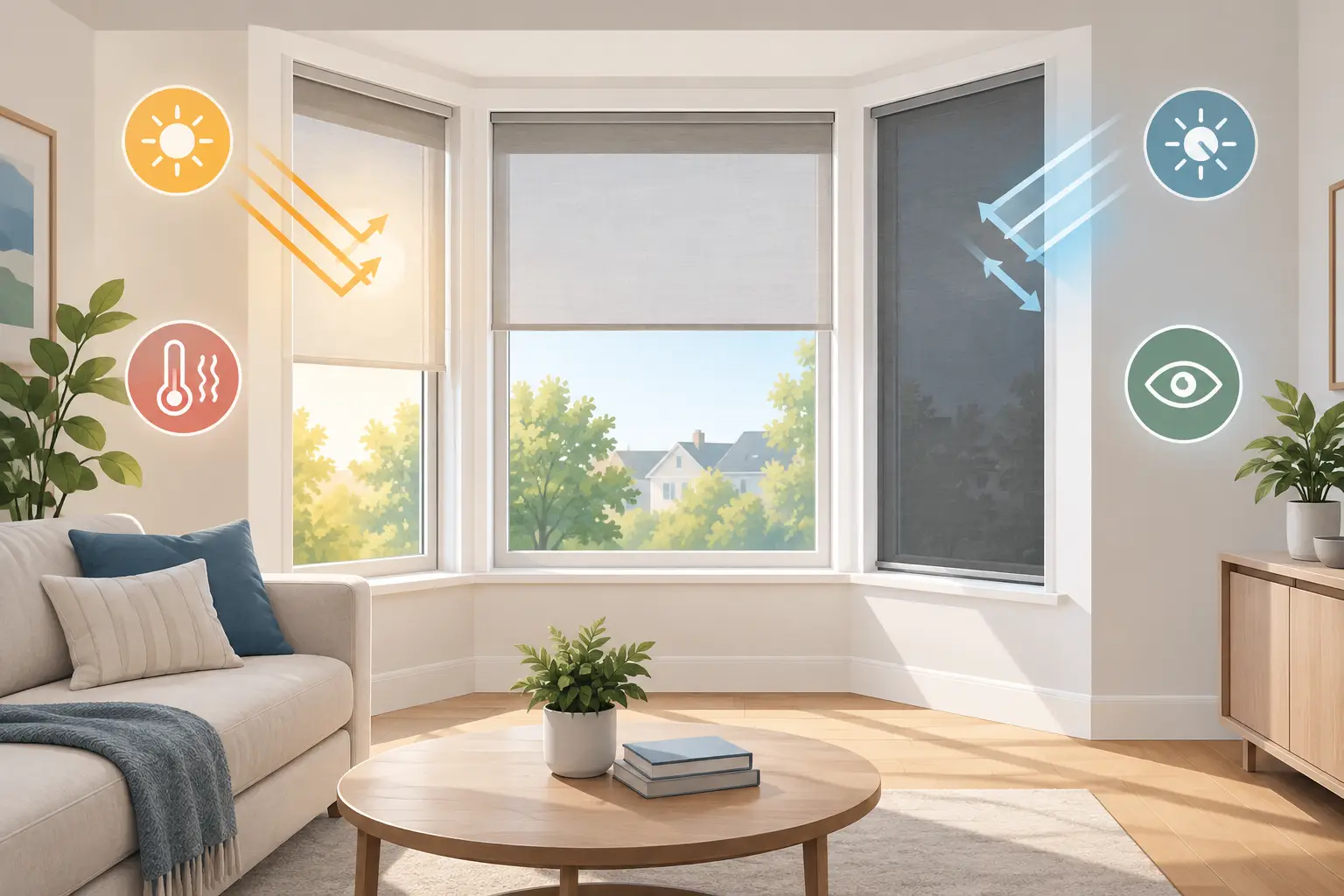
The simplest way to choose the right film is to be clear about the main issue in the room. In most cases, it will be one of four things: excess heat, glare, daytime privacy, or UV exposure. Many films improve all four to some degree, but one benefit is usually stronger than the others.
If the space becomes uncomfortably warm in direct sun, solar heat rejection should be the priority. This is common in south-facing rooms, conservatories, shops with large glazed fronts, offices with broad window elevations, and static caravans that heat up quickly in summer. A film designed for strong solar control will help stabilise the temperature and make the room more usable.
If the main complaint is glare, especially on televisions, laptops, till systems or office monitors, a film with stronger anti-glare performance may be the better fit. In these cases, the aim is not simply to darken the glass but to reduce the intensity of light without making the room feel gloomy.
For properties overlooked from outside, privacy often comes first. Reflective solar films are a popular option here because they can provide daytime privacy while still allowing good natural light in. That said, privacy film is not the same thing as a blackout solution. During the evening, when lights are on inside and it is darker outside, the effect changes. That is one of the most important trade-offs to understand before choosing a finish.
How to choose solar control window film by property type
Different buildings place different demands on window film. A home, a static caravan and a commercial property may all need solar control, but not in exactly the same way.
Homes and conservatories
In residential settings, comfort is usually the deciding factor. Bedrooms, lounges, kitchen extensions and conservatories can all suffer from hotspots, glare and fading furnishings. Homeowners generally want to keep the room bright while taking the edge off the sun. That often means choosing a film that balances heat reduction with a natural internal appearance.
Conservatories are slightly different because they can experience sustained solar build-up across multiple glazed panels. In that setting, stronger solar rejection is often needed, and the glass specification must be checked carefully before installation.
Static caravans
Static caravans tend to benefit from solar control film very quickly because internal spaces are compact and heat builds up fast. Daytime privacy is also a common requirement on busy parks or exposed coastal sites. Here, a reflective finish is often attractive, but it still needs to be practical. Too dark, and the interior can feel closed in. Too light, and the privacy benefit may be weaker than expected.
Offices, shops and other commercial premises
Commercial properties usually need performance first. Glare on screens, uncomfortable working conditions near windows and excessive sun through frontages can all affect productivity and customer comfort. Commercial grade film is often selected for measurable outcomes such as heat reduction, UV protection and improved working conditions rather than purely for appearance.
There is also the professional presentation of the building to think about. A uniform reflective or neutral finish can improve the external look of glazed elevations, but appearance should follow function, not override it.
Understand the film finish before you decide
The finish of the film affects both performance and appearance. This is where many decisions are won or lost.
Reflective films are often chosen for strong solar performance and daytime privacy. From outside, they create a mirrored effect in daylight, which can help limit views in. They are especially useful for homes overlooked at the front, static caravans in busy locations and commercial premises with large windows. The trade-off is that the external look is more noticeable, and privacy reduces after dark when interior lights are on.
Neutral or lightly tinted films are a good option when you want a less obvious finish. They can still reduce heat and glare effectively, but they usually provide less daytime privacy than a stronger reflective film. These are often preferred where maintaining a cleaner, more natural glass appearance matters.
Darker films can help with glare and appearance, but darker does not always mean better solar control. The performance figures matter more than the shade. That is why choosing by look alone can lead to disappointment.
Check the glass type before selecting a film
Not every film is suitable for every pane of glass. This is one reason professional advice matters.
Flat glass installations need to take account of the existing glazing specification, including whether the unit is toughened, laminated, double glazed, coated or older glass. The wrong combination can increase thermal stress and create problems. A proper assessment looks at the window construction, its orientation and how much direct sun it receives.
This is especially important on conservatories, large glazed commercial elevations and any property with modern sealed units. The best film is not simply the highest-performing one on paper. It has to be compatible with the glass already in place.
Look beyond privacy and ask about performance figures
When comparing options, ask what the film actually does. A professional installer should be able to explain the likely effect on solar heat, glare and UV in practical terms.
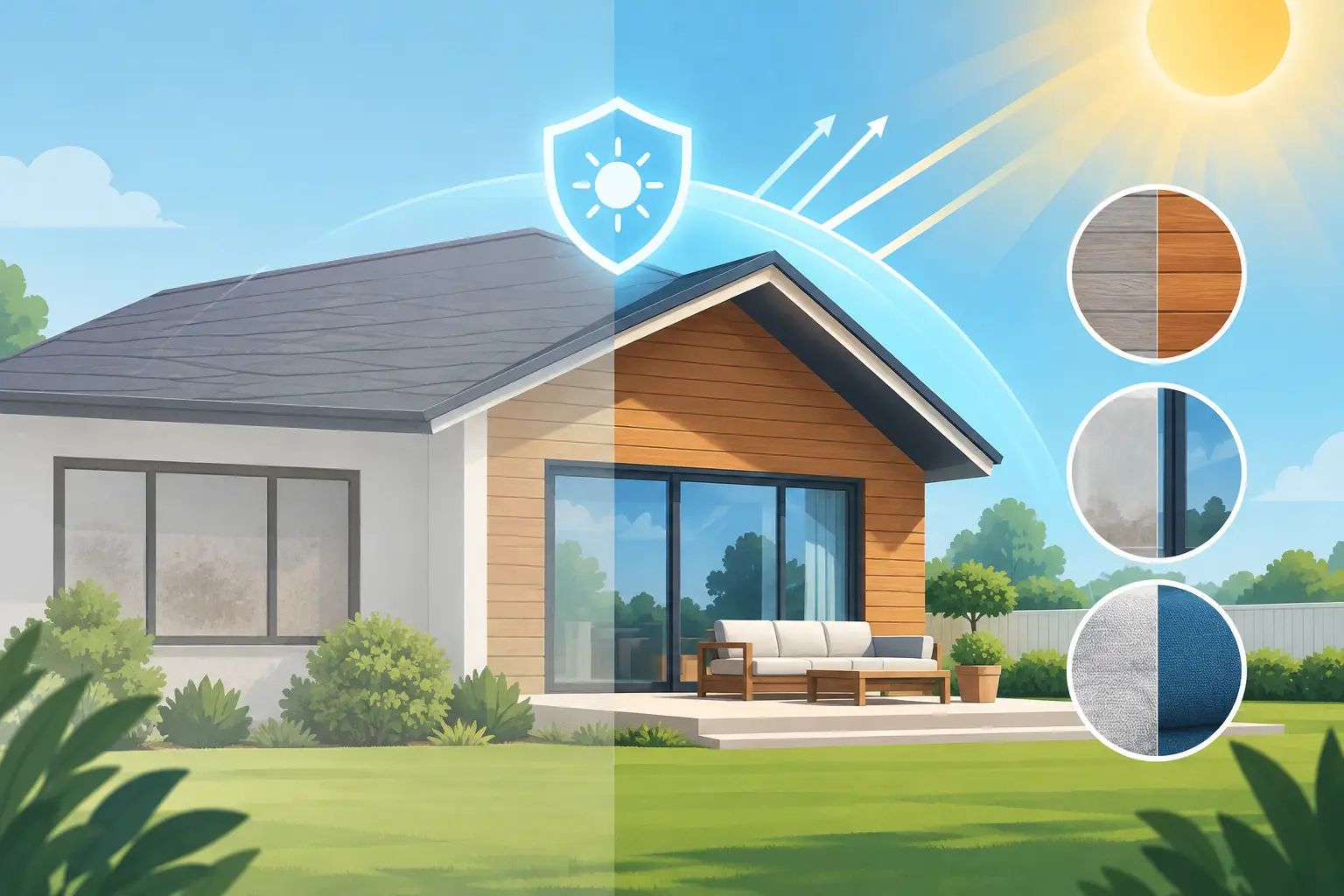
UV reduction is valuable in almost every setting because it helps protect furnishings, flooring, displays and interior finishes from fading. Glare reduction matters most in rooms where people work, relax or watch screens. Solar energy rejection becomes the key measure when the room is consistently overheating.
It also helps to ask how the room is used throughout the day. A west-facing office may need strong afternoon glare control. A living room may need a better balance of daylight and comfort. A static caravan may need privacy and heat control together. The right choice often comes down to which compromise you are happiest with.
Think about daylight, not just heat reduction
One of the biggest concerns customers have is making a room too dark. That is a sensible concern, because a film that performs brilliantly on heat but leaves the space dull may not feel like an improvement.
This is where tailored selection matters. In some rooms, a stronger film is absolutely worthwhile because the heat problem is severe. In others, a lighter-performing film gives a better overall result because it preserves the brightness of the space. There is no single best film for every property.
For that reason, the best approach is usually not to ask for the maximum tint. It is to ask for the best balance of heat control, glare reduction, privacy and natural light for your specific windows.
Installation quality matters as much as film choice
Even high-quality film can disappoint if it is poorly fitted. Clean preparation, accurate cutting and correct edge finishing all affect appearance and longevity. On larger commercial windows or caravan glazing, neat installation is particularly important because defects are easier to notice in sunlight.
Professional installation also gives you a clearer route to the right specification in the first place. A service-led supplier can assess the property, identify the main issue and recommend a commercial grade solution that fits the building rather than relying on guesswork.
If you are choosing for a home, static caravan, conservatory or commercial premises in North Wales, Chester, the Wirral, Manchester, Salford, Worsley or Runcorn, a local specialist such as Tinting For Glass can help match the film to the actual use of the space and the type of glazing involved.
How to choose solar control window film without overcomplicating it
In practice, the decision becomes much easier when you narrow it down to a few clear questions. Is heat the real problem, or is it glare? Do you need daytime privacy, or is preserving the appearance of the glass more important? How much natural light do you want to keep? And is the existing glass suitable for the film you are considering?
Answer those properly, and you are much more likely to end up with a film that improves the room in a noticeable, lasting way. Good solar control window film should make the space easier to use, not just make the glass look different.
If you are unsure, start with the room that causes the most frustration. The right film usually proves its value there first.