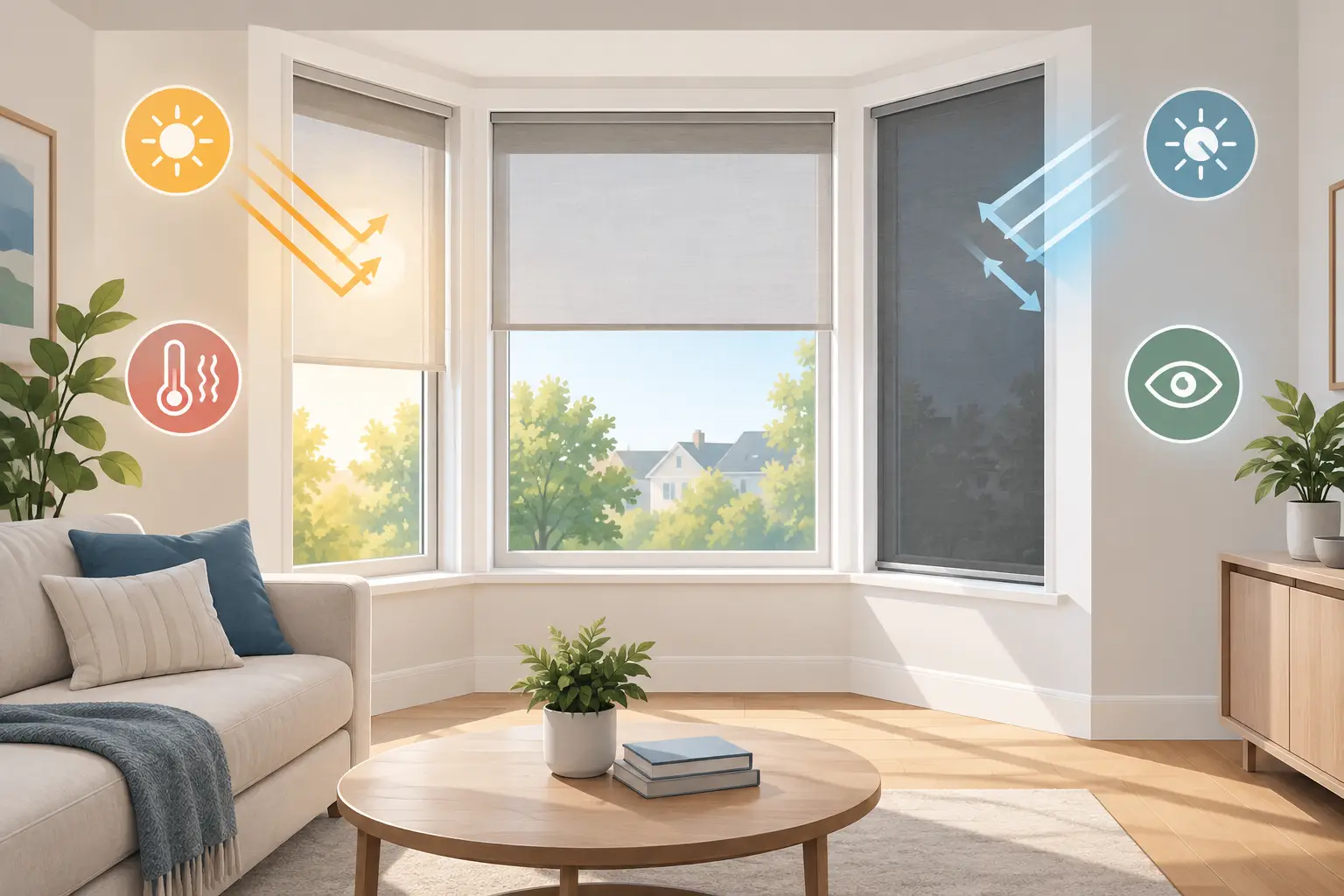
A bright room should not make a laptop, television or point-of-sale display difficult to use. So, does window film reduce screen reflections? In many properties, yes. The right professionally installed solar control film can significantly reduce the direct sunlight that causes glare on screens, helping rooms remain brighter, more comfortable and more usable throughout the day.
The key is choosing a film for the actual problem. Screen reflections can be caused by direct sun, a bright patch of sky, internal lighting or light bouncing from nearby buildings, water and pale surfaces. A commercial-grade window film can control the sunlight entering through the glass, but the best result depends on window orientation, screen position and the type of film selected.
How Window Film Reduces Screen Reflections
A screen becomes difficult to view when a strong light source is brighter than the image on the display. Sunlight passing through a large window can create a sharp reflection on a television or monitor, while bright daylight can make text look washed out even where there is no obvious reflection.
Solar control window film reduces this effect by filtering a proportion of solar energy and visible light before it enters the room. Depending on the film specification, it can reduce glare while still allowing useful natural daylight into the space. This gives the screen a better contrast against its surroundings and reduces the need to close curtains or blinds during working hours.
Reflective and tinted films are often particularly effective on windows exposed to strong sun. They reduce the intensity of incoming light and can cut the glare created by low morning or evening sun. Neutral and lighter films may be better where maintaining a brighter appearance is the priority, while still providing a worthwhile improvement in viewing comfort.
It is not simply about making glass darker. A professionally specified film balances visible light transmission, solar rejection, internal appearance and the level of privacy required. The aim is a room that remains practical, not one that feels unnecessarily dim.
Does Window Film Reduce Screen Reflections in Every Room?
It depends on where the glare originates. If sunlight or bright daylight is coming through the window behind or beside a screen, window film is often an effective long-term solution. It is especially useful in open-plan rooms, conservatories, offices with extensive glazing, reception areas and shop premises where blinds would block the view or need constant adjustment.
If the reflection is caused by an internal ceiling light directly above the screen, film will not solve that issue. In that case, repositioning the light fitting, changing the bulb angle or moving the screen may be more effective. Likewise, a glossy screen facing a white wall can reflect indoor light even on an overcast day.
For most properties, the problem is mixed. There may be direct sun at certain times, bright skies for much of the day and internal lighting after dark. Window film addresses the daylight part of the problem, which is often the largest and most persistent source of glare.
The position of the screen still matters
Film reduces the amount of light entering the room, but it cannot change the laws of reflection. A monitor placed directly opposite a window may still show a reflected image of that window, particularly on a glossy display. Moving the screen slightly off-axis, tilting it, or positioning it at right angles to the glazing can make a substantial difference alongside solar film.
This is why a site assessment is valuable. Looking at the room in use, rather than selecting a film from a sample alone, helps identify whether the priority is glare control, heat reduction, privacy, UV protection or a combination of all four.
The Benefits Go Beyond a Clearer Screen
Anti-glare performance is usually part of a wider improvement in room comfort. The same solar film that reduces distracting light can also help limit heat build-up from the sun. This can be particularly noticeable in south-facing offices, home working spaces, conservatories and static caravans during warmer weather.
Most quality solar window films also reject a high proportion of harmful UV radiation. UV exposure contributes to fading in furnishings, flooring, displays, stock and interior finishes. While window film cannot prevent every cause of fading, it adds a useful layer of protection without requiring daylight to be shut out.
For commercial premises, reduced glare can support more consistent working conditions. Staff can read monitors more easily, customers can see digital displays and reception teams are less likely to be working behind closed blinds. A clearer outward view can also make a workplace feel more open and professional.
At home, the benefit is often simpler: watching television in the afternoon should not require turning the lounge into a darkened room. A tailored film can reduce the harshness of the light while retaining the daylight that makes a room pleasant to use.
Choosing the Right Film for Glare Control
There is no single film that is right for every window. A very dark or highly reflective film may give strong solar control, but it can alter the external appearance of the property and reduce daylight more than some customers want. A lighter film preserves more natural light but may offer a more moderate reduction in glare.
The glass itself also matters. Modern double glazing, coated units, toughened glass and certain insulated glass units need compatible films. Applying the wrong product can increase thermal stress in the glass, which is why professional specification is essential. The film should be selected for both the performance required and the construction of the existing glazing.
For homes and static caravans, a balanced solar film is often the preferred option. It can help reduce glare and summer heat while preserving outward visibility. Where daytime privacy is also a concern, a reflective finish may be suitable, although privacy works differently after dark. When interior lights are on and it is darker outside, curtains or blinds are still needed for privacy.
For offices, shops and larger commercial spaces, the right specification may depend on screen density, window size and the direction each elevation faces. A west-facing glazed wall can create a completely different challenge from a shaded north-facing window. A tailored solution avoids over-tinting areas that do not need it.
Reflective films and internal reflections
Reflective window film can be excellent for controlling sun and providing daytime privacy, but it is worth understanding the trade-off. The more reflective the external finish, the more likely there may be some visible reflection internally in certain lighting conditions. This is usually manageable, but it should be considered for rooms where people use dark screens or watch television at night.
A professional installer can explain which finish offers the most suitable balance. In many cases, a less reflective solar film provides enough glare reduction with a more subtle internal appearance.
Where Anti-Glare Window Film Makes the Biggest Difference
Window film is particularly valuable where screens and glass need to coexist. Home offices often have a desk close to a window because that is where the natural light is best. Without glare control, though, the same window can make video calls, spreadsheets and detailed work frustrating at key times of day.
In commercial offices, glare can affect productivity across an entire bank of desks. Staff may close blinds, switch on lights and lose the benefits of daylight simply to see their monitors. Solar film can reduce the need for these daily adjustments and help create a more consistent workspace.
Static caravans can also benefit considerably. Their large windows and bright coastal settings are part of their appeal, but they can allow strong sunshine into lounges and dining areas. Film helps reduce glare on televisions and tablets, limits heat build-up and adds daytime privacy while retaining the view out.
Retail premises, salons, receptions and waiting rooms are further strong candidates. Digital tills, card terminals, display screens and customer-facing monitors are all harder to use when sunlight falls directly across them. Reducing glare can improve both staff comfort and the customer experience without changing the layout of the premises.
Professional Installation Delivers a More Reliable Result
A high-quality film is only as effective as its specification and installation. Professional installation ensures the glass is assessed correctly, the film is applied cleanly and the finished appearance is consistent across the property. It also avoids the bubbling, peeling and uneven coverage associated with unsuitable DIY products.
Solar Tint Wales provides commercial-grade flat-glass window film solutions for homes, conservatories, static caravans and commercial premises across North Wales, the Wirral, Chester, Manchester, Salford, Worsley and Runcorn. This is not automotive tinting. Every recommendation is based on the property, the glazing and the outcome required.
If screen reflections are making a room less usable, do not assume you need to live with closed blinds or rearrange the whole space. A properly chosen window film can reduce the glare at its source, protect the interior and allow the room to keep the natural light it was designed to enjoy.