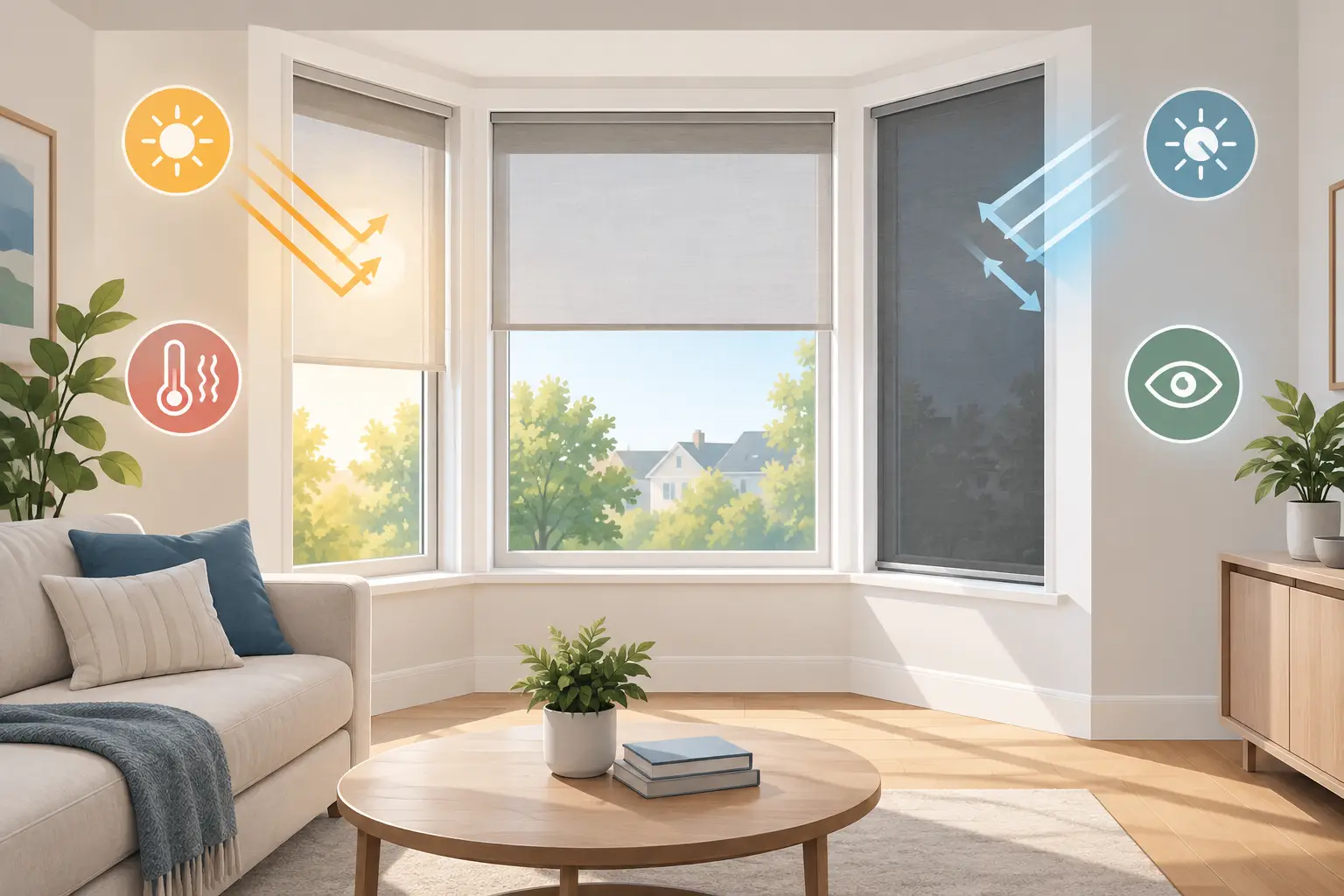
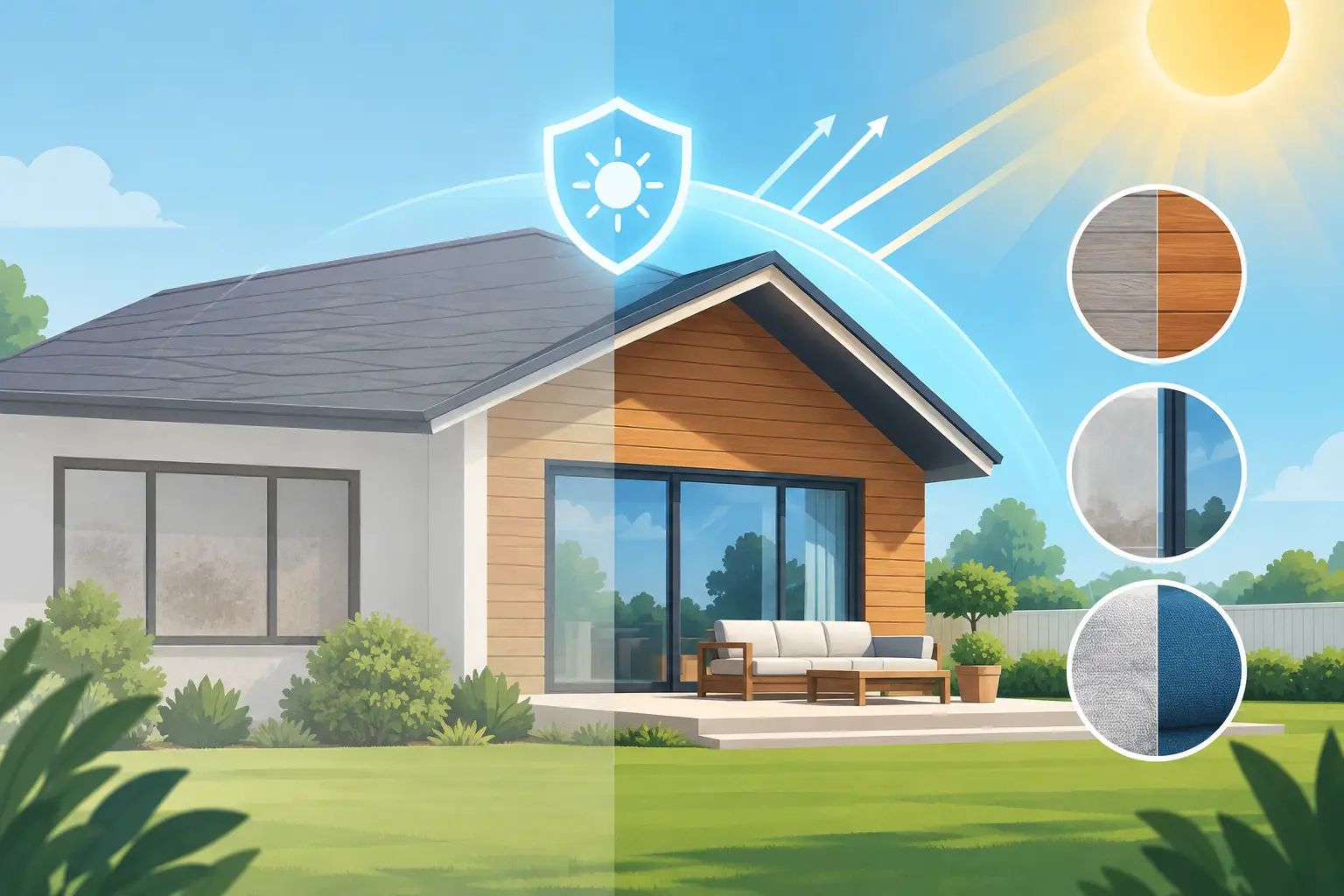
That sunlit patch on the sofa looks lovely – right up until the fabric goes washed-out, the timber floor lightens in strips, and a framed print starts to look like a different picture. Fading is one of those problems you only notice once it has already cost you.
If you are looking for the best window film to stop fading, the key is understanding what is actually doing the damage. It is not just “sunlight” in a general sense, and it is not solved by simply making the glass darker. The right film choice is about measurable UV control, sensible light management, and getting a finish that works for your property – home, static caravan, conservatory, shopfront, or office.
What causes fading in the first place?
Most fading inside properties is driven by ultraviolet (UV) radiation, but it is not the only contributor. UV breaks down dyes and finishes, which is why you can see distinct outlines where a rug has protected the floor underneath.
Visible light also plays a part, particularly for textiles, artwork, and some plastics. Even when UV is reduced, strong daylight over time can still fade certain materials. Heat can accelerate the process as well, drying out fabrics and affecting varnishes, leather and timber. That is why properties with big south-facing glazing, conservatories, and coastal static caravans often see the quickest change.
The practical takeaway is simple: the best anti-fade film needs excellent UV rejection first, and then a smart approach to glare and solar control depending on how bright and warm the room gets.
What “anti-fade” window film should actually do
You will see plenty of marketing phrases, but performance comes down to a few points that matter in real rooms.
High UV rejection (the non-negotiable)
For fade protection, you want a film that blocks the vast majority of UV – typically up to 99% on commercial-grade products. This is the biggest single step you can take to protect furnishings, flooring, displays and stock.
A common misconception is that modern double glazing already blocks all UV. It does reduce some UV, but not enough to rely on if your goal is to slow fading significantly, especially in high-sun areas or where items sit close to glass.
Glare control without making the room gloomy
If you have ever shut curtains to stop glare on a television or workstation, you already know the compromise: you get comfort, but you lose daylight and the room feels closed-in.
Window film can reduce glare while keeping a natural, usable level of light. This matters for offices (screens), shops (customer comfort and visibility), and homes where you still want the space to feel bright.
Solar heat management (because heat speeds up wear)
Heat does not “bleach” in the same way UV does, but it can shorten the life of materials and finishes. Solar control films reduce the amount of solar energy coming through the glass, helping rooms stay more stable in warm spells. In conservatories and caravans, that can be the difference between a room you use and a room you avoid.
Which type is the best window film to stop fading?
The best option depends on your priorities: maximum fade reduction, minimal change to appearance, daytime privacy, or stronger heat control. In practice, the best results usually come from commercial-grade solar control films that combine very high UV rejection with sensible glare and heat reduction.
Clear UV-filtering film (best when you do not want a “tinted” look)
If your main concern is protecting interiors without noticeably changing the look of the glass, a clear UV film can be a strong choice. It is designed to keep the view and daylight as close to normal as possible while cutting UV dramatically.
This is often ideal for properties where aesthetics are sensitive: bright living rooms, bays facing the sea, or spaces where you do not want a reflective finish. The trade-off is that, because it is designed to be subtle, it may offer less glare and heat reduction than a more dedicated solar control film.
Neutral solar control film (best all-round for homes and offices)
Neutral solar control films aim to reduce UV, glare and heat while keeping the glazing looking balanced rather than heavily mirrored. For many homes and commercial spaces, this is the “most liveable” option.
You get meaningful protection against fading, improved comfort, and less squinting in bright conditions, without the property taking on a strong reflective look. It is particularly useful in offices where people want daylight but need screens to be workable throughout the day.
Reflective solar control film (best for high sun, conservatories, and daytime privacy)
Where rooms overheat or glare is severe, reflective films can deliver a bigger step-change in comfort. They are popular on conservatories, large patio doors, and commercial premises with broad glass elevations.
As well as strong solar control, reflective films can provide daytime privacy, which is a common request for street-facing windows and static caravans on busy parks. The trade-off is appearance: reflective films are more noticeable from the outside in daylight, and at night the effect can reverse if your interior lights are brighter than outside.
Dual-reflective film (best when you want privacy without a harsh mirror)
Dual-reflective options are designed to be more subtle while still offering good glare and solar control. They can be a good middle ground for properties that need privacy and comfort but want to avoid a highly mirrored finish.
Security or safety film with UV protection (best when you also want peace of mind)
If you want to slow fading and also improve glass performance under impact, security films can be specified with UV filtering. These are often used on ground-floor glazing, shopfronts, and some domestic settings where breakage risk is a concern.
The trade-off is that security films are chosen primarily for strength and retention. For intense solar heat issues, you may still prefer a film designed specifically for solar control, or a combination approach where appropriate.
What about “stop fading completely” claims?
No window film can promise to stop fading entirely. Even with excellent UV rejection, visible light and interior conditions still contribute over time. What a professional-grade film can do is slow the process dramatically and reduce the uneven, patchy damage you see in sun hotspots.
If you want the best long-term result, combine film with sensible placement: move valuable artwork slightly back from the glass, rotate cushions and rugs, and use blinds at peak sun when needed. The film does the heavy lifting, but small habits help protect the things you have already paid for.
Choosing the right film for your property type
Homes
In most homes, the best anti-fade result comes from a neutral solar control film. You get strong UV reduction and improved day-to-day comfort without turning the house into a darker space.
If your main issue is artwork or soft furnishings fading near a particular window – and you love the current look of the glass – a clear UV film can be the neatest fix.
Conservatories
Conservatories are often where fading and overheating show up fastest. A more performance-led solar control film, often reflective or dual-reflective, can reduce glare and help stabilise temperature. That helps protect furniture, flooring, and the room itself as a usable space rather than a seasonal problem.
Static caravans
Static caravans in coastal areas and open parks can have strong sun exposure and privacy concerns at the same time. Daytime privacy films that also deliver high UV rejection are a practical choice, particularly on front elevations where you want to keep the view out but reduce the view in.
Here the “best” film is rarely the darkest. It is the one that balances daytime privacy, glare control, and a comfortable interior without making the caravan feel closed off.
Shops and commercial premises
For retail, fading is not just a furnishing issue – it can be stock, packaging, signage and displays. A solar control film that reduces UV and glare helps protect products while making the space more comfortable for customers and staff.
For offices, glare control is often the big driver, and the best fade protection comes as part of that specification. If people are pulling blinds down every sunny day, it is usually a sign the glazing needs a performance solution.
Installation and glass type: the details that matter
Film performance is only half the story. The wrong specification on the wrong glass can cause issues, and DIY fitting often fails on finish and longevity.
Different glazing types, orientations, and frame systems affect what can be installed safely and effectively. A professional installer will assess the glass, discuss what you want to achieve (fade protection only, or also heat and privacy), and match a film that is suitable for that window.
If you are comparing quotes, ask what the film is designed to do: UV rejection, glare reduction, solar energy reduction, and whether you should expect a visible change to the glass. Clear answers here prevent disappointment later.
A practical way to decide quickly
If your priority is purely interior protection and you do not want to change the look of your windows, start with a clear UV-filtering film.
If you want the best all-round improvement for comfort plus fade reduction, a neutral solar control film is usually the sensible choice.
If you have strong sun, frequent glare, conservatory overheating, or a real need for daytime privacy, look at reflective or dual-reflective solar control films, specified to the window and room.
For property owners across North Wales, The Wirral, Chester and surrounding areas who want commercial-grade film supplied and professionally installed for flat glass, Tinting For Glass can advise on the most effective specification for your windows and usage: https://tintingforglass.com
Fading is slow, then sudden. The best time to deal with it is when you first notice that bright patch on the carpet – because that is the window telling you what it will keep doing every day it gets the chance.