A west-facing conservatory can become difficult to use long before the afternoon is over. Screens reflect sunlight, furniture fades near the glass and rooms feel warmer than the rest of the property. When weighing up solar film versus awnings, the right choice comes down to more than shade: it depends on whether you need to control heat, glare, UV exposure, privacy or all four, and whether the solution needs to work every day of the year.
Both options can improve comfort, but they work in different ways. Awnings shade the outside of a building, while professional solar window film is applied directly to flat glass. One may be the stronger choice for an exposed patio; the other can be the more practical answer for a conservatory, office, shopfront or static caravan where daylight and outward views still matter.
Solar Film Versus Awnings: The Main Difference
An awning creates a physical barrier between the sun and the window. Because it intercepts sunlight before it reaches the glass, it can be highly effective at reducing solar gain where it provides full coverage. Retractable awnings also give you control: extend them during strong sun and retract them when you want more daylight or when weather conditions require it.
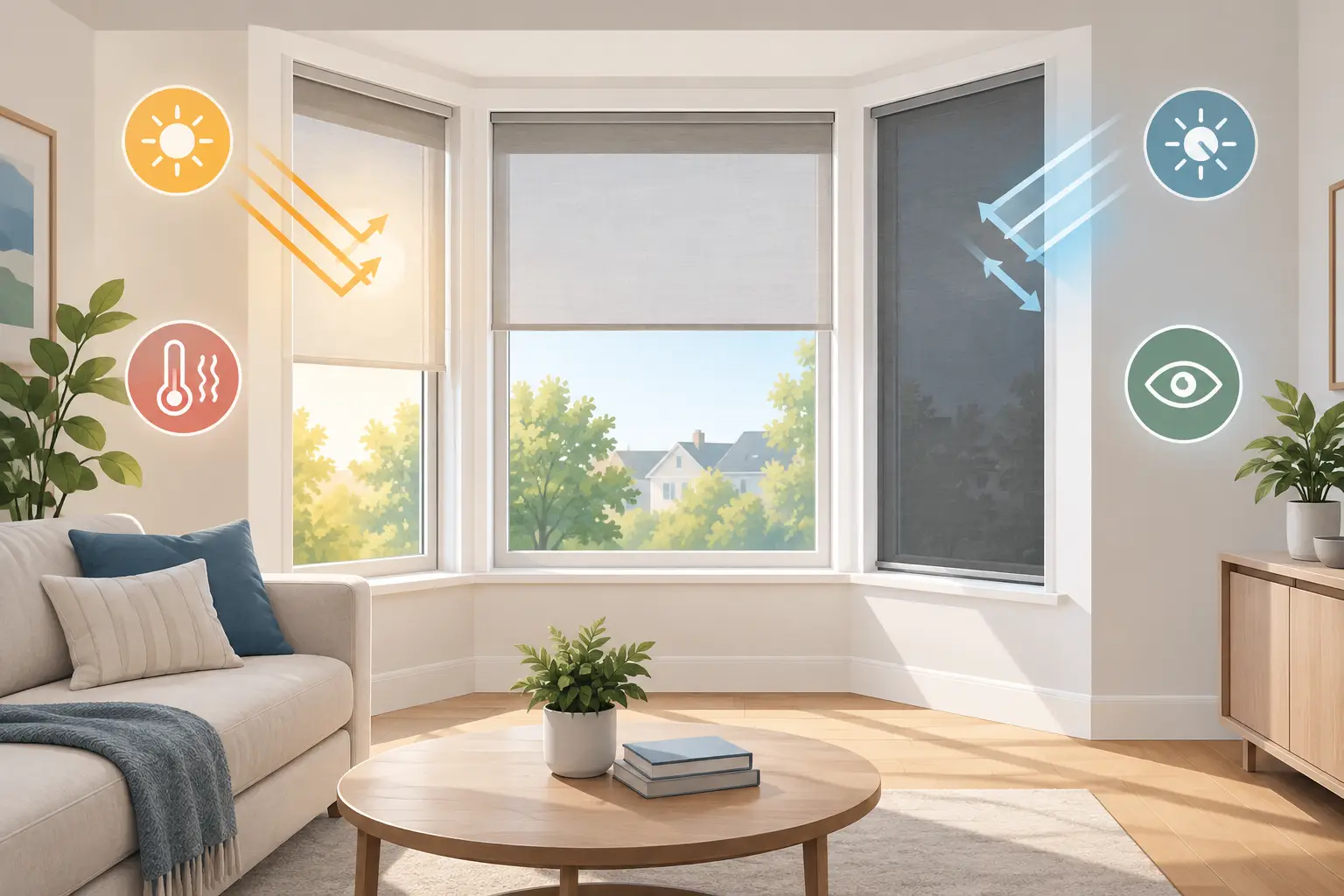
Solar film changes the performance of the glass itself. Commercial-grade solar films reject a proportion of solar energy, reduce glare and filter harmful UV rays while allowing useful natural light into the room. Depending on the chosen finish, film can also add daytime privacy and give the exterior a cleaner, more uniform appearance.
The practical distinction is availability. An awning only helps when it is extended, correctly positioned and in good condition. Window film remains in place and performs throughout the day without adjustment. For busy workplaces, holiday caravans and rooms that receive regular sun, that consistency can be a significant advantage.
Heat Control: External Shade Has Strengths, Film Has Consistency
For a large south- or west-facing window, external shading can be very effective. Blocking direct sunshine before it strikes the glass reduces the heat entering the building. This is why awnings are often popular over patio doors, outdoor seating areas and café frontages.
However, performance depends on the design. A narrow awning may shade the top part of a window while low-angle morning or evening sun still enters beneath it. The angle of the sun changes through the day and across the seasons, so an awning that works well at lunchtime may do less later in the afternoon. Wind can also limit when retractable systems are used, particularly in exposed coastal locations.
Solar film does not create an outdoor shaded area, but it provides consistent solar control across the full glazed surface. This can make it particularly suitable for conservatories, glazed extensions, offices with fixed windows and static caravans where an awning would be impractical or would restrict access. A tailored film specification can reduce the intensity of sunlight without making the room feel closed off.
No heat-control product removes the need for sensible ventilation on very hot days. Yet reducing solar gain at the glass can make a noticeable difference to how quickly a room heats up and how usable it remains during bright weather.
Glare and Screen Comfort
Awnings are excellent for reducing direct sunlight from above a patio or through a large opening. Inside, though, glare can remain an issue where light enters from the sides, below the awning line or at a low angle. This can be frustrating in offices, reception areas, living rooms and workspaces where people use monitors or televisions.
Solar film is often the more targeted choice for glare. It reduces the brightness passing through the window itself, helping to make screens easier to view and rooms more comfortable without relying on closed blinds. Unlike internal blinds, which can leave a room darkened and block the view entirely, the right film allows daylight to remain part of the space.
This matters in commercial premises. Staff are less likely to tolerate drawn blinds all day, especially in customer-facing areas where a bright, professional interior is important. Reducing glare at source can offer a more permanent, low-maintenance answer.
UV Protection and Protecting Interiors
Strong sunlight does more than raise the temperature. Over time, UV exposure contributes to fading on soft furnishings, flooring, artwork, displays and interior finishes. An awning can help while it is extended and shading the relevant window, but it does not provide a constant filter against daylight entering around its coverage area or at other times.
Professional solar window film is designed to filter a high level of harmful UV radiation. This makes it a practical consideration for homes with furniture close to windows, retail displays, holiday caravans and offices with valuable finishes. It is not a guarantee that fading will never occur, as heat, visible light and material quality also play a part. However, it is a useful layer of protection that works every day without changing how the property is used.
Privacy and Appearance
This is one of the clearest differences between solar film and awnings. An awning may prevent people above or directly outside from looking through a window when it is extended, but it does not generally provide privacy at eye level. It also has a visible framework, fabric and cassette that must suit the building’s exterior.
Reflective or tinted solar films can provide daytime privacy while maintaining outward visibility. During daylight hours, the brighter exterior surface becomes more reflective, making it harder for passers-by to see in. This is useful for street-facing homes, ground-floor offices, shopfronts and static caravans on busy parks.
There is an important limitation: daytime privacy is not the same as privacy after dark. When lights are on inside and it is darker outdoors, the effect reverses. Curtains, blinds or another internal privacy measure will still be needed in the evening. A professional installer should explain this clearly before recommending a film.
Maintenance, Weather and Long-Term Use
Awnings are mechanical outdoor products. They require suitable fixings, periodic cleaning and sensible use in wind and poor weather. Fabric can collect dirt and may eventually need attention, while motors and moving parts introduce another maintenance consideration. A quality awning can be an excellent investment, but it is not a fit-and-forget product.
Solar film has no moving components and does not take up garden, patio or façade space. Once professionally installed, it requires straightforward cleaning with appropriate non-abrasive methods after the recommended curing period. Its appearance and lifespan depend on the film quality, glazing type, exposure and installation standard, which is why commercial-grade products and correct preparation matter.
For listed buildings, leasehold properties or commercial sites, appearance and permissions may also influence the decision. An awning may need approval because it changes the external elevation. Window film is usually more discreet, although reflective finishes should still be selected with the property’s character and local requirements in mind.
When an Awning Is the Better Choice
Choose an awning when your main aim is to make an outdoor area more comfortable. It can provide shade over a patio, seating area or doorway and offers a welcome buffer from direct sunshine before it reaches the glass. It is also a good option where you want adjustable shade for occasional use and have a suitable, sheltered wall for installation.
Awnings can work especially well alongside solar film. For example, an awning can improve a patio area, while film manages glare, UV and heat through the glazing when the awning is retracted. The two solutions are not always competitors.
When Solar Film Is the Better Choice
Solar film is usually the more practical option where the problem is inside the building rather than outside it. Consider it for rooms with persistent glare, windows that are difficult to shade externally, conservatories that overheat, offices with screen reflections, retail premises with sun-exposed displays or static caravans needing cooler interiors and daytime privacy.
It is also well suited to properties where you want protection without losing the use of the window. There is no fabric to extend, no outdoor projection and no need to close off daylight. The film can be matched to the priority, whether that is solar control, a lighter neutral look, stronger reflection or increased privacy.
Choosing a Solution for Your Glass
The best answer should be based on the glass, the direction it faces and how the room is used. A south-facing glazed extension has different needs from an east-facing office, and a caravan on an exposed holiday park has different practical limits from a sheltered terrace.
Before choosing, consider when the sun causes the greatest discomfort, whether glare affects screens, how much privacy is required, and whether the shaded space is indoors or outdoors. A professional assessment can also confirm that the selected film is suitable for the existing glazing, helping to protect both performance and peace of mind.
Tinting For Glass provides tailored, commercial-grade window film installation for homes, conservatories, static caravans and commercial premises across North Wales, Chester and the Wirral. If heat, glare or fading is making a space harder to use, contact the team to discuss the glass and the result you need. The most effective solution is the one that improves comfort without creating a new compromise.