If your front room, ground-floor office or static caravan window sits directly onto a pavement, road or neighbouring approach, you already know the problem. People can see in far more easily than you would like, especially during the day, and curtains often leave you choosing between privacy and daylight. Privacy film for street facing rooms is designed to solve that issue in a more practical way, giving you daytime privacy while still allowing the room to feel bright and usable.
For many properties, the biggest frustration is not just visibility from outside. It is the knock-on effect of glare on screens, fading on furnishings, and rooms that feel overexposed because the window has no buffer. A professionally fitted window film can improve privacy, reduce glare and cut UV exposure in one application, which is why it is often a better long-term answer than relying on blinds alone.
Why street facing rooms need a different solution
A street facing room has a different set of demands from a rear bedroom or an upstairs landing. The glass is exposed to passing foot traffic, parked cars, direct lines of sight from the pavement, and often stronger sunlight at key times of day. In homes, that usually means living rooms, bay windows, dining rooms and home offices. In commercial premises, it often affects reception areas, treatment rooms, shopfront sections and offices close to the entrance.
The difficulty is that most people still want light. Blocking the window completely defeats the purpose of the room. Heavy curtains can make a space feel closed off, and net curtains may soften the view but do not always give the level of privacy customers expect. Window film changes the performance of the glass itself, which means the room can stay open and bright without feeling exposed.
How privacy film for street facing rooms works
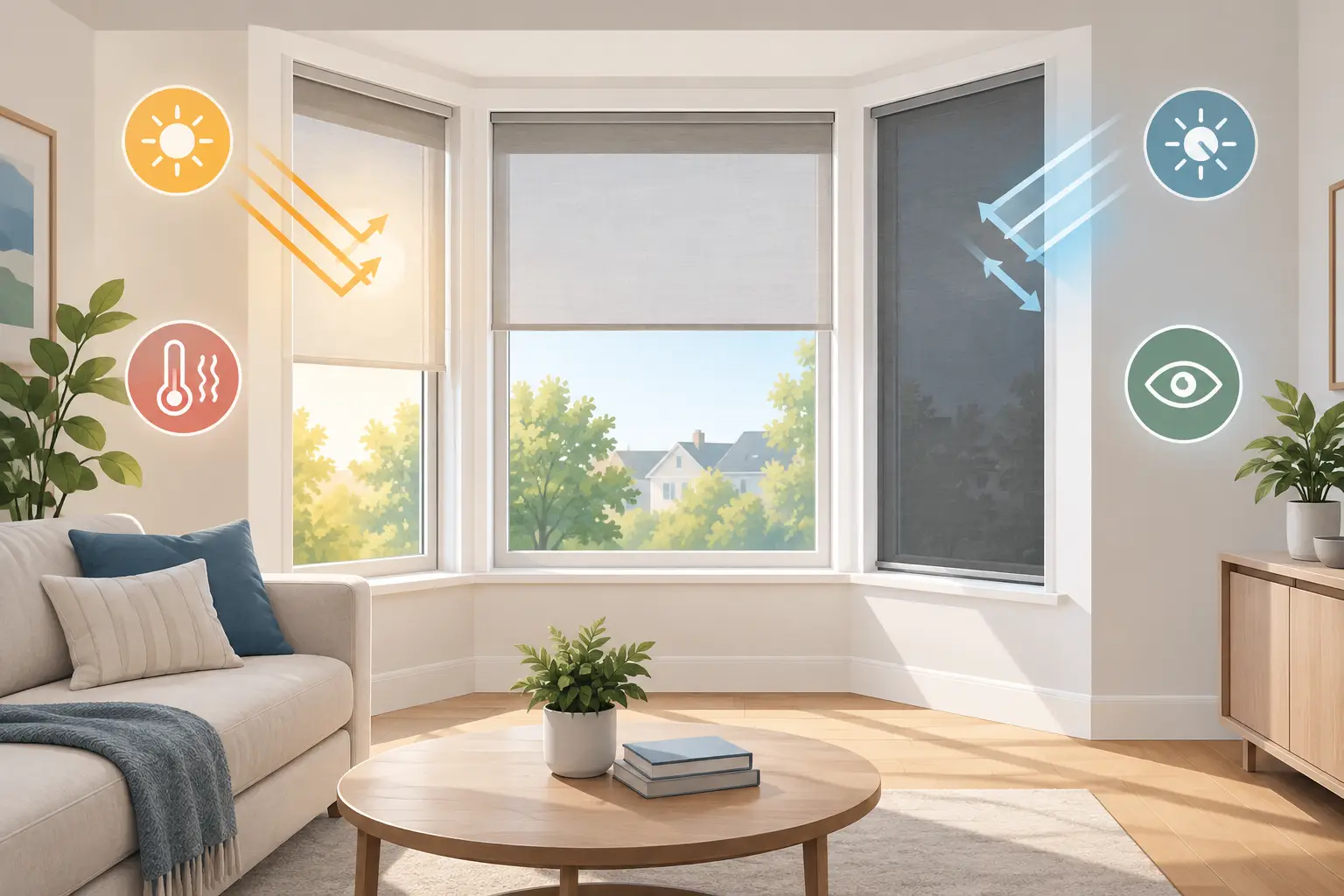
The most common option for this type of application is a reflective or one-way privacy film. During daylight hours, when it is brighter outside than inside, the external face of the glass appears more reflective. That reduces inward visibility from the street while still allowing people inside to look out.
This is the part that matters most – privacy film is not one single product. Different films are designed for different outcomes. Some focus heavily on daytime privacy. Others combine privacy with solar control, which helps reduce heat build-up and glare. Some have a softer, less mirrored appearance, while others provide a stronger external reflective finish for maximum screening.
That is why a tailored approach matters. A south-facing lounge in Chester may need a stronger solar performance than a shaded ground-floor office in Conwy. A static caravan near the coast may need privacy and glare reduction without making the interior feel dark. The right film depends on the glass, the orientation of the room and how the space is used day to day.
The main trade-off to understand
Daytime privacy films work best when the outside is brighter than the inside. In the evening, once lights are on indoors, the effect changes. If the room is illuminated and it is dark outside, standard reflective film will not provide the same one-way privacy. That is not a flaw in the product – it is simply how light levels work.
For that reason, some customers still use curtains or blinds at night. The benefit is that during the day, when street exposure is usually at its most noticeable, the room remains much more comfortable and private without being closed off.
What you gain beyond privacy
The word privacy gets the attention first, but the extra benefits are often what make the installation feel worthwhile over time.
Glare reduction is a major one. Street facing rooms often catch low-angle sun, which can make televisions, laptops and till screens difficult to use. A suitable film can soften that glare and make the room easier to work in.
UV protection is another practical advantage. Commercial-grade window films help reduce the amount of ultraviolet light entering through the glass, which helps protect flooring, fabrics, furniture and displays from fading. In homes, that can mean less wear on sofas, rugs and wood finishes. In commercial settings, it can help preserve stock, seating and interior fit-outs.
Heat control can also make a noticeable difference, especially in conservatories, front rooms with large panes, and static caravans where solar gain builds quickly. Not every privacy film is designed primarily for heat rejection, but many solar privacy films combine both functions. That means the room not only feels less exposed, but also more comfortable during warmer periods.
Choosing the right privacy film for street facing rooms
The best starting point is not the shade of film. It is the result you need from the glass.
If privacy is the top priority, a stronger reflective finish is often the best fit. This works well for front lounges, bay windows, street-level offices and commercial units where there is regular public footfall. If the room also suffers from overheating or strong sun, a solar control privacy film is usually the better option because it tackles multiple issues at once.
If you want a softer look, there are more neutral films available, but there is usually a balance between appearance and privacy strength. A highly discreet finish may not screen the room as effectively as a more reflective product. In some settings, that compromise is acceptable. In others, especially on busy roads or public approaches, stronger performance is the priority.
Ground-floor bathrooms and treatment rooms are slightly different again. In those cases, frosted or obscure films may be more appropriate than reflective film, particularly if constant privacy is needed rather than outward visibility. The right specification depends on whether you need to see out, simply let light through, or fully screen the space.
Domestic, caravan and commercial needs are not the same
For homes, the usual goal is making the room feel private without making it feel shut in. Families want a front room they can actually sit in during the day, not one that requires blinds half-drawn from morning onwards.
For static caravans, privacy and heat reduction often go together. Large front or side windows can create glare, excessive warmth and clear sightlines from nearby paths or neighbouring pitches. Film offers a cleaner, lower-maintenance solution than constantly adjusting blinds.
For commercial premises, presentation matters as well as performance. A quality film can improve privacy for staff and customers while giving the glazing a more professional, uniform appearance from outside. That is particularly useful for offices, clinics, salons and retail spaces where comfort and discretion both matter.
Why professional installation makes the difference
Window film only performs properly when the correct product is matched to the glass and installed cleanly. Street facing windows are highly visible, so poor fitting stands out straight away. Dust contamination, lifting edges, uneven trimming and incorrect film choice all reduce the result.
Professional installation matters for another reason too – not all glass should be treated in the same way. Film selection needs to account for pane size, glass type, existing glazing specification and solar exposure. This is especially important for larger domestic windows, commercial shopfronts, conservatories and static caravans where the wrong specification can create avoidable issues.
A proper survey takes those details into account before any film is fitted. It also gives you a realistic view of what the product will and will not do, particularly around daytime privacy versus night-time conditions. That clarity is important because it helps you choose the right finish without unrealistic expectations.
Is privacy film worth it for a street facing room?
If the room feels exposed every day, the answer is usually yes. Privacy film is one of the few solutions that improves the usability of the glass without removing the benefit of the window. You keep natural light, reduce direct visibility from outside and often gain glare and UV control at the same time.
It is not a one-size-fits-all product, and it does not replace curtains in every circumstance. But for many homeowners, caravan owners and commercial properties, it solves the exact problem that makes a room awkward to use. The right film can turn a front-facing space from somewhere you avoid into somewhere that works properly.
Across North Wales, the Wirral, Chester and surrounding areas, that is usually what customers are looking for – a practical, professional solution that improves comfort without making the room darker or more enclosed. If your glass is doing too little for privacy and too much for glare and exposure, the best next step is to treat the window as a performance surface, not just a pane of glass.
When a street facing room starts working with the light instead of against it, the whole space becomes easier to live in, work in and enjoy.