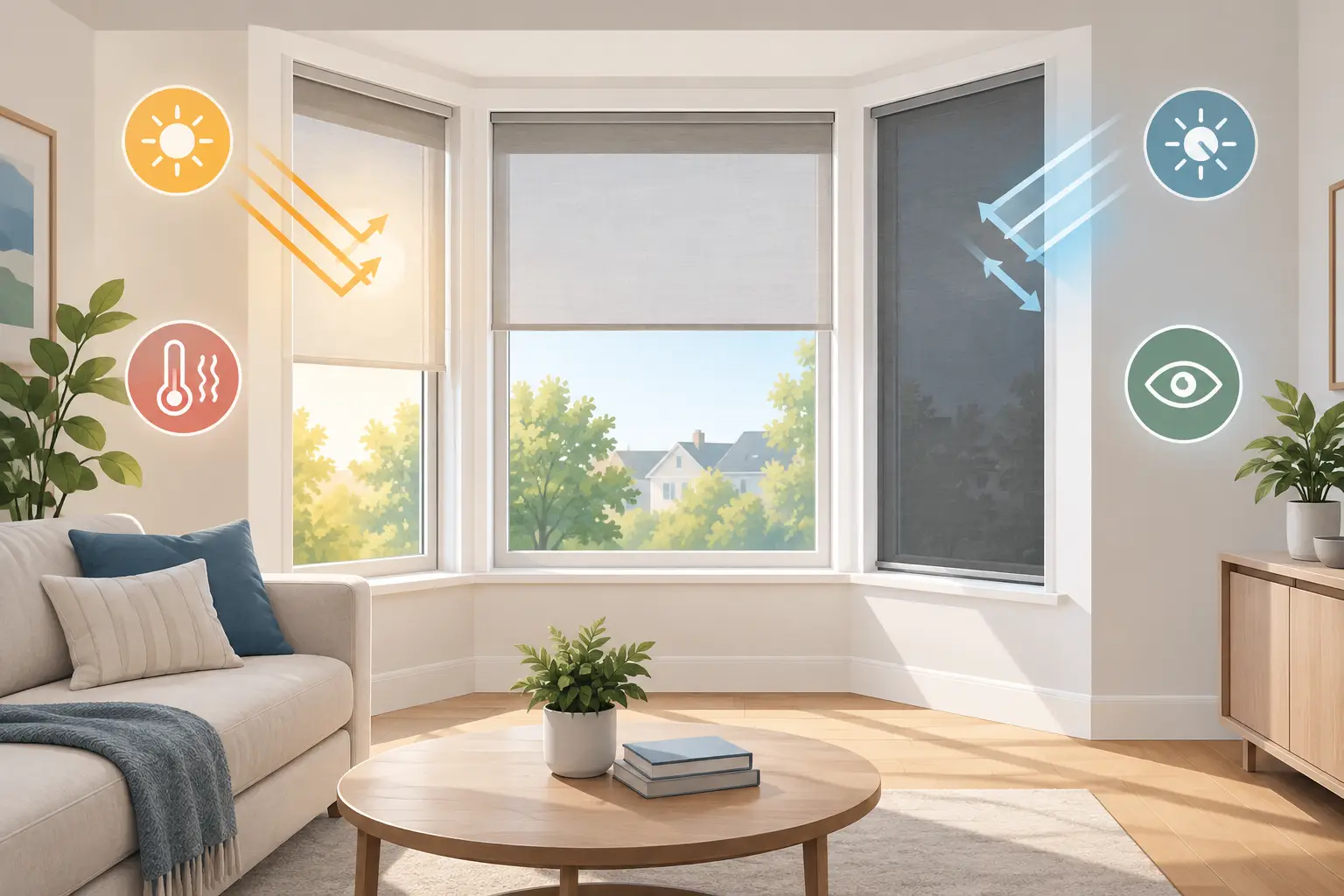
By 10am, the meeting room is already too bright for the screen, desks near the windows are warming up, and the blinds are half shut again. That is usually the point when office window tinting film stops being a nice-to-have and becomes a practical building upgrade. In working offices, the issue is rarely the glass itself. It is what unmanaged sunlight does to comfort, visibility, privacy and day-to-day use of the space.
For offices across North Wales, The Wirral, Chester and surrounding areas, window film is often the simplest way to improve performance without replacing glazing. A professional installation can reduce glare on monitors, cut solar heat gain, protect interiors from UV exposure and add daytime privacy, while still keeping the workplace bright and usable. The right film depends on the building, the aspect of the windows and how each area is used.
What office window tinting film actually does
Office film is a performance product applied to existing flat glass. It changes how the glass handles sunlight, heat and visibility, which is why it is used in everything from small private offices to larger commercial premises.
In practical terms, most office managers are trying to solve one or more of the same problems. Staff are uncomfortable in sun-facing rooms, screens are difficult to read, reception areas feel exposed, and internal finishes are fading faster than they should. Commercial-grade films are designed to address those issues directly.
Solar control films reduce heat and glare by reflecting or filtering part of the sun’s energy before it builds up indoors. UV filtering helps protect flooring, furniture, displays and soft furnishings from fading. Privacy films can make glazing less exposed from the outside during daylight hours, which is particularly useful for ground-floor offices, front-facing meeting rooms and customer areas.
There is no single best film for every office. A heavily glazed south-facing office may need a stronger solar control product, while a street-level finance office might place more value on daytime privacy and a clean external finish. That is why tailored specification matters.
Why offices benefit from window film
The main reason businesses choose office window tinting film is usability. If blinds stay shut all afternoon, a room is not really working as intended. If staff avoid certain desks because of glare or heat, that has a direct impact on comfort and productivity.
A good film installation can make office space more consistent throughout the day. Temperatures feel more controlled, bright areas become easier to work in, and glare on monitors is reduced without making the room feel gloomy. That balance matters. Most workplaces do not want to block natural light altogether. They want to keep the benefits of glazing without the drawbacks.
There is also a professional appearance benefit. Reflective and neutral films can give a building a cleaner, more uniform look from the outside. For customer-facing premises, that can improve first impressions while also giving staff and visitors more privacy during the day.
For facilities teams, the value often comes down to practical building performance. If air conditioning is working harder in summer because of solar gain through large glazed areas, film can help moderate that load. It is not a substitute for every cooling issue, but it can form part of a more efficient and comfortable environment.
Choosing the right office window tinting film
The best office window tinting film is the one matched to the glass, the orientation and the use of the room. That sounds simple, but it is where many off-the-shelf decisions go wrong.
Solar control for heat and glare
This is the most common requirement in office settings. Solar control films are suitable where direct sunlight makes spaces too warm or too bright. They are especially effective on elevations that receive strong afternoon or midday sun. If staff are lowering blinds every day or shifting seats away from windows, solar film is usually the first option to consider.
Different grades provide different levels of performance. A lighter film may keep the office looking more natural while still reducing glare. A stronger reflective film may provide more heat rejection and better daytime privacy, but with a more noticeable finish. The right choice depends on what matters most in that space.
Privacy film for exposed glazing
Offices on main roads, retail parades or public-facing business parks often need more privacy. Daytime privacy film can make it harder to see in from outside while still allowing people indoors to maintain outward visibility. This works well for reception areas, interview rooms and ground-floor offices where external footfall is high.
It is worth being clear about the trade-off. Standard reflective privacy film works best in daylight when it is brighter outside than in. At night, when interior lights are on, the effect changes. If round-the-clock privacy is needed, the glazing strategy may need to include other measures alongside film.
UV protection for interiors
UV film is often overlooked until fading becomes obvious. Office carpets, furniture, display materials and finishes can all deteriorate faster under prolonged exposure to sunlight. Film helps block the majority of harmful UV rays, which supports longer-lasting interiors and better protection for fit-outs.
For businesses that have invested in a professional office finish, this is not a small detail. Protecting what is already in place can be just as important as improving comfort.
Where film makes the biggest difference in an office
Not every glazed area causes the same level of disruption. The most noticeable results usually come from spaces that are already difficult to manage.
Meeting rooms are a common example. These rooms often combine large windows, presentation screens and long periods of occupancy. Too much glare makes screens harder to read and pushes people to close blinds, which can leave the room feeling boxed in. Film helps maintain a brighter, more professional environment.
Open-plan offices also benefit, particularly where rows of desks face or sit alongside sun-exposed windows. Even a moderate reduction in glare and heat can make the whole area more workable. Reception areas, shopfront-style offices and director rooms are other strong candidates, especially where privacy and presentation both matter.
Older buildings can also see a clear benefit. Full glazing replacement is expensive and disruptive. Applying film to existing flat glass is often a far more practical route when the goal is to improve comfort and performance quickly.
Why professional installation matters
Office window film is not just about the product. The installation standard affects appearance, durability and performance. In commercial settings, a poor finish is obvious. Bubbles, edge lift, contamination and inconsistent alignment all undermine the result.
Professional installation starts with proper assessment. Not all glass types are suitable for the same film, and the specification needs to account for existing glazing, pane size and solar exposure. This is particularly important in offices with sealed units, larger glazed panels or mixed elevations.
A professionally installed commercial-grade film should look clean, perform consistently and last well under normal use. It should also be selected with the building’s actual needs in mind, not just chosen because it is the darkest or most mirrored option available.
That is where a specialist service adds value. Companies such as Tinting For Glass focus on flat glass applications and match films to property type, exposure and use-case, which helps office clients avoid guesswork and get a more reliable outcome.
A realistic view of results
Window film can make a major difference, but it helps to set expectations properly. It reduces heat, glare and UV exposure. It improves daytime privacy. It can support energy efficiency and make rooms more comfortable to use. What it does not do is solve every building issue in isolation.
If an office has poor ventilation, failing seals or broader temperature-control problems, film should be seen as part of the solution rather than the only answer. The same applies to privacy after dark. Film improves daytime conditions very effectively, but lighting conditions always matter.
That said, in many offices the improvement is immediate. Staff notice less glare on screens, customer-facing spaces feel less exposed, and sun-heavy rooms become easier to use throughout the working day. Those are practical gains, not cosmetic ones.
For businesses that want better comfort, a more controlled internal environment and a smarter use of existing glazing, office window tinting film is one of the most straightforward upgrades available. If your office has bright spots that are too hot, too exposed or too difficult to work in, it is usually worth addressing the glass rather than working around it.