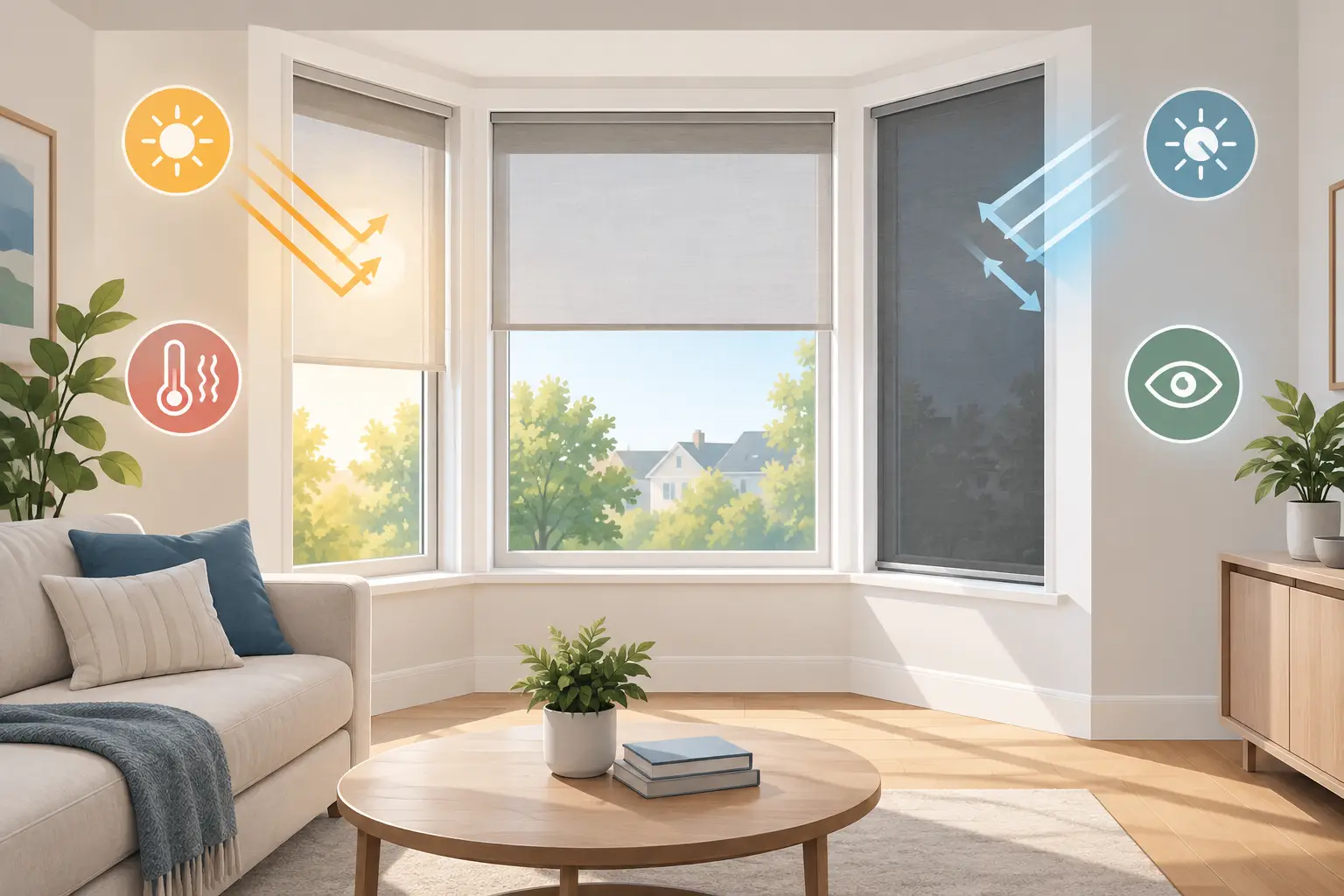
A solar control film review for an office should start with the working conditions, not the appearance of the glass. If staff are closing blinds by mid-morning, moving desks to avoid reflected light, or struggling to see screens near a sunny elevation, the problem is already affecting how the space is used. The right commercial-grade film can reduce glare and solar heat while retaining useful daylight and outward views.
For offices in North Wales, Chester and the Wirral, the best result is rarely the darkest film. It is the film that addresses the specific issue at the window: direct sun, uncomfortable heat, fading interiors, daytime privacy or a combination of these. Professional assessment matters because glazing type, window orientation and the use of each room all affect the right choice.
Office solar control film review: what changes in practice
The most noticeable improvement for many offices is reduced glare. Bright sunlight and reflected light from external surfaces can make monitors difficult to read, especially in meeting rooms, reception areas and desks beside large windows. Solar control film filters a proportion of visible light and solar energy before it enters the room, helping staff work without relying so heavily on blinds.
That does not mean every room should become noticeably darker. A well-selected film can soften harsh light while preserving a bright, professional feel. This is particularly useful where natural light is valued but unmanaged sunshine creates screen glare or visual discomfort.
Heat control is the second major benefit. Large areas of flat glass can allow substantial solar gain during warmer periods. Rooms facing south or west often feel the effect most strongly in the afternoon, when sun exposure combines with computers, lighting and occupancy. Solar film reduces the amount of solar energy passing through the glass, which can make those areas more comfortable and reduce pressure on cooling systems.
Results depend on the existing glazing and the film specification. A light film may prioritise a natural appearance and glare reduction, while a more reflective or darker option can provide greater heat rejection and stronger daytime privacy. The practical question is not simply, “How dark should it be?” It is, “What level of performance does this room need without compromising its function?”
The benefits that matter to office managers
Screen comfort and usable workspaces
Glare is not a minor inconvenience when it occurs every day. It can lead to blinds being left closed, desks being rearranged around the sun, and meeting rooms becoming less useful at certain times. Film provides a fixed, low-maintenance response at the glass itself.
It is especially effective where the office needs access to daylight but cannot accommodate permanent shading systems. By reducing the harshness of incoming light, it can help create a more consistent environment across the working day.
UV protection for interiors
Sunlight can fade fabrics, carpets, display materials, timber finishes and office furnishings over time. Commercial-grade window films can block up to 99% of harmful UV rays, helping protect the interior without requiring curtains or blinds to remain shut.
UV is only one part of fading – visible light and heat also contribute – so no film can make furnishings completely fade-proof. However, reducing UV exposure is a sensible protective measure in offices with window displays, reception furniture, printed graphics or valuable finishes near the glass.
Daytime privacy without losing the view
Reflective solar film can make it harder for people outside to see into an office during daylight hours, while allowing occupants to look out. This suits ground-floor premises, roadside offices and reception areas where privacy matters but a closed-off appearance is not wanted.
There is an important trade-off. Daytime privacy relies on the outside being brighter than the inside. After dark, when internal lights are on, the effect can reverse. Offices that need reliable privacy at all hours may need to combine film with blinds, curtains or a dedicated privacy film in sensitive areas.
A smarter look from outside
Consistent solar film can improve the appearance of a glazed office frontage by reducing visual clutter and giving the glass a more uniform finish. Reflective finishes can look particularly professional on commercial premises, but the exterior appearance should be considered carefully before installation. A very mirrored finish may not suit every building, neighbouring property or planning requirement.
Where solar control film performs best
Solar film is often most valuable on south-facing and west-facing windows, but orientation is only part of the picture. An east-facing meeting room can still suffer from intense morning glare, while a north-facing office may experience reflected brightness from water, pale paving or nearby buildings.
Meeting rooms are a common priority because presentations and video calls are quickly disrupted by screen reflection. Reception areas can benefit from daytime privacy and a more comfortable temperature. Open-plan offices may need a tailored approach, with higher-performance film on the most exposed elevations and a lighter solution elsewhere.
It can also be an effective option for shops and customer-facing premises where direct sun affects staff, displays or stock. In every case, the film should be selected for the glass and the operational problem rather than chosen solely from a photograph or sample swatch.
What to check before choosing a film
A useful review of office solar control film considers performance as well as appearance. Start by identifying when the issue happens. Is the room too hot all afternoon, or is the main complaint low-angle glare for an hour each morning? Is privacy required in a reception area, or are staff mainly trying to protect screens and furnishings?
The existing glass must also be assessed. Different types of glazing react differently to absorbed heat, and some units require particular film specifications to avoid unnecessary thermal stress. Professional installers assess the glass type, condition and installation details before recommending a product. This is not a shortcut worth taking, particularly on older units, large panes or double-glazed systems.
Ask how the film will affect visible light, glare, heat rejection, UV protection and external appearance. These figures should be considered together. The highest heat reduction is not automatically the best answer if it leaves a naturally dark office or changes the building’s appearance more than desired.
It is also worth checking practical details: access to the glazing, whether furniture needs moving, how long the work will take, and the care needed during the curing period. Film is normally applied internally to suitable flat glass, so disruption is often limited, but a professional installation should still be planned around the working environment.
Common concerns about office window film
Some office managers worry that film will make staff feel enclosed. That can happen if a dark product is used where only a modest reduction in glare is needed. It is why light and neutral films are often a better fit for general office areas, while stronger reflective options are reserved for highly exposed glass.
Another concern is whether film will replace air conditioning or blinds entirely. It can reduce the solar load reaching the room, but it does not remove heat generated by people, equipment or poor ventilation. Likewise, it can significantly reduce glare without eliminating every reflection on every screen. Its value is in improving the baseline comfort of the room before additional measures are needed.
Finally, installation quality affects both appearance and durability. Correct preparation, clean application and appropriate film selection are essential for a clear, professional finish. Bubbles, lifting edges and poor visual consistency are not features of a properly installed commercial-grade system.
Is solar control film worth it for an office?
For offices with recurring glare, heat build-up, UV exposure or a need for daytime privacy, solar control film is often a practical upgrade because it works without changing the way the building is used. It allows windows to remain a source of daylight and outward visibility rather than becoming a problem that staff manage with blinds every day.
The strongest outcomes come from a site-specific recommendation. Tinting For Glass provides professional, tailored solutions for flat-glass office applications, helping property managers match the film to their glazing, exposure and comfort requirements. A short assessment of the most troublesome windows can turn an uncomfortable desk, meeting room or reception area into a space people can use properly throughout the day. Contact the team to discuss the performance you need and the finish that will suit your premises.