If your front room sits right on the pavement, you already know the problem – you can either live with the blinds half-closed all day, or accept that passers-by can see straight in. Ground floor privacy is less about hiding your home and more about being able to use it comfortably, with daylight still doing its job.
Privacy window film is one of the few options that can give you that “curtains open” feeling without putting your space on show. But not all films behave the same, and the best choice depends on when you need privacy, what direction your windows face, and whether you still want a clear view out.
What “privacy” really means on the ground floor
Most people ask for privacy film because they want to stop being watched. The detail is in the timing. Some films give excellent daytime privacy but can reverse at night when lights are on indoors. Others give privacy 24/7 but remove your view.
A practical way to think about it is this: do you want to block seeing in, block seeing through, or simply soften the view so people can’t make out faces and details? Ground floor rooms often need different answers depending on the window and the room.
A street-facing lounge might need strong daytime privacy with glare reduction. A bathroom window usually needs full-time obscurity. A ground floor office might need privacy from customers but still want a professional, light-filled feel.
Best privacy window film for ground floor rooms: the main types
There isn’t one film that suits every ground floor property, but there are a few categories that consistently deliver. The right match comes from balancing privacy level, natural light, heat control, and whether you want to keep a view.
Reflective (mirror) films for daytime privacy
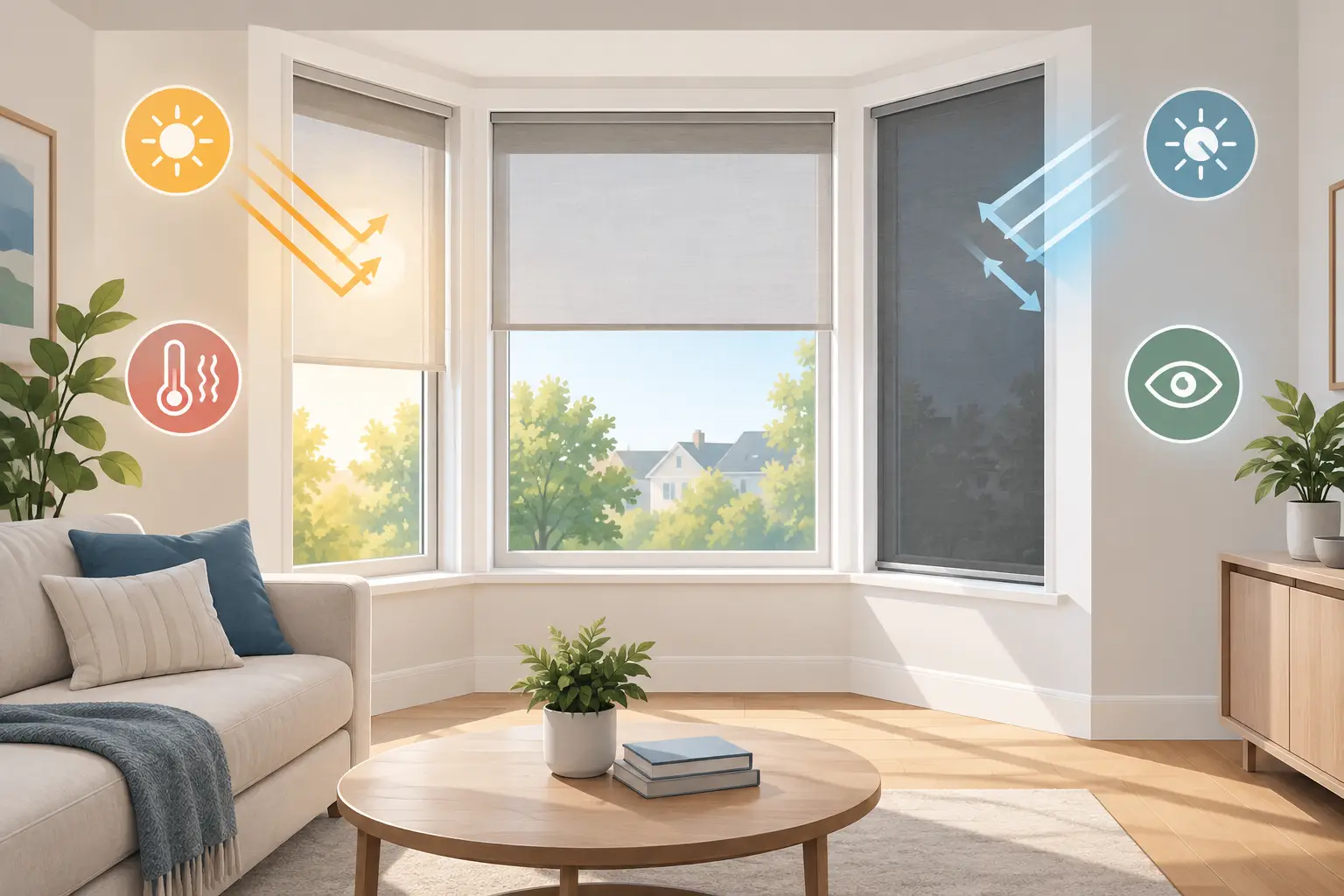
Reflective films are the go-to for street-facing windows where you still want to see out. From the outside in daylight, the glass takes on a mirrored finish and makes it much harder to see into the room.
They also bring a second benefit that matters on ground floors – glare reduction. If you get low sun across the front of the house, reflective film can make the room instantly more usable for TV viewing and working.
The trade-off is important: mirror films rely on the brighter side being outside. In the evening, if your room lights are on and it’s darker outside, the privacy effect reduces and can reverse. For many homes that’s fine because curtains or blinds are used at night anyway, but it’s best to be clear about it upfront.
Reflective finishes vary from lighter “subtle” silvers through to stronger mirror effects. A strong mirror usually gives more daytime privacy, but it can also look more commercial and may reduce light slightly more.
Frosted and etched films for 24/7 privacy
If you need privacy all day and all night, frosted (sometimes called etched or sandblasted effect) film is usually the most reliable option. It obscures the view through the glass, so it doesn’t matter whether it’s bright outside or dark.
This makes frosted film ideal for bathrooms, street-level hallway sidelights, landing windows that face neighbouring paths, and any room where you don’t need a clear view out.
Light transmission is generally good. You still get daylight, but you lose clarity. If your ground floor room feels overlooked from very close range, frosted film is often the quickest way to get peace of mind without turning the room into a cave.
The main compromise is obvious: you won’t keep a clear view. If you enjoy watching the street or you need visibility for security, frosted might not be the best fit for a main living space.
Patterned and decorative privacy films for “soft screening”
Patterned films sit between reflective and frosted. They can break up sight lines and reduce the sense of being overlooked while keeping the window attractive.
They work well where you want privacy but you also want the room to feel finished rather than “covered”. Ground floor dining rooms, front bay windows, and commercial reception areas often suit a subtle pattern.
You can apply decorative film across the full pane or just at eye level. The “banded” approach is a strong option for ground floors because it blocks the most intrusive viewing angle while still leaving a clear section to look through.
One-way privacy films: good idea, but only in the right conditions
People often ask for “one-way” film. In practice, that usually means a reflective film, and the same rule applies: it’s one-way only when it’s brighter outside than inside.
If your main concern is daytime passers-by, it’s effective. If your concern is evening privacy, it needs pairing with a blind, curtain, or another privacy layer.
How to choose the right film for your window and room
The most common mistake is choosing a film by appearance alone. The better approach is to start with the room use, then check light conditions, then decide how much view you want to keep.
1) Decide whether you need privacy in daytime only or 24/7
For most street-facing lounges and kitchens, daytime is the big concern. Reflective films tend to win here because they preserve the view out and can reduce glare and heat.
For bathrooms and ground floor rooms overlooked from very close range, 24/7 privacy matters more. That usually points to frosted or patterned films.
2) Consider which direction the window faces
South- and west-facing ground floor windows often suffer from heat build-up and strong glare. A reflective or solar control privacy film can help with comfort as well as privacy.
North-facing windows can be more sensitive to light loss. In those cases, a lighter reflective option or a carefully chosen decorative film can preserve brightness better than a heavy tint.
3) Think about distance and viewing angle
If the pavement is right against your window, you need a stronger privacy solution than if the window sits behind a front garden.
Also consider upstairs neighbours looking down, or properties opposite with a clear line of sight. A film that blocks straight-on viewing might not fully address elevated angles. Sometimes a combination works best, such as patterned film at the bottom section plus a lighter solar film above.
4) Don’t ignore UV protection and fading
Privacy is usually the headline reason, but ground floor rooms often contain the most-used furniture and flooring. Commercial-grade window films typically block a high percentage of UV, which helps reduce fading and material degradation over time.
UV protection is especially valuable in static caravans and holiday homes where strong sun can quickly age upholstery, vinyl flooring and soft furnishings.
Installation and performance: what changes in real life
A properly installed film should look tidy, sit cleanly at the edges, and perform consistently without distracting distortion. On the ground floor, where windows are at eye level and seen up close, finish matters.
It’s also worth knowing that internal films are the standard for most domestic glazing. They are protected from the weather and easier to maintain. You clean them with non-abrasive methods and avoid harsh chemicals – simple, sensible care keeps the finish looking right.
If you have modern double glazing, film selection needs to account for heat absorption and glass type. This is where professional specification becomes important, particularly for darker tints on sun-facing windows.
It depends: common ground floor scenarios and the best fit
A street-facing living room usually suits a reflective privacy film because it provides daytime screening while keeping the room open and usable. If you also struggle with glare on a telly, this is often the most noticeable day-to-day improvement.
A ground floor bathroom is better served by frosted or etched film for reliable privacy at all hours. You keep daylight, avoid the “always shut” blind, and the room feels calmer.
A shopfront, office or reception area often benefits from a combination: a decorative band or frosted lower section for privacy from customers, with a solar control film above to reduce glare and heat. It can look professional from the outside while improving comfort for staff.
Static caravans are their own category. Many owners want daytime privacy without losing the view, plus a cooler interior in summer. A reflective solar film is often a strong match, but placement matters – you might choose stronger privacy on the side facing a path and a lighter film on the side facing your pitch.
Getting the “best” result is mostly about correct specification
The best privacy window film for ground floor rooms is the one that matches your privacy timing, your light levels, and your need for view-through – while also dealing with glare, heat and UV in a way you can feel.
If you want a film that’s actually tailored to your property rather than guessed from a photo online, professional supply-and-installation is the straightforward route. At Tinting For Glass (Solar Tint Wales), we specify commercial-grade films for homes, static caravans and commercial premises across North Wales, The Wirral and Chester, with the focus kept on measurable outcomes like daytime privacy, reduced glare, UV protection and comfort.
The best next step is simply to decide what you need your window to do at 2pm and at 8pm – once those two moments are clear, the right film choice tends to become obvious, and your ground floor starts feeling like your space again.