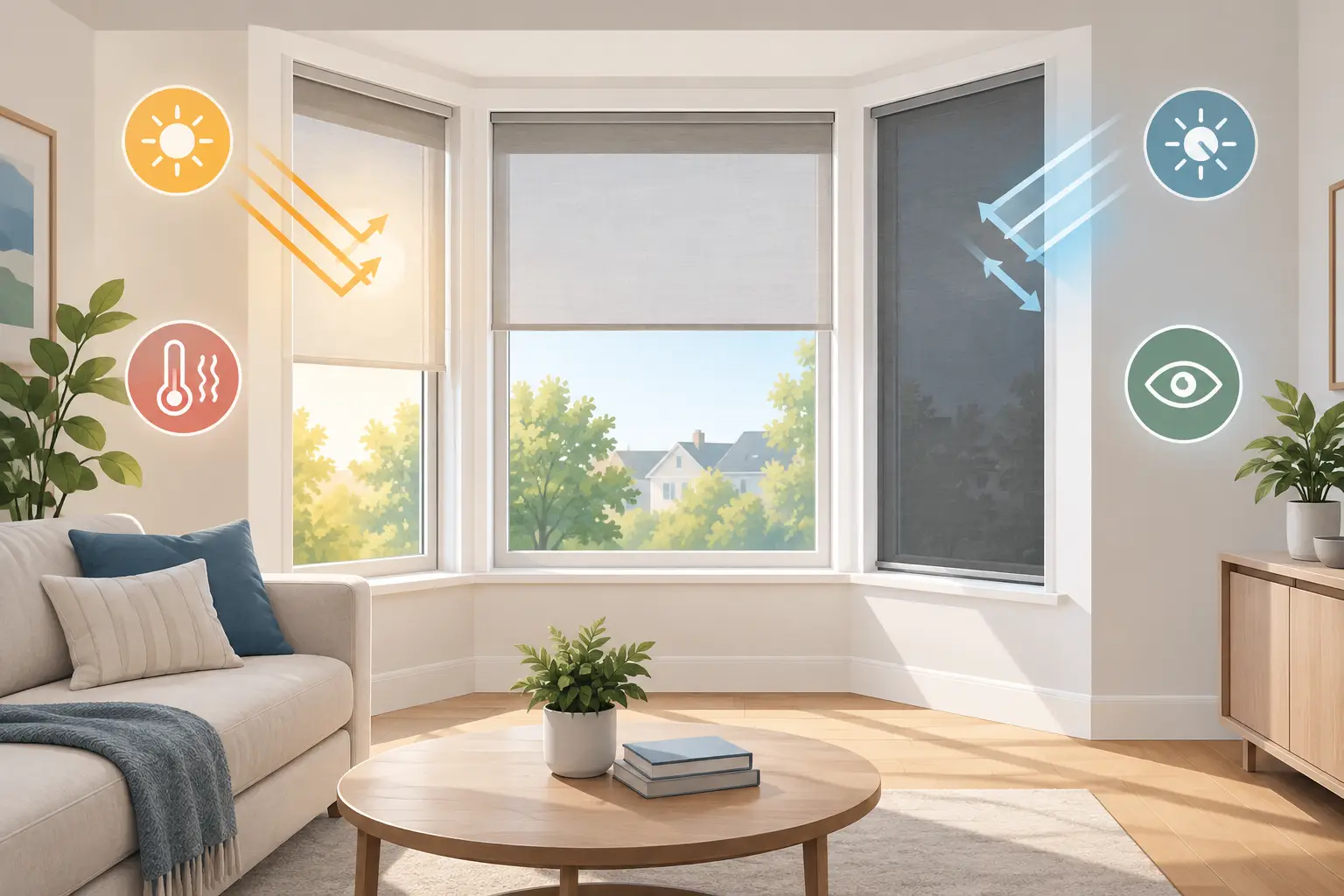
A south-facing conservatory can become difficult to use long before the outdoor temperature reaches its peak. The same applies to bright lounges, shop fronts, offices with large glazing and static caravans exposed to uninterrupted afternoon sun. Window film for summer heat waves is a practical way to reduce the solar energy entering through glass, making these spaces cooler, less glaring and more comfortable to use.
It is not a substitute for sensible ventilation, shading or insulation. However, professionally specified solar film can make a measurable difference where windows are the main source of unwanted heat. The right product also reduces UV exposure and screen glare, while selected finishes provide useful daytime privacy without turning a bright room into a dark one.
Why glass makes rooms uncomfortable in hot weather
Sunlight passing through glazing brings visible light, ultraviolet radiation and heat-carrying infrared energy. In a room with broad, unshaded windows, that solar gain can build quickly. Once furniture, floors and internal surfaces have absorbed the energy, the space may remain warm even after the sun has moved round.
This is particularly noticeable in conservatories, garden-facing rooms and static caravans. Glazing is valuable for views and daylight, but during a heat wave it can leave a room overly bright, hot and difficult to cool. Air conditioning or fans may help, but they are then working against a constant source of solar heat.
Commercial premises face a similar problem. Staff seated near windows can experience hot spots and reflections across monitors, while customers may avoid a bright window-side table or display area. A professional window film addresses the issue at the glass, before much of that solar energy has entered the building.
How solar window film helps during a heat wave
Solar-control film is applied to flat glass and is designed to reject a proportion of solar energy. Performance varies by film type, glass type and installation position, but the objective is consistent: reduce heat gain while retaining a useful level of natural light.
A commercial-grade film can help by reflecting and absorbing selected parts of the sun’s energy. It can also cut glare, which matters when the sun is low or when direct light falls across televisions, laptops, till screens and workstations. Instead of closing curtains throughout the day and losing the view, many property owners choose a film that keeps rooms brighter but more manageable.
UV protection is another important benefit. Window films can significantly reduce UV transmission through the treated glass, helping to protect flooring, upholstery, artwork, merchandise and wood finishes from fading. No solution can stop all fading, as visible light and heat also contribute, but reducing UV exposure is a sensible layer of protection for valuable interiors.
It is not just about making a room darker
A common assumption is that the darkest film will provide the best result. In practice, the best choice depends on the window orientation, the amount of direct sun, the existing glass and how the space is used.
A highly reflective or darker film can reject more solar energy and provide stronger daytime privacy, but it may alter the external appearance of the property and reduce internal light levels. A lighter, more neutral solar film may preserve a more natural look while still improving comfort and glare control. The appropriate balance is different for a street-facing office, a coastal static caravan and a family kitchen.
Choosing the right film for your property
A tailored survey is valuable because film choice should be based on more than a photograph of the window. The installer needs to consider the glass construction, its condition, whether it is double glazed, the frame type, the size of each pane and the amount of sun it receives. These factors influence both performance and safe product selection.
For example, a room that overheats only from late afternoon may benefit from a lighter solar-control film that maintains daylight. A conservatory with prolonged direct exposure may require a higher-performance reflective solution. In a workplace, reducing monitor glare and improving staff comfort may be the priority, whereas a caravan owner may put equal weight on privacy, outward visibility and keeping the interior usable during a summer holiday.
The main objectives usually fall into four connected areas: solar heat reduction, anti-glare performance, UV protection and daytime privacy. A good specification identifies which of these matters most rather than promising that one film will maximise every outcome.
Homes and conservatories
For homeowners, the most immediate change is often that a previously uncomfortable room becomes usable for longer. Solar film can help reduce the sharp glare that makes it hard to watch television, read or work near a window. It can also protect soft furnishings and flooring in rooms that receive regular direct sun.
Conservatories are a common application because of their high proportion of glazing. Film can improve comfort substantially, although expectations should remain realistic. A conservatory with a poorly insulated roof, little ventilation and full sun all day will still become warm. Film reduces the heat load through the treated glass, rather than removing every source of heat in the structure.
Static caravans
Static caravans can heat up quickly, particularly on exposed holiday parks and coastal locations. Their compact interiors, large front windows and lighter construction mean direct sun can have an immediate effect. Solar window film helps reduce that intense solar gain while retaining daylight and the view that makes the location appealing.
Privacy also matters in close-pitch settings. Reflective privacy film can make it harder for people outside to see in during daylight, while allowing occupants to see out. This effect changes after dark: when interior lights are on and it is darker outside, curtains or blinds are still needed for privacy. Being clear about this avoids a common misunderstanding.
Offices, shops and shared workspaces
In commercial settings, excess sun affects more than temperature. It can make screens difficult to read, create uneven comfort across a floor and leave window-side areas underused. A solar film can support a more consistent working environment and reduce the reliance on blinds being closed during business hours.
For shops, it can protect stock and displays near the glass while helping to control glare for customers and staff. Reflective finishes may also create a cleaner, more uniform external appearance, though any branding, planning considerations and desired level of visibility should be discussed before selecting a finish.
Professional installation matters
Window film needs a clean, controlled installation to perform and look right. Dust, damaged seals, old residue and unsuitable glass can affect the final result. Professional installers assess the glazing, prepare the surface thoroughly and use appropriate commercial-grade products for the application.
This also matters because not every film is suitable for every pane of glass. Some glazing types have specific thermal stress considerations. Applying a product without assessing the glass can create avoidable risk. A proper recommendation accounts for the existing glazing rather than treating all windows as the same.
After installation, the film needs time to settle and cure. It is normal to see a temporary haziness or small moisture pockets while this happens. Cleaning advice should also be followed, using suitable soft cloths and non-abrasive products to protect the finished surface.
A practical upgrade before the next hot spell
Heat waves in North Wales, Chester and the Wirral may be short, but the discomfort from direct sun can be immediate. Preparing before the hottest period gives you time to choose the right finish and have the work completed without trying to solve the problem mid-heat wave.
Solar Tint Wales provides professional, commercial-grade window film installation for homes, conservatories, static caravans and commercial premises. The right solution starts with how your glass performs now, what you need the room to do and which benefit matters most.
If a bright room is regularly becoming the room nobody wants to sit or work in, treating the glass can be a straightforward, long-term step towards a cooler, calmer space.