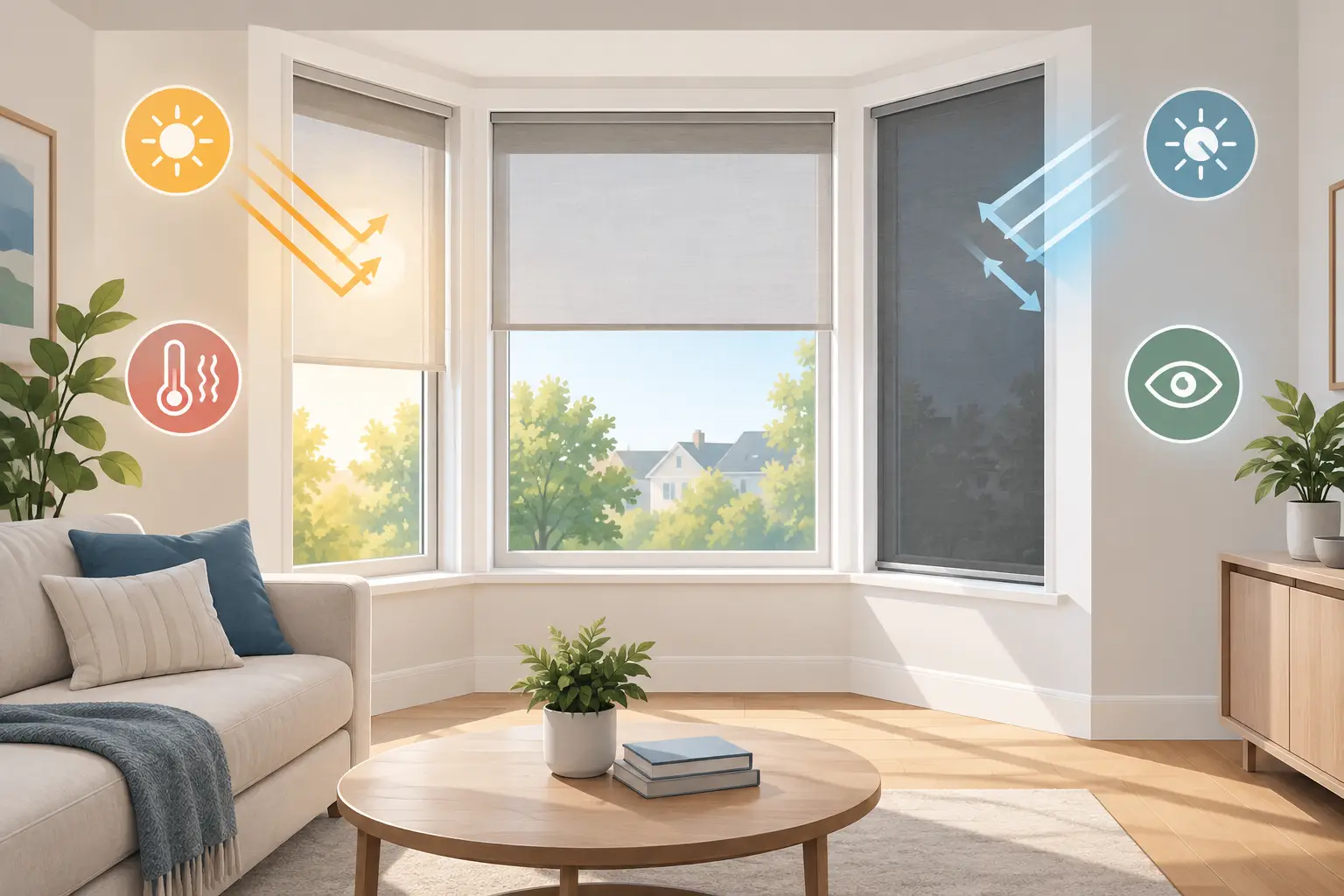
Patio doors are often the biggest source of unwanted heat and glare in a room. If your lounge, kitchen diner, conservatory or static caravan feels too bright by midday and too warm by late afternoon, solar window film for patio doors is usually one of the most effective fixes without changing the glass.
Large glazed doors bring in valuable daylight, but they also let in solar gain, UV and harsh glare. That is why patio doors are one of the most common flat glass areas we are asked about. The right film can make the space more comfortable, protect furnishings and improve daytime privacy, while still keeping the room usable and bright.
Why patio doors cause so many comfort problems
A standard window can create glare. A full-height patio door can turn an entire room into a hotspot. The larger the glazed area, the more direct sunlight enters, and that affects temperature, screen visibility, furniture fading and general comfort.
This is especially noticeable in south-facing and west-facing rooms. South-facing patio doors usually create a steady build-up of heat through the day. West-facing doors can feel fine in the morning, then become uncomfortable later on when the lower afternoon sun comes straight into the room.
In homes, this often means blinds closed during the brightest hours, which defeats the point of having large glazed doors in the first place. In static caravans, the issue is often even more obvious because interiors heat up quickly. In commercial settings, patio-style glazed doors and large sliding doors can create glare on screens, uncomfortable customer areas and inconsistent room temperatures.
What solar window film for patio doors actually does
Solar film is applied directly to the inside face of the glass in most domestic and commercial installations. Its job is to reduce the amount of solar energy entering through the glazing, while also cutting glare and blocking a high percentage of damaging UV.
The exact performance depends on the film type and glass specification, but the practical result is simple. Rooms feel cooler, light becomes easier to live with, and soft furnishings, flooring and display items get better protection from fading.
A good installation should not leave you with a gloomy room. That is a common concern, and it comes down to choosing the right product. Some films are more reflective and better for stronger heat rejection and daytime privacy. Others are lighter in appearance and better suited where customers want a more natural look with a softer reduction in glare and heat.
The main benefits of solar film on patio doors
For most property owners, the first benefit is temperature control. Film helps reduce excessive solar gain, which can make the space in front of the doors much more usable during warmer weather.
The second is glare reduction. If you cannot watch the television, work on a laptop or sit comfortably near the doors at certain times of day, film often makes an immediate difference.
The third is UV protection. Patio doors allow a large amount of UV light into the property, and over time that affects flooring, fabrics, artwork and furniture finishes. Solar film helps protect those surfaces.
Then there is daytime privacy. This matters particularly for overlooked gardens, neighbouring properties, ground-floor commercial units and static caravans on busy parks. Reflective solar film can make it harder to see in from outside during daylight, while still allowing clear outward visibility from inside.
Choosing the right solar window film for patio doors
Not every film suits every patio door. The best option depends on how the room is used, how much sun the glass receives and what matters most to you – heat reduction, privacy, glare control, appearance, or a balance of all four.
Reflective films
Reflective films are often the strongest option for reducing heat and improving daytime privacy. They are a practical choice for heavily exposed patio doors, especially in conservatories, sunrooms, static caravans and south-facing living areas.
The trade-off is appearance. From outside, the glass will usually have a more mirrored finish. Some customers want that cleaner, more contemporary look. Others prefer something more subtle.
Neutral and lighter-tint films
These films reduce glare and solar gain with a softer appearance. They are useful where customers want the room to feel less harsh but do not want a pronounced reflective finish.
They can be a very good fit for homes where appearance is a key concern, but if the patio doors receive intense direct sun for long periods, a lighter film may not perform as strongly as a more reflective product.
Privacy expectations
Daytime privacy and night-time privacy are not the same thing. This is one of the most important points to get right from the start. Reflective solar film works well for privacy during the day because the outside is brighter than the inside. At night, when lights are on indoors, that effect reduces or disappears.
If privacy is the main issue after dark, you may need to combine film with blinds or curtains, depending on the setting.
Is film better than replacing the glass?
In many cases, yes. Replacing patio door glass can be expensive and disruptive, especially when the existing doors are otherwise in good condition. Solar film is a more straightforward upgrade that improves performance without the cost of full replacement.
That said, it depends on the glass and the issue. If the units have failed, misted internally or have structural problems, film will not solve that. Film is designed to improve the performance of serviceable glazing, not fix damaged glass.
For most homes, static caravans and commercial spaces dealing with too much sun, too much glare or fading furnishings, film is the practical route.
What to expect from professional installation
Large patio doors need careful handling. A clean, accurate application matters because these panels are highly visible and exposed to changing light throughout the day. Any poor finish, contamination or misalignment will be obvious.
Professional installation starts with checking the glass type, measuring correctly and matching the film to the use case. This is important because not all glazing should take the same film. Toughened glass, double glazing, older units and certain coated glass types all need proper assessment before installation.
Once fitted, the film needs time to settle. It is normal for newly installed film to show a slight hazy or watery appearance during curing. That clears as it dries out fully.
For customers across North Wales, the Wirral, Chester and surrounding areas, a local specialist can also recommend the right finish based on exposure and property type rather than supplying a one-size-fits-all product. That is usually where better long-term results come from.
Where solar film works particularly well
Homes
Patio doors in lounges, open-plan kitchens and rear extensions are common problem areas. If the room is bright but uncomfortable, solar film helps keep the natural light while reducing the harshness that makes people shut blinds.
Static caravans
This is one of the clearest use cases. Static caravans can become very warm in direct sun, and large glazed doors add to that quickly. Film helps with daytime privacy, solar control and UV protection without making the space feel shut in.
Commercial premises
Offices, waiting areas, shopfronts and customer spaces with large glazed doors benefit from reduced glare and better comfort. It can also improve the exterior appearance of the building where a clean reflective finish suits the frontage.
A few realistic limitations
Solar film makes a measurable difference, but it is not a miracle product. If a room has poor ventilation, an uninsulated roof or multiple unprotected glazed elevations, film will help but may need to be part of a wider solution.
It also will not create full privacy in every lighting condition, and the darkest film is not always the best choice. Going too dark can affect the feel of the room without giving the best balance of performance and appearance.
That is why tailored recommendations matter. A film that works perfectly on a west-facing static caravan door may not be the right choice for a shaded set of patio doors in a family home.
Is it worth it?
If your patio doors make the room too hot, too bright or too exposed, solar film is usually well worth considering. It is one of the most efficient ways to improve comfort, reduce glare and protect interiors without replacing the glazing.
For the best result, the film should match the glass, the orientation and the way the room is used. That is the difference between a patio door that still causes daily frustration and one that lets you enjoy the light without the drawbacks.
If you want a professional, commercial-grade solution for patio doors, conservatories, static caravans or other flat glass applications, the next step is simply to ask for the right film for the right space. That tends to save time, avoid guesswork and give you a result that performs properly long after installation.