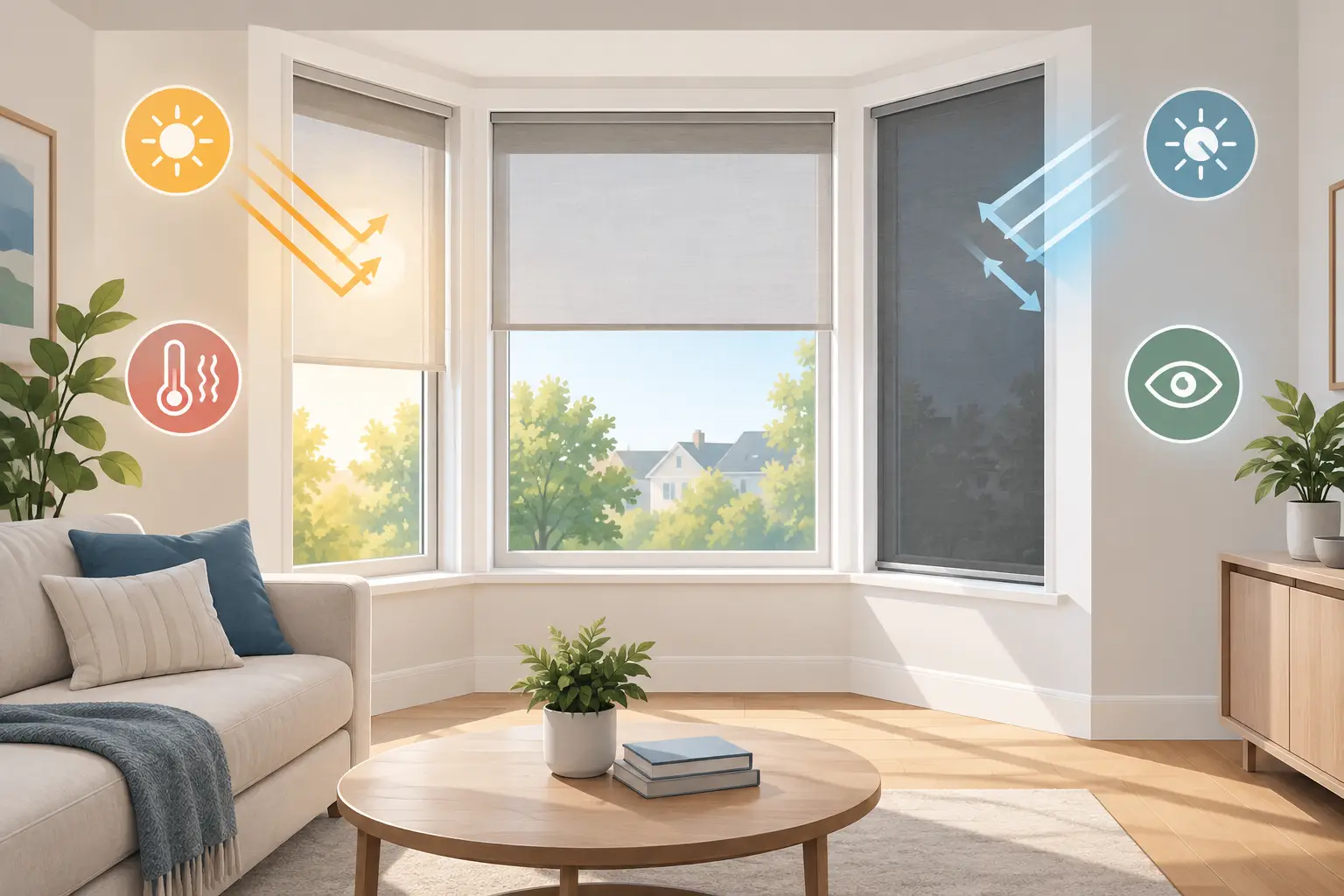
A meeting room that turns into a greenhouse by midday is not just uncomfortable – it affects concentration, screen visibility and how people use the space. The same applies to shopfronts with harsh afternoon sun or offices where blinds stay shut all day. This commercial solar control films guide explains what these films do, where they work best, and how to choose the right specification for your building.
Commercial window film is not one single product. Different films are designed to solve different problems, and that matters. A premises dealing with excessive glare on monitors may need a different finish from a retail unit looking for daytime privacy, or a south-facing office trying to reduce solar heat gain without making interiors feel dark.
What commercial solar control films actually do
Solar control films are applied to existing glass to reduce the amount of solar energy entering a building. In practical terms, that means less heat build-up, less glare, and better control over UV exposure. Depending on the product selected, they can also improve daytime privacy and give a more uniform external appearance.
For many commercial premises, the biggest day-to-day benefit is usability. Spaces become easier to work in because staff are not constantly shifting desks, closing blinds or avoiding certain rooms in the afternoon. Customers also notice the difference. A cooler, more comfortable environment feels better managed and more professional.
Most commercial-grade films are designed to filter a significant proportion of the sun’s energy while still allowing natural light through. That balance is important. The aim is usually not to darken a building heavily, but to reduce the parts of sunlight that cause the most disruption.
A commercial solar control films guide to the main film types
The right film depends on what the building needs to achieve first. Heat reduction, glare control, privacy and appearance often overlap, but one usually leads the decision.
Reflective films
Reflective films are a common choice for offices, shopfronts and larger glazed elevations with strong sun exposure. They are particularly effective where daytime privacy is important, because the reflective outer face makes it harder to see in during daylight hours.
They also perform well for heat and glare reduction. The trade-off is appearance. Reflective films create a more noticeable external finish, which suits many commercial properties but may not be appropriate for every façade or planning context.
Neutral and low-reflective films
Some buildings need solar control without a strong mirrored look. Neutral films are often the better fit in these cases. They reduce heat and glare while keeping the glass appearance more subtle, which can be useful for modern offices, internal partitions near glazed elevations, or premises where branding and frontage appearance matter.
The trade-off here is simple: lower reflectivity can mean less daytime privacy than a highly reflective film. If privacy is the main concern, a neutral finish may need to be balanced against that requirement.
Anti-glare focused films
In offices, clinics and reception areas, glare can be more disruptive than heat. Screen work suffers quickly when light reflects across monitors or polished surfaces. Films designed with glare reduction in mind can make workstations more usable without relying so heavily on blinds.
This is often where a site survey helps most. Glare issues are not always about the hottest window. They can be linked to sun angle, desk position and time of day, so the best film is not always the darkest one.
UV-reducing films
UV exposure is easy to overlook because the damage is gradual. Over time, it contributes to fading on flooring, fabrics, furniture, displays and finishes. For shops, showrooms and offices with strong daylight, UV-reducing window film adds a layer of protection that helps preserve interiors.
This is especially useful where valuable stock or presentation areas sit close to glazing. It is not just about appearance, either. Reducing UV transmission supports longer life for materials that are expensive to replace.
Where solar control film delivers the best results
Commercial solar control film is particularly effective in buildings with large glazed areas, south- or west-facing elevations, upper floor offices, reception spaces and retail frontages. These are the places where heat gain and glare tend to be most obvious.
It is also useful in buildings where air conditioning is already working hard. Film will not replace a full cooling system where one is needed, but it can reduce solar load and help make temperature control more manageable. In some buildings that means improved comfort. In others, it supports lower energy use and less strain on existing systems.
Meeting rooms, classrooms, waiting areas and shop windows are all common problem spots because they combine direct sun, prolonged occupancy and a need for clear visibility. If people regularly avoid using a room at certain times of day, solar film is often worth considering.
What to check before choosing a film
Glass type matters. Not every film is suitable for every pane, and choosing on appearance alone can cause problems. Toughened glass, laminated glass, older sealed units and specialist glazing can all require different considerations. That is why professional assessment matters in commercial settings.
You should also be clear about the priority. If the goal is mainly to reduce glare on screens, a film chosen purely for privacy may not deliver the best result. If the building needs a smarter external finish and daytime privacy, a heavily heat-focused product may not be the only factor to weigh.
Internal conditions matter as well. A server room, open-plan office and customer-facing showroom can all behave differently, even within the same building. The most effective installations are tailored to the actual use of the space, not just the direction the windows face.
Installation, performance and realistic expectations
Good film performs best when the specification and installation are both right. Commercial-grade products are designed for durability, but poor fitting can affect appearance and long-term reliability. Clean edges, proper preparation and the right product for the glass are all part of getting a result that lasts.
It is also worth being realistic about what film can and cannot do. Solar control film can make a major difference to heat, glare and comfort, but it does not make glass insulated in the same way as replacing the glazing unit. It is a practical upgrade to existing glass, often far more cost-effective than replacement, but it still needs to be matched properly to the building.
Night-time privacy is another area where expectations need to be clear. Reflective films work well for daytime privacy because they depend on external light conditions. At night, when interiors are lit and it is dark outside, that effect reduces. If privacy after dark is essential, that should be discussed from the start.
Why many businesses choose film instead of replacing glass
Replacing glazing can be disruptive, expensive and slow, particularly in occupied buildings. Solar control film gives property owners and managers a way to improve performance without major alteration to the premises. For many offices, shops and commercial units, that makes it the sensible first step.
The benefits are immediate in day-to-day use. Staff notice reduced glare. Rooms stay more comfortable. Furnishings and finishes get better UV protection. The building can also present a cleaner, more consistent look from the outside, especially where different windows currently behave differently in strong sun.
For landlords and facilities teams, the value is often in solving a known problem without a major project. For owner-occupiers, it is about making the space work better with less compromise.
Choosing a local, tailored service
Commercial film is not a product you want to guess your way through. The right approach is to assess the premises, understand the problem windows, and recommend a film that fits the glass type, orientation and use of the space. That is particularly important when balancing glare reduction, privacy, natural light and external appearance.
At Tinting For Glass, the focus is on professional installation and tailored solutions for flat glass applications across North Wales, the Wirral, Chester and surrounding areas. Whether the issue is excessive solar gain in an office, glare in a customer-facing space or UV exposure across a glazed frontage, the best results come from specifying the film around the property rather than forcing the property to fit the film.
If your commercial premises has rooms that overheat, windows that create glare, or glazed areas that need better daytime privacy, solar control film is often one of the most practical upgrades available. The right specification will not just change how the glass looks – it will change how the space works.