A street-facing bathroom window, an overlooked conservatory or a glazed office partition can all create the same problem: people need privacy, but do not want to lose the daylight that makes the room usable. When weighing up privacy film versus etched glass, the right choice comes down to more than appearance. It affects installation time, future flexibility, glare, solar comfort and the way the glass performs day to day.
Privacy film versus etched glass: the key difference
Etched glass has a permanently translucent surface. It may be produced in the factory, sandblasted or chemically etched, and it gives glass a soft, diffused finish. Light still enters the room, but the view through the pane is obscured. It is a familiar choice for bathroom windows, internal doors and office partitions where a clean, established look is the priority.
Privacy window film is applied to the existing flat glass. Frosted and patterned films create a similar obscured-glass effect, while reflective and tinted films can provide daytime privacy alongside solar control. This makes film a broader category: the finish can be selected around the problem rather than simply changing the appearance of the glass.
The practical distinction is permanence. Etched glass is part of the pane itself. A professionally installed film is durable, but it can be removed or replaced if the use of the room, branding or privacy requirement changes.
Privacy: what each option can and cannot do
For consistent privacy in both daylight and darkness, frosted privacy film and etched glass work in much the same way. They prevent a clear view through the glass while allowing useful natural light into the room. This is often the best approach for bathrooms, consultation rooms, internal meeting spaces and lower sections of windows close to paths or neighbouring properties.
Reflective privacy film works differently. It creates a more mirror-like external finish in brighter daytime conditions, so people outside have reduced visibility into the building while occupants can generally retain an outward view. It can be particularly useful on large home, office, shop or static caravan windows where the view matters.
However, reflective film is not a one-way solution after dark. When interior lighting is brighter than outside, the effect reverses and people outside may be able to see in. Blinds, curtains or a frosted section may still be needed for evening privacy. This is one of the most important trade-offs to discuss before choosing a film.
Daylight, glare and heat control
Etched glass softens daylight but does not normally deliver meaningful heat rejection, UV filtering or glare control. In a north-facing bathroom this may not matter. In a bright conservatory, a sun-facing office or a holiday caravan with wide glazing, it can be a missed opportunity.
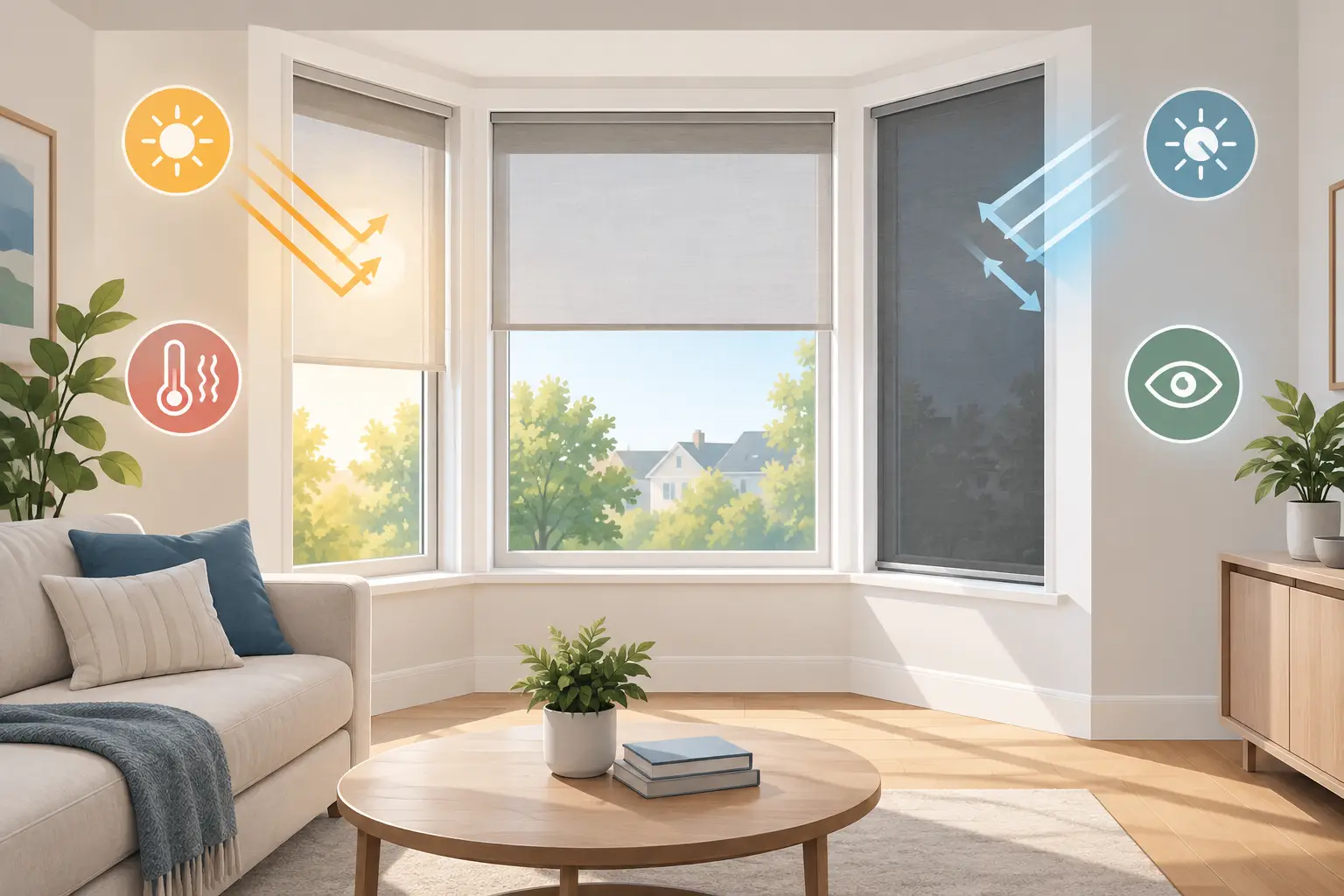
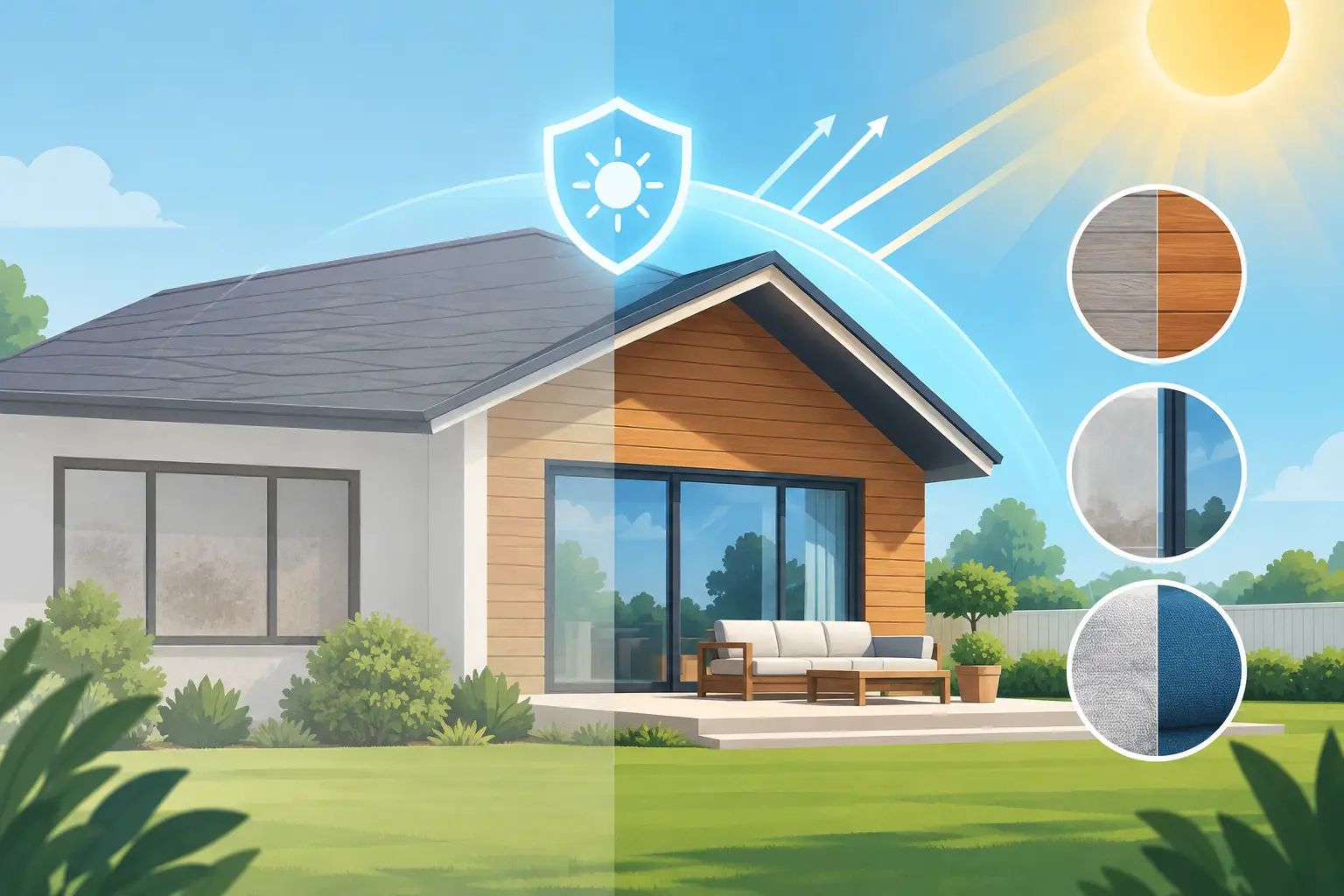
Commercial-grade solar and privacy films can be selected to reduce glare and help limit solar heat entering through the glass. The result can be a more comfortable room, clearer screens and less reliance on closing curtains during the day. Many films also filter a high proportion of UV radiation, helping protect furnishings, flooring, displays and interior finishes from fading.
There is a balance to strike. A darker or more reflective film may improve glare and solar performance, but it will also alter the level and quality of light entering the room. For spaces where maximum daylight is essential, a lighter solar film or a carefully positioned frosted film may be the better fit.
A useful approach for partial privacy
Full-window coverage is not always necessary. Applying frosted film to the lower half or lower two-thirds of a window can block overlooking from a pavement, neighbouring property or campsite walkway while preserving the upper view and daylight. This works especially well in living rooms, kitchens and static caravans where people want privacy when seated but do not want a closed-in feel.
Appearance and long-term flexibility
Etched glass has a premium, permanent appearance. It is well suited to buildings where the glazing is being replaced anyway, or where a uniform finish across many new partitions is specified from the outset. It can also be the right answer when a property owner never expects the design or use of the room to change.
The limitation is that changing the finish later means replacing the glass. If a business rebrands, a meeting room becomes an office, or a homeowner wants to restore a clear view, the alteration is more disruptive and costly.
Privacy film offers more choice at the point of installation. Frosted, graduated, striped and patterned finishes can be used to match the setting, while solar films add an external reflective or neutral appearance where performance is required. Film can also be cut around handles, frames and existing features, allowing privacy to be targeted rather than applied indiscriminately.
For commercial premises, this flexibility has another advantage. Film can provide a professional, consistent look across glazed partitions without the disruption of removing and replacing panes. In homes and caravans, it can update the glass while retaining the existing windows.
Cost and disruption
The cost comparison depends on the number, size and accessibility of panes, but applying privacy film to existing glass is often the more economical route. There is no need to order replacement units, remove glazing or manage the wider work associated with fitting new glass.
That does not mean film is simply a low-cost substitute. The correct film should be chosen for the glass type, its location, the amount of sun exposure and the intended outcome. A film selected only for its appearance may not provide the expected heat reduction, glare control or level of privacy.
Etched glass can make financial sense when new glazing is already planned, particularly for internal partitions where solar control is irrelevant and a permanent decorative finish is wanted. For most occupied properties, though, film usually causes less disruption and allows a quicker, more tailored upgrade.
Which is right for your property?
Choose etched glass when permanence is the main requirement, the glazing is being replaced as part of a wider project, and you want a fixed translucent finish with minimal concern for heat or glare performance. It is also a straightforward option for internal glass where privacy is the only objective.
Choose frosted privacy film when you need reliable obscurity day and night but want to retain the existing glass. It is a practical option for bathrooms, entrance panels, internal office glazing and overlooked windows. A partial application can provide privacy at eye level while keeping the room bright.
Choose reflective or solar privacy film when the challenge includes strong sunshine, glare, overheating or daytime overlooking. This can be particularly valuable in conservatories, open-plan offices, shopfronts and static caravans. Just plan for evening privacy separately if the room is used after dark.
In some cases, the best solution is a combination. A frosted band can provide permanent visual screening at the lower level, while a solar film on other panes helps reduce glare and solar heat. The right layout depends on where people stand, sit and work, not just on how the window looks from outside.
Professional installation matters
Both options rely on good specification, but window film is especially dependent on preparation and fitting quality. The glass must be properly assessed and cleaned, and the film must be installed without trapped contamination, poorly finished edges or unsuitable joins. Larger panes, shaped glass and hard-to-reach windows all need a considered approach.
It is also sensible to identify the glass type before selecting a solar film. Certain glazing units need compatible products to manage thermal stress appropriately. A professional survey allows the film finish and performance level to be matched to the property rather than guessed from a sample.
For property owners across North Wales, Chester and the Wirral, Solar Tint Wales can assess whether privacy, glare reduction, UV protection or heat control should lead the specification. The most effective result is not always the darkest or most reflective option – it is the film that improves how the particular room is used.
A window should not force you to choose between daylight and privacy. Start with the real issue at the glass, whether that is overlooking, screen glare, summer heat or fading furnishings, and the most suitable finish becomes much clearer.