A bright shopfront can bring people through the door, but uncontrolled sunlight can make the space behind the glass difficult to use. This retail glare example is familiar to many shop owners: a south- or west-facing window catches the afternoon sun, turning product displays into reflections and making the till screen hard to read just when footfall increases.
Glare is not simply an inconvenience. It can affect how long customers browse, how clearly staff can use screens, and how well products show their true colour and detail. The right commercial-grade window film reduces excessive brightness at the glass while keeping the premises naturally lit and presentable from the street.
A retail glare example: sunlight at the front display
Consider a boutique with a large glazed frontage. In the morning, the window allows useful daylight into the shop. By early afternoon, however, direct sun hits the glass at an angle. The pavement, passing traffic and buildings opposite are reflected over the display, while sunlight falls across the floor and counter.
From outside, customers struggle to see the clothing, gifts or promotional items arranged in the window. From inside, staff find that the card terminal and point-of-sale monitor are washed out. A customer trying to compare colours on a phone or read a price label may need to move away from the window. The display still exists, but it is no longer working as effectively as it should.
This is a common issue in shops with wide glazing, especially where the frontage faces the lower afternoon sun. It can also occur in salons, showrooms, reception areas and retail units within shopping parades, where reflective surfaces, polished floors and bright product packaging add to the problem.
Why glare can affect the customer experience
Retail lighting needs to do two jobs at once. It should make the premises feel open and welcoming, while allowing customers to see products, prices and digital information without strain. Direct sunlight can interrupt both.
At the counter, screen glare slows simple tasks down. Staff may have to tilt monitors, close blinds, move equipment or shade the screen with a hand. These are small interruptions, but repeated throughout a busy day they affect service and concentration.
On the shop floor, glare can flatten the appearance of merchandise. Fine details disappear in reflected light, while colours can look different under intense sunshine. For a business selling clothing, homewares, cosmetics, jewellery or display-led products, that matters. Customers need a clear, comfortable view before they make a decision.
There is also a practical comfort issue. The same sunlight that creates glare often brings unwanted solar heat. Staff positioned near the front window can become uncomfortable, and customers may move quickly through the brightest part of the premises rather than stopping to browse.
Why curtains and blinds are not always the answer
Blinds can be useful where privacy or occasional shading is required, but they often involve a compromise for retail premises. Closing them may stop the glare, yet it can also block the shop window, reduce daylight and make the frontage look closed or less inviting.
A window film is applied directly to the flat glass, so it manages solar glare across the full glazed area without the same loss of visibility. Depending on the film selected, it can reduce glare and solar heat while retaining a bright interior and an outward view.
The correct choice depends on the orientation of the glass, the size of the windows, the level of direct sun, the business type and the look required from outside. A highly reflective film may offer strong solar performance and daytime privacy, for example, but it changes the external appearance more than a lighter, more neutral film. For many retailers, the best result is a tailored balance between glare control, heat reduction and a professional shopfront.
How commercial window film addresses glare
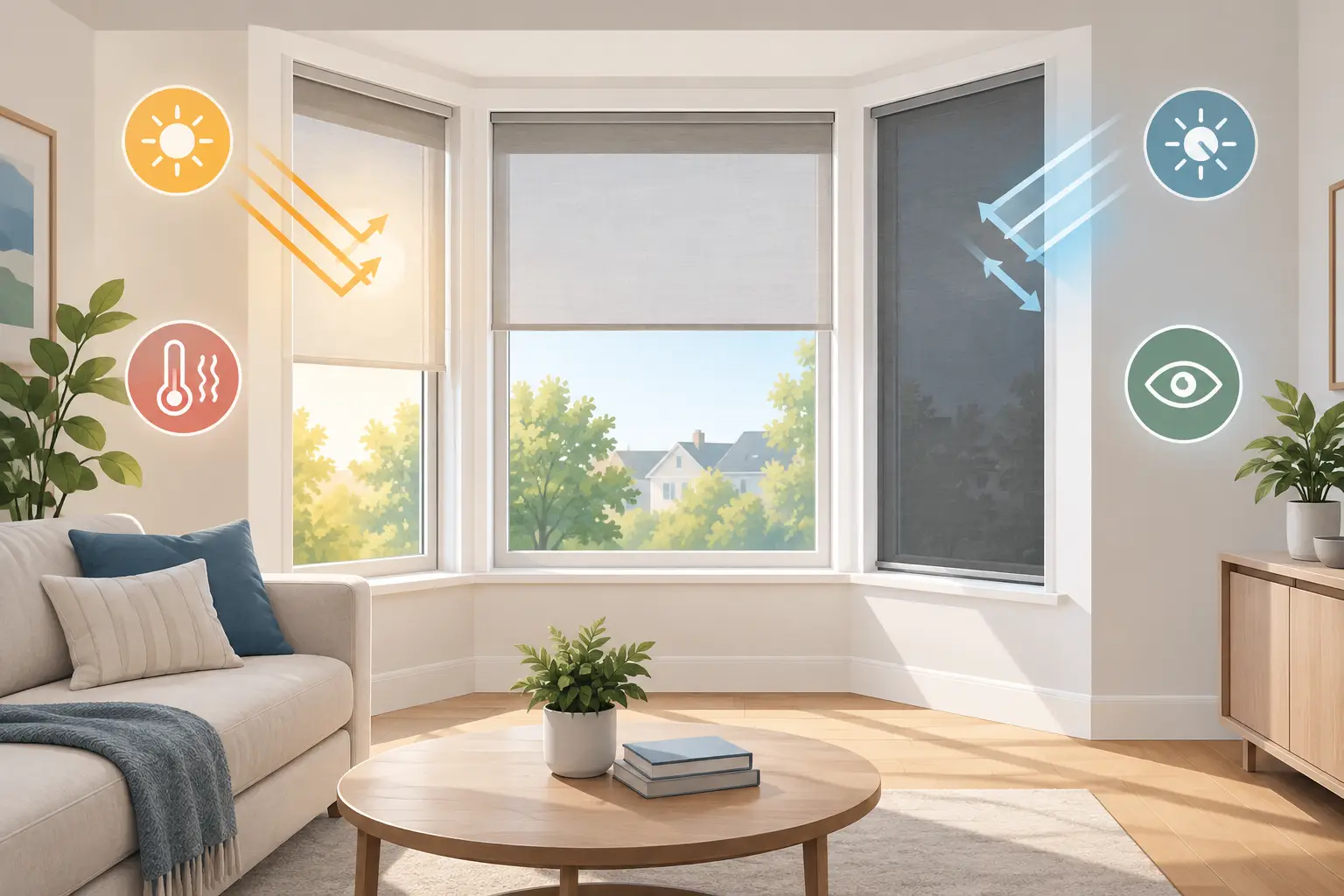
Solar control window film works by reducing the amount of solar energy and visible light passing through the glass. This helps soften intense daylight before it reaches the display, counter or screen.
The result should not be a dark shop. A professionally specified film can reduce the harshness of direct sunlight while preserving useful natural light. Customers can still see into the premises, staff can work more comfortably, and the window display remains easier to view from the pavement.
Many commercial-grade films also provide UV filtering. This is particularly valuable near windows, where prolonged sun exposure can fade fabrics, printed signage, flooring, artwork, packaging and furnishings. Glare control and UV protection often solve related problems in the same part of the building.
Reflective films can be especially effective where daytime privacy is also required. They can reduce inward visibility during daylight hours while allowing occupants to see out. However, privacy performance changes after dark when interior lighting is stronger than outside, so this should be considered during the specification process. If privacy is the main requirement at all times, a different film or additional treatment may be more suitable.
Choosing the right film for a shopfront
There is no single film that suits every retail unit. A small independent shop with a heritage-style frontage may need a subtle, low-reflective finish. A modern showroom with large, sun-exposed panes may benefit from a stronger solar film that provides greater glare and heat rejection.
A professional assessment looks beyond the glass itself. The important questions include when sunlight enters the premises, which areas are affected, whether glare is disrupting screens or displays, and how much change to the external appearance is acceptable. The building’s existing glazing also matters, as film selection must be suitable for the glass type and installation conditions.
For a display window, it may be sensible to use a film that maintains clearer outward and inward visibility. For an office area behind the sales floor, stronger glare reduction might be the priority. In some properties, different elevations need different solutions because one side receives direct afternoon sun while another does not.
This is why a commercial-grade installation should be specified around the use of the space rather than selected only by shade. The aim is measurable improvement in comfort and visibility without creating a darker or less welcoming premises.
Where glare problems often appear in retail premises
Glare is usually most noticeable at glazed frontages, but it is not limited to the main display window. Roof glazing, internal glass partitions, side windows and rear office areas can all create difficult light conditions.
In a salon, glare may affect mirrors and make colour work harder to assess. In a showroom, reflections can obscure finishes on furniture, appliances or samples. In a pharmacy, optician or reception-led business, glare can make screens and paperwork uncomfortable to use. Even a small counter window can cause a persistent problem if sunlight hits it at the right time each day.
The pattern matters. A short period of very intense glare can be more disruptive than generally bright conditions, particularly if it happens during peak trading hours. Recording when and where the problem occurs gives a clearer basis for selecting a film that delivers the right level of control.
A practical way to assess the issue
Before arranging installation, spend a few days observing the affected glass. Note the time glare begins, where reflections fall, and whether the issue is strongest for customers, staff, products or screens. Photographs taken at different times can also show how the window behaves in changing light.
It is useful to consider the wider impact as well. If air conditioning is working harder near the frontage, or if window displays need frequent replacement because colours are fading, the benefit of solar film may go beyond glare reduction. Lower solar gain can support a more consistent indoor temperature, while UV filtering helps protect items displayed close to the glass.
For businesses in North Wales, Chester and the Wirral, changing weather does not remove the need for glare control. Low-angle sunshine can be particularly intrusive, and bright cloud cover can still create strong reflections across screens and polished surfaces.
A better view of your products and premises
A well-chosen window film should feel like a practical improvement rather than a dramatic alteration. The shop remains bright, the frontage stays professional, and staff and customers can see what matters without battling direct sun.
Solar Tint Wales provides tailored commercial window film solutions for retail premises, helping businesses reduce glare, manage solar heat, protect displays from UV exposure and improve daytime privacy where required. The right starting point is to identify the problem glass and the time of day it affects your business most. From there, a suitable film can make the space easier to work in and more comfortable to browse.