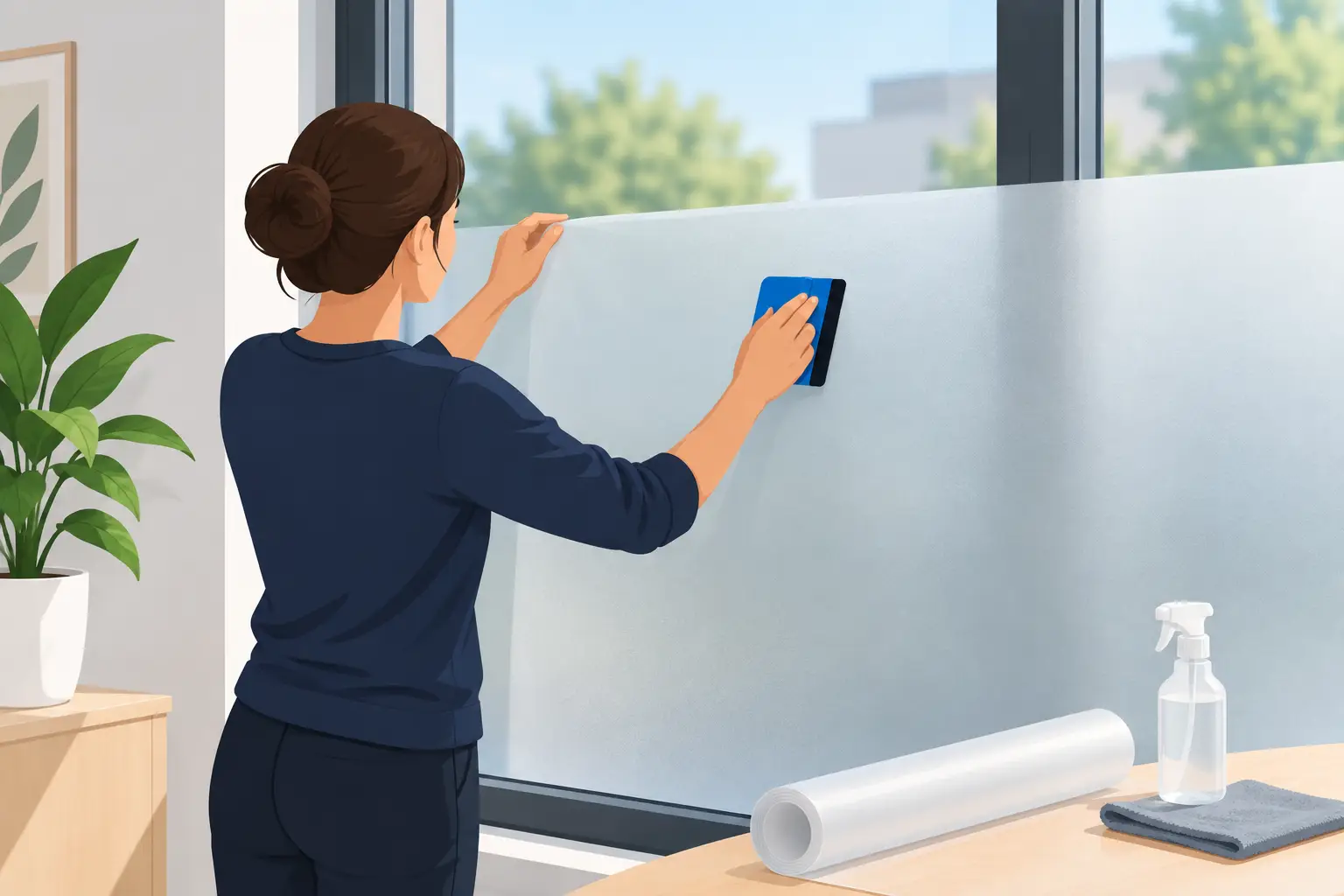
A meeting room with clear glass can look smart right up until the moment someone starts searching for a wall to hide a confidential discussion. That is usually when privacy film for office meeting rooms moves from a nice idea to a practical requirement. If staff feel exposed, clients can see people outside the room, and screens or notes are visible from the corridor, the space is not working as it should.
Meeting rooms need a careful balance. You want privacy, but not a dark box. You want a professional finish, but not something that makes the office feel closed off. You may also need glare reduction, improved comfort in sunny rooms, or a finish that supports the overall look of the premises. The right film can solve several of these issues at once, but only if the specification matches how the room is actually used.
What privacy film for office meeting rooms needs to achieve
The first job is obvious – stop unwanted views into the room. In practice, that can mean different things depending on the layout. Some offices need full visual screening because meeting rooms face reception areas, shared walkways or open-plan desks. Others only need partial screening at seated eye level, so people can still keep the open feel of glazed partitions while stopping direct lines of sight.
This is where one-size-fits-all advice tends to fall short. Frosted film is often the default choice because it creates a clean, professional appearance and obscures the view without blocking light. For many offices, that is exactly the right answer. But it is not the only option, and it is not always the best one.
If a meeting room receives strong sunlight, privacy alone may not be enough. A solar control or reflective film may be more suitable where heat build-up and glare are making the room uncomfortable. If the room contains screens used for presentations, glare control becomes especially important. If the priority is keeping a bright, open look while adding discretion, a lighter privacy finish may work better than a dense obscure film.
Choosing the right film finish
Frosted and etched-effect films remain the most common choice for office meeting rooms because they provide reliable privacy in a straightforward way. They suit internal glazed partitions and external windows, and they tend to work well with modern office design. The finish looks consistent, professional and easy to maintain.
That said, the level of privacy matters. Some frosted films are more translucent than others. A lighter option may blur shapes but still allow movement to be seen. A denser finish gives stronger screening but can feel more enclosed. The right level depends on whether the room is used for day-to-day catch-ups, sensitive HR discussions, financial reviews or client meetings.
Reflective films are another option, especially where external glazing is involved. These can provide daytime privacy while also reducing solar gain and glare. They are often useful in meeting rooms that overheat or become uncomfortable during bright weather. The trade-off is that privacy performance can change depending on lighting conditions. In simple terms, if it is brighter outside than in, reflective film performs well. If the lighting reverses in the evening, the effect can reduce.
There are also decorative and banded applications to consider. In some offices, full-height privacy is not necessary and can make the room feel shut in. A well-positioned manifestation band or mid-level privacy section can block direct views while keeping a more open feel above and below. This approach suits businesses that want to maintain light flow and visibility through the office without sacrificing discretion where people are seated.
Privacy film for office meeting rooms and natural light
One of the biggest concerns from office managers is whether privacy film will make the room too dark. Usually, the answer is no – but it depends on the product and placement. Good quality commercial-grade film is designed to control visibility without turning glazed areas into solid panels.
Frosted films diffuse light rather than blacking it out, which helps rooms stay bright. That makes them particularly useful on internal glass where borrowed light is important. In many offices, this is a better option than blinds, which can create a harsher, more closed-in feel and are often left half-open or uneven.
On external meeting room windows, the conversation changes slightly. If heat, glare and sun exposure are already a problem, a solar control privacy film may slightly reduce visible light, but the gain in comfort can be worth it. A room that is bright but too hot to use properly is not an efficient space. In those cases, a modest reduction in glare and light often improves usability rather than harming it.
Practical reasons offices install meeting room film
Privacy is usually the trigger, but it is rarely the only benefit. Office meeting rooms often sit in the sunniest part of a building, especially in newer layouts with extensive glazing. Staff may complain that the room is too warm by afternoon, that laptop screens are difficult to see, or that the space feels uncomfortable for longer meetings.
A well-chosen film can reduce glare on screens, improve comfort and help protect interiors from UV exposure. Over time, strong sunlight can fade flooring, furniture and soft finishes. In client-facing spaces, that wear becomes visible. Film helps reduce that exposure while keeping the room usable and presentable.
There is also the question of professionalism. Clear glass meeting rooms can create a modern look, but they can also expose clutter, body language and presentation materials to the rest of the office. A privacy finish gives the room a clearer purpose. It signals that the space is designed for focused conversation, not display.
Installation matters as much as the film itself
Even the best film will look poor if it is badly fitted. On office glazing, this shows quickly. Misaligned edges, trapped dust, uneven bands or poorly cut sections undermine the finish and can make the whole room look temporary. For commercial premises, that is not what you want.
Professional installation is about more than neat appearance. It also ensures the correct film is used on the correct glass type. That is especially important on external windows, where compatibility with the glazing matters. A proper site assessment helps avoid choosing a film based only on appearance when the room actually needs solar control, anti-glare performance or a different privacy level.
This is why tailored solutions are usually the better route than ordering a generic film online and hoping for the best. Meeting rooms vary widely in orientation, glass type, internal lighting and use. A room used once a week for team updates has different demands from one used daily for private client calls or management meetings.
Internal glass vs external windows
Internal glazed partitions and external meeting room windows often need different solutions, even within the same room. Internal glass usually benefits from frosted or decorative privacy film because the main issue is line of sight from surrounding office areas. The goal is visual discretion while keeping the office feeling open.
External windows may need a broader performance film. If the room faces strong sun, the right specification can help with privacy, glare and heat at the same time. In some cases, using one finish internally and another externally gives the best overall result. That depends on the building, but it is often more effective than trying to force one product to do every job.
For offices across North Wales, The Wirral, Chester and surrounding areas, this tends to be a practical discussion rather than a design-led one. The key question is simple: what is stopping the room from working properly now? Once that is clear, the right film choice becomes much easier.
What to consider before you choose
Before fitting privacy film for office meeting rooms, it helps to think beyond the word privacy. Ask whether the problem is mainly visibility, glare, heat, appearance or a mix of all four. Consider how the room is used during the day and into the evening, who needs privacy from whom, and whether full coverage is necessary.
It is also worth considering cleaning, durability and the overall office finish. Commercial-grade film should stand up to regular use and maintain a professional appearance over time. In busy workplaces, that matters just as much as first impressions.
For some businesses, the answer will be a simple frosted film on internal partitions. For others, a more technical solar or reflective film on external glazing will deliver better day-to-day results. There is no single best product for every meeting room, only the one that fits the room properly.
A meeting room should support clear thinking, private conversation and comfortable working conditions. If the glass is getting in the way, the right film can correct that without losing the light and openness that made the space appealing in the first place. If you are weighing up options, a professional assessment usually saves time by getting straight to the finish and performance level the room actually needs.