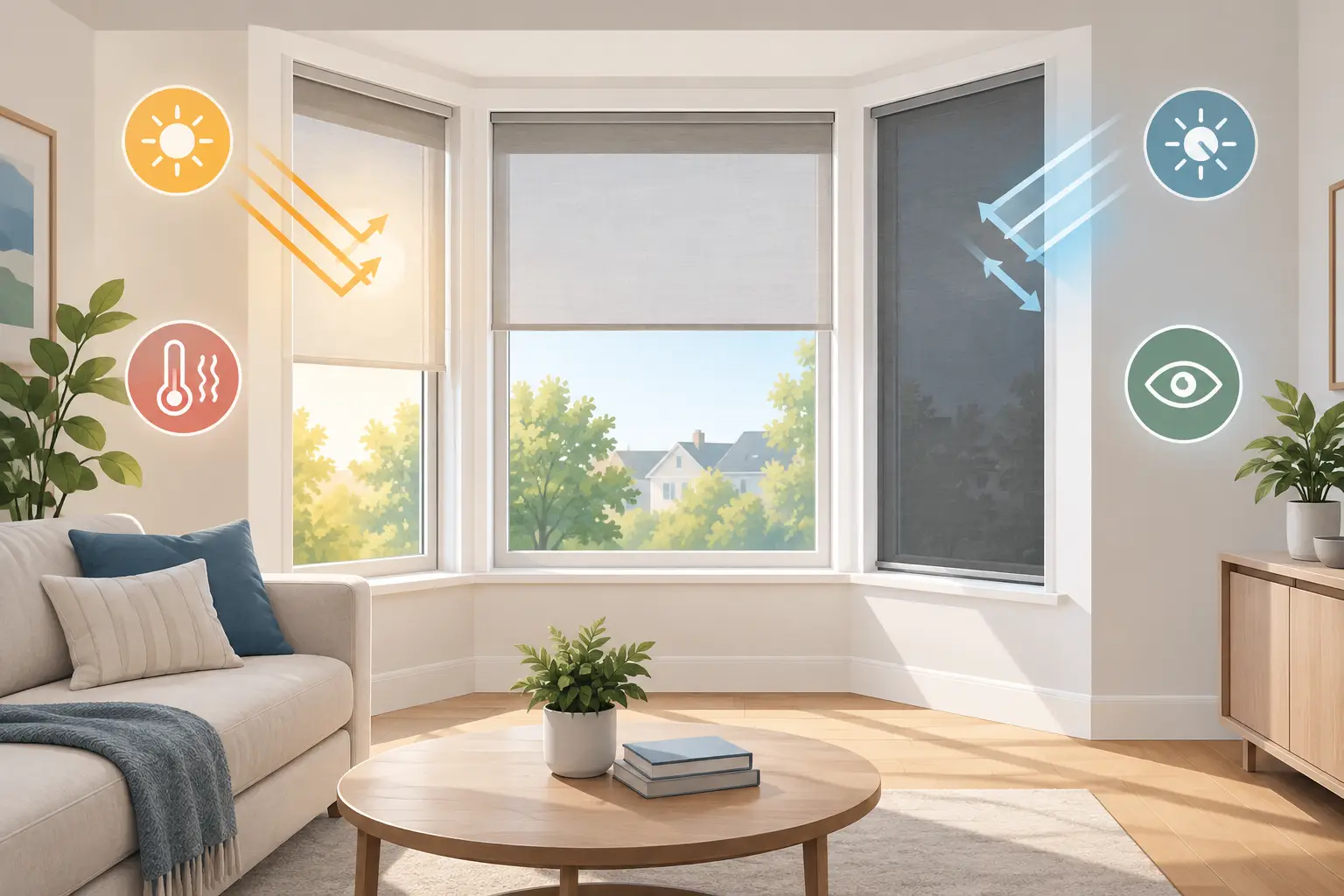
If one room in your property turns into a greenhouse every time the sun appears, the question is rarely whether you need a fix. It is usually double glazing vs solar window film, and which option gives you the result you actually need without overspending.
That matters because these two solutions solve different problems, even when they seem to overlap. In homes, conservatories, static caravans and commercial buildings, people often ask for “heat reduction” when the real issue is glare on screens, fading furnishings, poor daytime privacy, or a room that is simply uncomfortable to use for part of the day. Getting the specification right makes all the difference.
Double glazing vs solar window film – what is the difference?
Double glazing is a replacement glass system. It uses two panes separated by a sealed gap, usually filled with air or inert gas, to improve insulation. Its main strength is reducing heat loss in colder weather and improving overall thermal efficiency compared with older single glazing.
Solar window film is applied to existing flat glass. It is a professional retrofit product designed to control solar gain, reduce glare, block a very high percentage of UV, and in many cases improve daytime privacy. Depending on the film selected, it can also give the glass a more reflective or neutral appearance.
So while both can affect comfort and energy use, they are not direct like-for-like products. Double glazing is primarily a glazing upgrade. Solar window film is primarily a performance upgrade for the glass you already have.
When double glazing makes more sense
If your windows are old, draughty, failed or inefficient in winter, double glazing may be the better long-term investment. A property with ageing single glazing, condensation between panes, rotting frames or obvious heat loss issues may need replacement rather than adaptation.
This is especially true where the whole window unit is underperforming. Film cannot fix broken seals, poor frames or structural issues around the opening. If your main concern is keeping heat in during colder months, modern double glazing offers a broader insulation benefit than solar film alone.
For some homeowners, appearance and property upgrades also come into play. If a full renovation is already planned, replacing windows may fit naturally into the wider project. In those cases, film is not necessarily the first step.
When solar window film is the smarter option
Solar film comes into its own when the glazing itself is serviceable, but the room is unpleasant to use because of sun, glare or overheating. That is a common situation in south-facing rooms, conservatories, offices with large glazed elevations, shopfronts and static caravans.
In those spaces, replacing all the glazing can be expensive and disruptive. A commercial-grade solar film can often deal directly with the day-to-day problem by cutting glare, reducing solar heat build-up and protecting interiors from UV damage.
This is why solar film is often the more practical answer when people say things like:
- the lounge is too bright in the afternoon
- computer screens are hard to see in the office
- a caravan gets unbearably hot in summer
- furnishings are fading near the windows
- people can see in during the day
In other words, if the issue is solar control rather than failed windows, film is usually the more targeted solution.
Cost, disruption and timescales
For many property owners, the real comparison in double glazing vs solar window film comes down to budget and disruption.
Double glazing is a larger capital project. It involves removing existing units, fitting replacements and, depending on the property, dealing with trims, access and installation scheduling. It may be absolutely worthwhile, but it is not a light-touch upgrade.
Solar window film is generally much more cost-effective as a retrofit. Installation is quicker, cleaner and far less disruptive because the existing glass stays in place. For commercial premises, that can be a major advantage. Offices, shops and reception areas can often be improved without the level of disruption that full glazing replacement would create.
For static caravans and homes, the same applies. If the goal is to make the space cooler, more private and more comfortable before the next warm spell, film is often the faster route.
Performance in summer and winter
This is where a lot of confusion comes from. Double glazing and solar film affect heat differently.
Double glazing helps reduce heat transfer, which is valuable in winter. It helps the property hold warmth more effectively than older single-glazed windows. That said, a heavily sun-exposed room can still overheat, even with double glazing, because sunlight entering through the glass still creates solar gain.
Solar window film is designed to reduce that incoming solar energy. That makes it particularly useful in rooms that become too hot in sunny weather. It can also reduce harsh brightness and eye strain, which matters just as much as temperature in offices, living rooms and glazed extensions.
Some films can also support energy efficiency by reducing the cooling load in warmer conditions. The exact effect depends on glass type, orientation and film specification, which is why an application-led approach matters.
Glare, privacy and UV protection
This is the area where solar film usually has the clearest edge.
Standard double glazing does not automatically solve glare. If sunlight is bouncing off desks, televisions or till screens, changing to double glazing alone may not remove the problem. Solar film is specifically built for this kind of control.
The same goes for daytime privacy. Reflective and privacy films can make it much harder for people to see in from outside during daylight hours, while still allowing natural light into the room. That is particularly useful for roadside homes, ground-floor offices, shopfronts and static caravans on busy parks.
UV protection is another practical benefit. High-quality solar films can block the vast majority of damaging UV rays, helping to protect furnishings, flooring, fabrics and displays from fading. If you have already invested in interiors, that protection matters.
What about conservatories and static caravans?
These are two of the clearest examples where solar film often outperforms window replacement in terms of practicality.
Conservatories tend to suffer from excessive solar gain and glare because of the amount of glazing involved. Replacing all the glass can be costly, while solar film can address comfort more directly by reducing heat and brightness.
Static caravans face a similar challenge. They heat up quickly in sunny conditions, and privacy can be limited on busier sites. A suitable film can help create a cooler, more usable interior while improving daytime privacy and reducing UV exposure on upholstery and finishes.
That does not mean film is always the answer, but in these settings it is often the most efficient one.
The trade-offs to be aware of
Neither option is perfect for every building.
Double glazing is the stronger choice for full window renewal and cold-weather insulation, but it comes with higher cost and more disruption. Solar film is more targeted and more affordable, but it relies on the existing glazing being suitable and in sound condition.
There is also the question of appearance. Some films are reflective, which many customers want for privacy and solar performance, while others are more subtle. The right finish depends on the property type and the result you want.
It is also worth noting that not every film suits every pane of glass. Professional specification matters because thermal stress, glass type and installation environment all need to be considered properly.
How to choose the right one for your property
Start with the actual problem, not the product name. If your issue is failing windows, winter heat loss and old units nearing the end of their life, double glazing may be the correct route.
If your windows are otherwise sound but the room is too hot, too bright, lacking privacy or suffering from UV fade, solar window film is often the more sensible and cost-effective answer.
For many properties, especially homes with conservatories, static caravans and commercial spaces with large glazed areas, the comparison is not really about which product is “better”. It is about which one is designed for the problem in front of you.
At Tinting For Glass, that is exactly how we approach it – by looking at the glass, the building use and the result you need, then recommending a professional, tailored solution for homes, caravans and commercial premises across North Wales, The Wirral, Chester and surrounding areas.
If you are weighing up double glazing vs solar window film, the most useful next step is to stop thinking in general terms and look at how the space actually behaves across the day. The right solution is usually the one that makes the room properly usable again.