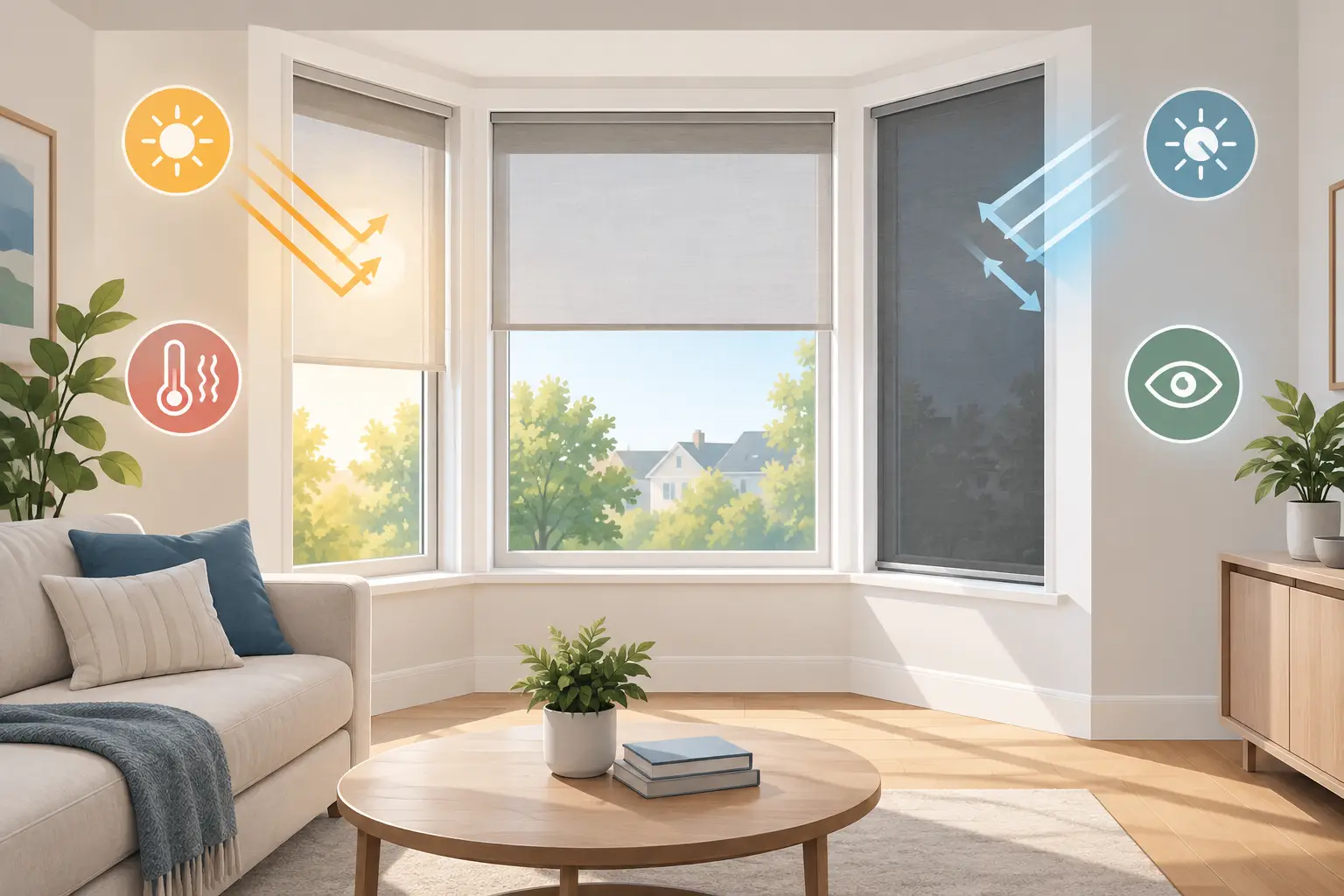
A caravan that feels bright and welcoming on a cloudy morning can become uncomfortably hot by lunchtime when it faces the coast. Static caravan window film for coastal sun is designed to manage that change: reducing harsh glare and solar heat while retaining the daylight and outward views that make a holiday home enjoyable.
Coastal locations bring a particular combination of conditions. Large open skies, reflective water, pale decking and long afternoon sun can put more strain on caravan windows than owners expect. The result is often a lounge that is difficult to sit in, a television screen that cannot be seen clearly, and furnishings that fade fastest nearest the glass. Professional window film offers a practical, commercial-grade way to improve comfort without replacing the windows.
Why coastal caravans need more than blinds
Blinds and curtains have a role, particularly at night, but they only deal with the problem after sunlight has passed through the window. Once closed, they can also make a compact caravan feel darker and more enclosed. Window film works directly on the glass, helping to reduce the amount of solar energy and damaging UV reaching the interior in the first place.
This matters in static caravans because the glazing often covers a large proportion of the main living space. Front-facing patio doors, picture windows and side windows provide the views owners want, but they can also create intense glare. In exposed areas around North Wales, Anglesey, Abersoch, Pwllheli, Conwy and the North Wales coast, even a cool sea breeze does not prevent strong sunlight building up behind glass.
The right film can make the space more usable through the day. It can soften glare on televisions, laptops and mobile phones, improve comfort around seating areas and help reduce the demand placed on fans or air conditioning. The result should still feel like a bright holiday home, not a darkened room.
What static caravan window film for coastal sun can do
Solar window film is not a single product. Different films are made to prioritise heat rejection, glare reduction, privacy, UV filtering or a particular external appearance. A professional survey helps identify which outcome matters most for the caravan and how its windows face the sun.
Cut glare without losing the view
Glare is often the first issue caravan owners notice. Light reflecting from the sea, wet ground, white cladding or nearby decking can be just as distracting as direct sunshine. A suitable solar film reduces the intensity of that light, making it easier to watch television, read or use screens.
The best choice depends on the position of the caravan. A front room with broad south or west-facing glazing may need stronger glare control than a bedroom window receiving only early-morning sun. Going too dark can affect natural light on overcast days, so the aim is a balanced finish rather than the darkest film available.
Help control summer heat
Sunlight through glass carries heat into the caravan. In a compact interior, that heat can accumulate quickly, especially when the property has been closed up for part of the day. Solar-control films reflect or absorb a proportion of solar energy before it becomes part of the indoor heat load.
Film will not remove the need for ventilation, shading or sensible use of doors and windows. It is also not a substitute for insulation in colder weather. However, it can make a noticeable difference to the heat coming through sun-facing glass, helping the lounge and bedrooms feel less oppressive during bright spells.
Protect furnishings from UV exposure
UV is a major cause of fading and deterioration. Upholstery, curtains, vinyl flooring, artwork, wood finishes and soft furnishings can all suffer when exposed to strong daylight over repeated seasons. Quality window film filters the vast majority of UV radiation, adding a useful layer of protection for the interior you have invested in.
Sun fading is not caused by UV alone. Visible light and heat also contribute, which is why solar-control films are valuable where exposure is high. No film can guarantee that fading will never occur, but reducing the main causes can slow the damage substantially.
Add daytime privacy where it is needed
Holiday parks can be sociable, but caravans are often positioned close to paths, roads or neighbouring pitches. Reflective and privacy-focused films can limit inward views during daylight while allowing occupants to see out. This is particularly useful for front lounges, dining spaces and caravans that overlook busy walkways.
There is an important trade-off. Daytime privacy film relies on the outside being brighter than the inside. At night, when lights are on indoors, it does not provide the same level of privacy. Curtains, blinds or other window coverings are still needed after dark.
Choosing the right finish for your caravan
The film should be selected for performance first, then appearance. A light neutral film may be the right answer where the main aim is UV protection and glare reduction without an obvious tint. A more reflective film can offer stronger daytime privacy and solar control, but it will alter the exterior look and may be subject to holiday park rules.
Before installation, it is sensible to check the park’s requirements. Some sites have guidelines on external changes, visible reflectivity or alterations to caravan windows. A tailored solution considers these restrictions alongside the direction of the glass, the surrounding environment and how the caravan is used.
It is also worth considering window type. Modern static caravans may have sealed double-glazed units, while older models can have different glazing arrangements. Film compatibility matters. Applying an unsuitable product to the wrong glass can increase thermal stress, which is why a professional installer should assess the existing windows before recommending a film.
Professional installation matters on caravan glass
Caravan windows need careful preparation. Salt air, wind-blown sand, insect marks and residue around frames can affect adhesion if the glass is not thoroughly cleaned. Professional installation includes detailed preparation, accurate cutting and application methods that avoid bubbles, creases and poorly finished edges.
Commercial-grade film is designed for flat glass applications and offers dependable performance when specified and installed correctly. It is not comparable with an off-the-shelf roll applied as a quick weekend job. The quality of the film, the condition of the glazing and the fitting process all affect how it looks and performs over time.
Owners should also understand that newly fitted film needs time to cure. A slight haze or small water pockets can be present shortly after installation and normally clear as the moisture dries. The curing period varies with weather, glass type and season. The film should not be disturbed or cleaned until the installer advises that it is ready.
A practical approach to coastal sun control
Start by identifying when and where the problem occurs. If the lounge is unbearable from mid-afternoon, the main front glazing may be the priority. If bedroom furnishings are fading or neighbouring pitches overlook the dining area, a different film or a more selective application may make better sense.
There is no need to tint every window to the same level. In many caravans, a tailored approach produces the best balance: stronger solar control on the most exposed panes and a lighter, more discreet film elsewhere. This protects the areas that need it most while preserving the natural brightness of the rest of the caravan.
Tinting For Glass provides professional window film installation for static caravans across North Wales, The Wirral, Chester and surrounding areas, including coastal locations. The process starts with the use case – heat, glare, UV, privacy or a combination – then matches the property with a suitable commercial-grade film.
A coastal caravan should be somewhere to enjoy a sunny day, not somewhere to hide from it. With the correct film and professional installation, the glass can continue to frame the view while doing far more to protect the comfort and condition of the space behind it.